080 Featured Specimen
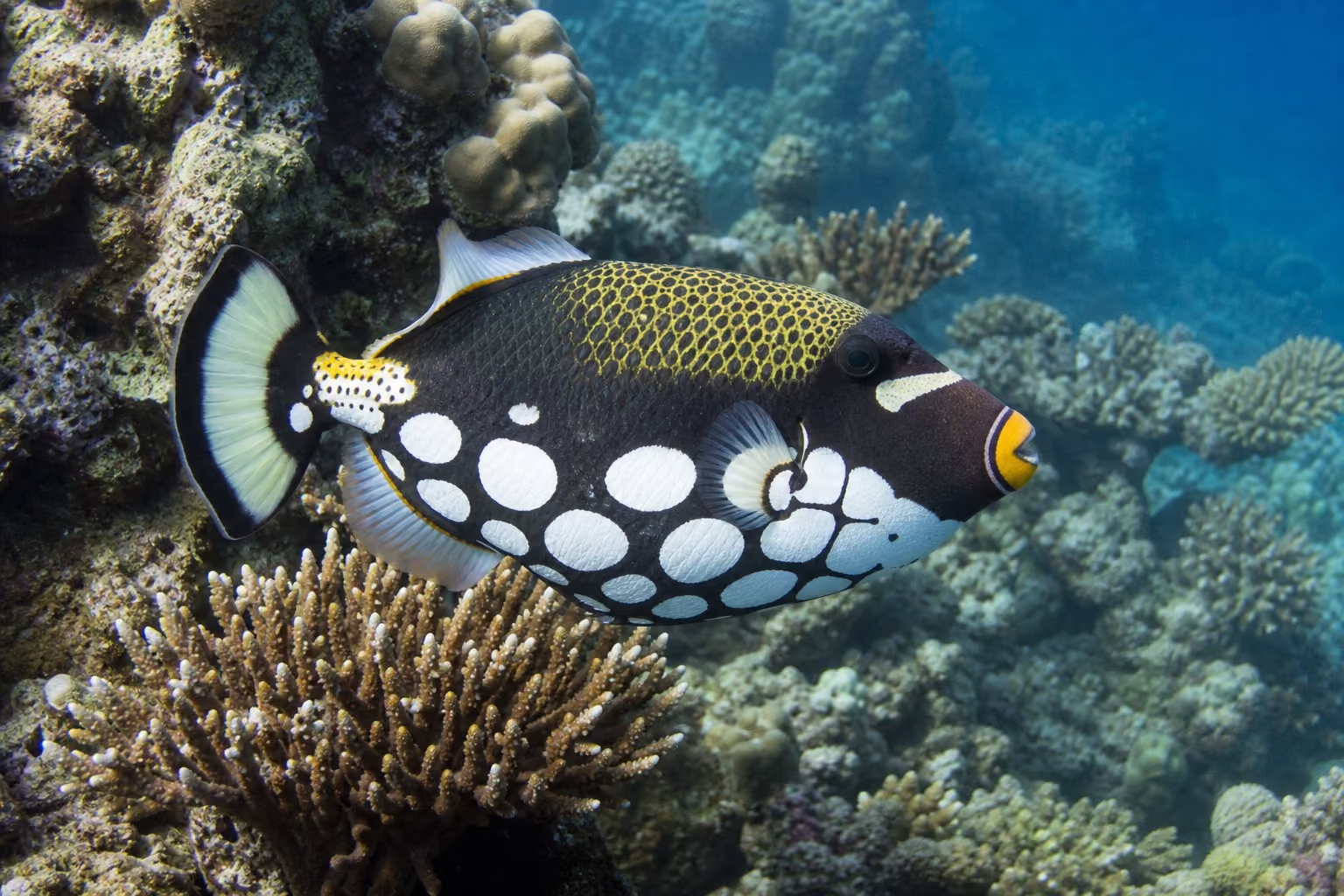
Clown triggerfish

Details

Clown triggerfish

Balistoides conspicillum

Size
30–50 cm · 1–2.5 kg
Diet
Omnivore
Activity
Diurnal
Sociality
Solitary
Lifespan
Varies by species and environment

One of the reef's most flamboyant fish, the clown triggerfish wears a black body splashed with large white spots, a yellow leopard-pattern over the back, and yellow-ringed lips. When threatened it wedges into a crevice and locks itself in place by erecting its stout dorsal spine, making it almost impossible to pull free.
Range

Habitat range map
Native range Occasional / Transient
Pacific OceanPacific OceanPacific OceanIndian Ocean

Map: Ecoregions 2017 © RESOLVE (CC BY 4.0) · Natural Earth (PD)

Details

Habitat

It ranges across the tropical and subtropical Indian and Pacific Oceans, favouring clear-water outer reef slopes. Adults occur from about 1 to 75 metres deep, while juveniles tend to stay shallower than 20 metres among caves and overhangs.

Appearance

A stocky, laterally compressed fish reaching up to 50 cm, with a large head about a third of its body length. The black body carries big white spots on its lower half, yellowish leopard-like markings near the first dorsal fin, yellow rings around the mouth, and a white stripe below the eye. Its thick rhomboid scales and continuously growing teeth help it crush shelled prey.

Behavior

Diurnal, solitary and territorial, it can be hard to spot on the reef and rests in rock or coral crevices by night. For defence it slips into a crack and raises its first dorsal and pectoral fins to anchor itself. Individuals grow more aggressive with age.

Feeding

An omnivore, it takes a varied diet of molluscs, echinoderms such as sea urchins and starfish, crustaceans, crinoids and algae gleaned from the seabed. Its powerful teeth crack open hard shells to reach the soft animal inside.

Reproduction

Egg-laying and maturing at around one year of age, it forms harems to breed. Females deposit eggs in sandy patches in deeper water and males fertilise them; the parents guard the nest for roughly eight days until hatching, after which the female continues to tend the young. Juveniles remain in deep water until they reach about 20 cm.

Notes

Listed as Least Concern by the IUCN, it is nonetheless prized in the aquarium trade, where every specimen is wild-caught, putting pressure on local reef populations. Hardy and pugnacious, it attacks tankmates and is usually kept alone; its sharp teeth can deliver a serious bite even to a hand that feeds it.