162 Featured Specimen
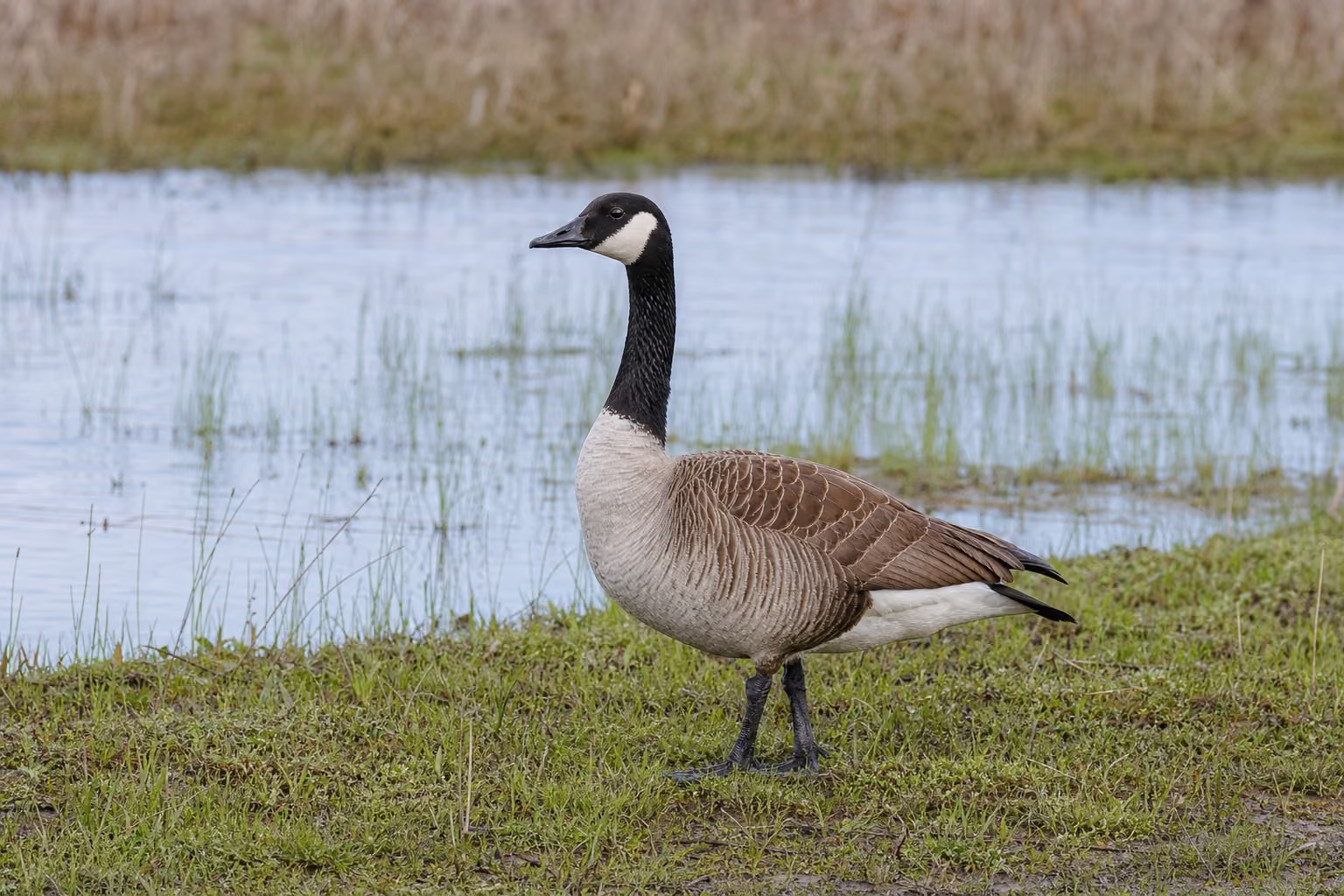
Canada goose

Details

Canada goose

Branta canadensis

Size
Wingspan 1.3–1.9 m · 3–6.5 kg
Diet
Herbivore
Activity
Diurnal
Sociality
Herd
Lifespan
8-25 years

The Canada goose is a large goose familiar around North American water and grassland. It is diurnal, flocking to fly, graze, and move seasonally.
Range

Habitat range map
Native range Occasional / Transient
NearcticNearcticNearcticNearcticNearcticNearcticNearcticNearcticNearcticNearcticNearcticNearcticNearcticNearcticNearcticNearcticNearcticNearcticNearcticNearcticNearcticNearcticNearcticNearcticNearcticNearcticNearcticNearcticNearcticNearcticNearcticNearcticNearcticNearcticNearcticNearcticNearcticNearcticNearcticNearcticNearctic

Map: Ecoregions 2017 © RESOLVE (CC BY 4.0) · Natural Earth (PD)

Details

Habitat

It uses lakes, rivers, marshes, farmland, and park lawns. Sites with water beside short grass allow easy feeding and refuge.

Appearance

Wingspan is about 130-185 cm and weight about 3-6.5 kg. A black head and neck, white cheek patch, and brown body are characteristic.

Behavior

Active by day, it moves in family groups and larger flocks. In flight, birds often form V-shaped lines and keep contact with calls.

Feeding

It is herbivorous, eating grasses, shoots, aquatic plants, and grain. It grazes on land and also feeds in shallow water.

Reproduction

Pairs nest on the ground near water. The downy young are precocial and soon walk and swim with their parents.

Notes

Its status is listed as Least Concern. It adapts readily to human-made ponds and lawns, sometimes forming large local flocks.