649 Featured Specimen
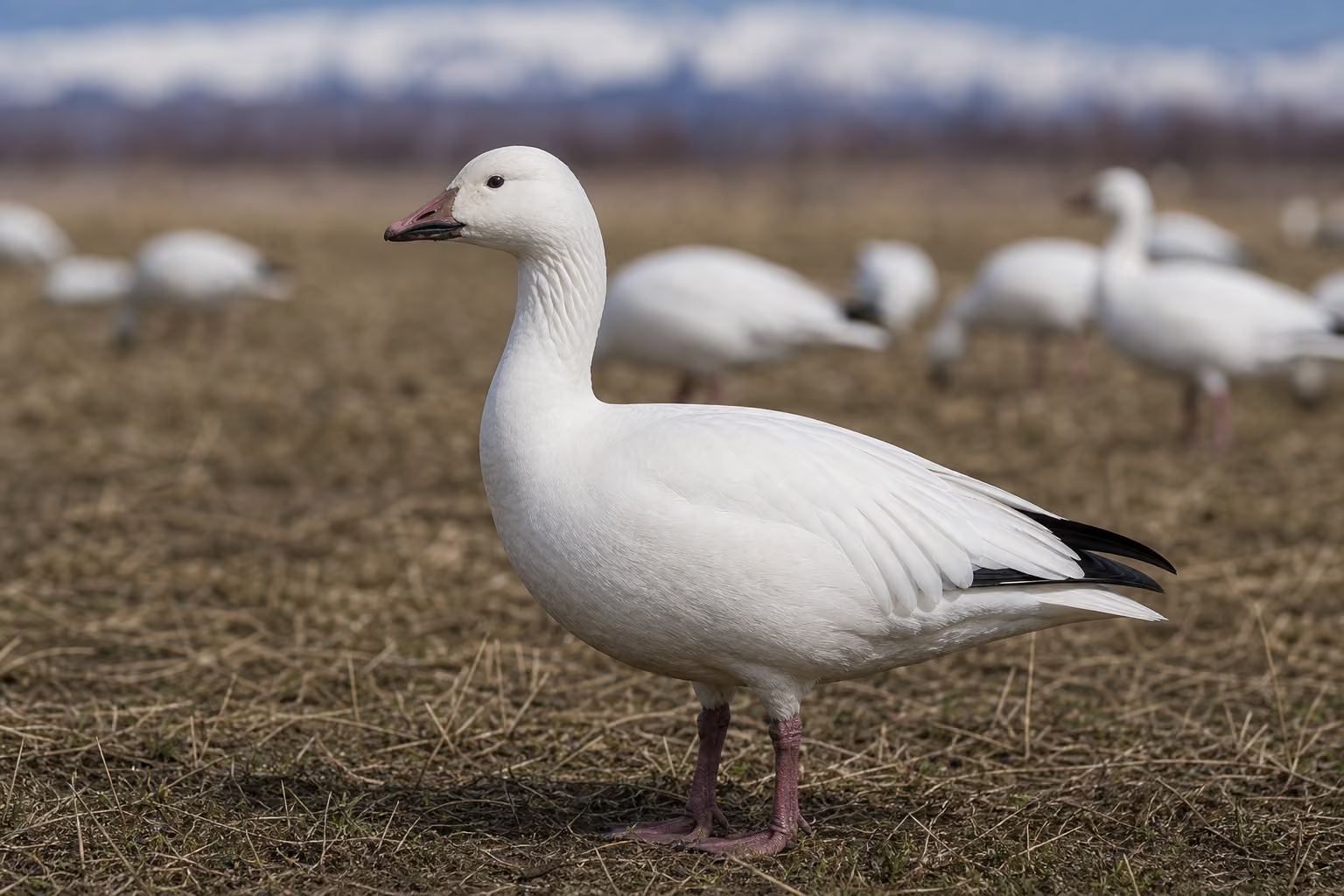
Snow goose

Details

Snow goose

Anser caerulescens

Size
64–79 cm · 2–3.3 kg
Diet
Herbivore
Activity
Diurnal
Sociality
Herd
Lifespan

A white Arctic-breeding goose that migrates in huge flocks to North American wetlands and fields, with a darker blue morph.
Range

Habitat range map
Native range Occasional / Transient
Arctic OceanArctic OceanArctic OceanNearcticNearcticNearcticNearcticNearcticNearcticNearcticNearcticNearcticNearcticNearcticNearcticNearcticNearcticNearcticNearcticNearcticNearcticNearcticNearcticNearcticNearcticNearcticNearcticNearcticNearcticNearcticNearcticNearcticNearcticNearcticNearcticNearcticNearcticNearcticNearcticNearcticNearcticNearcticNearcticNearctic

Map: Ecoregions 2017 © RESOLVE (CC BY 4.0) · Natural Earth (PD)

Details

Habitat

Breeds on tundra and uses lakes, estuaries, tidal flats, farmland, and grassland during migration and winter.

Appearance

White morphs have white bodies and black wingtips. Blue morphs have gray-blue bodies with white heads.

Behavior

It migrates in very large flocks, often in V formations, and feeds noisily in open fields and marshes.

Feeding

Grasses, roots, rhizomes, grain, and young plants are eaten, sometimes dug from mud with the bill.

Reproduction

Ground nests are built on tundra. Females incubate, and goslings walk and graze soon after hatching.

Notes

In some regions, growing populations can put heavy pressure on vegetation at breeding grounds.