580 Featured Specimen
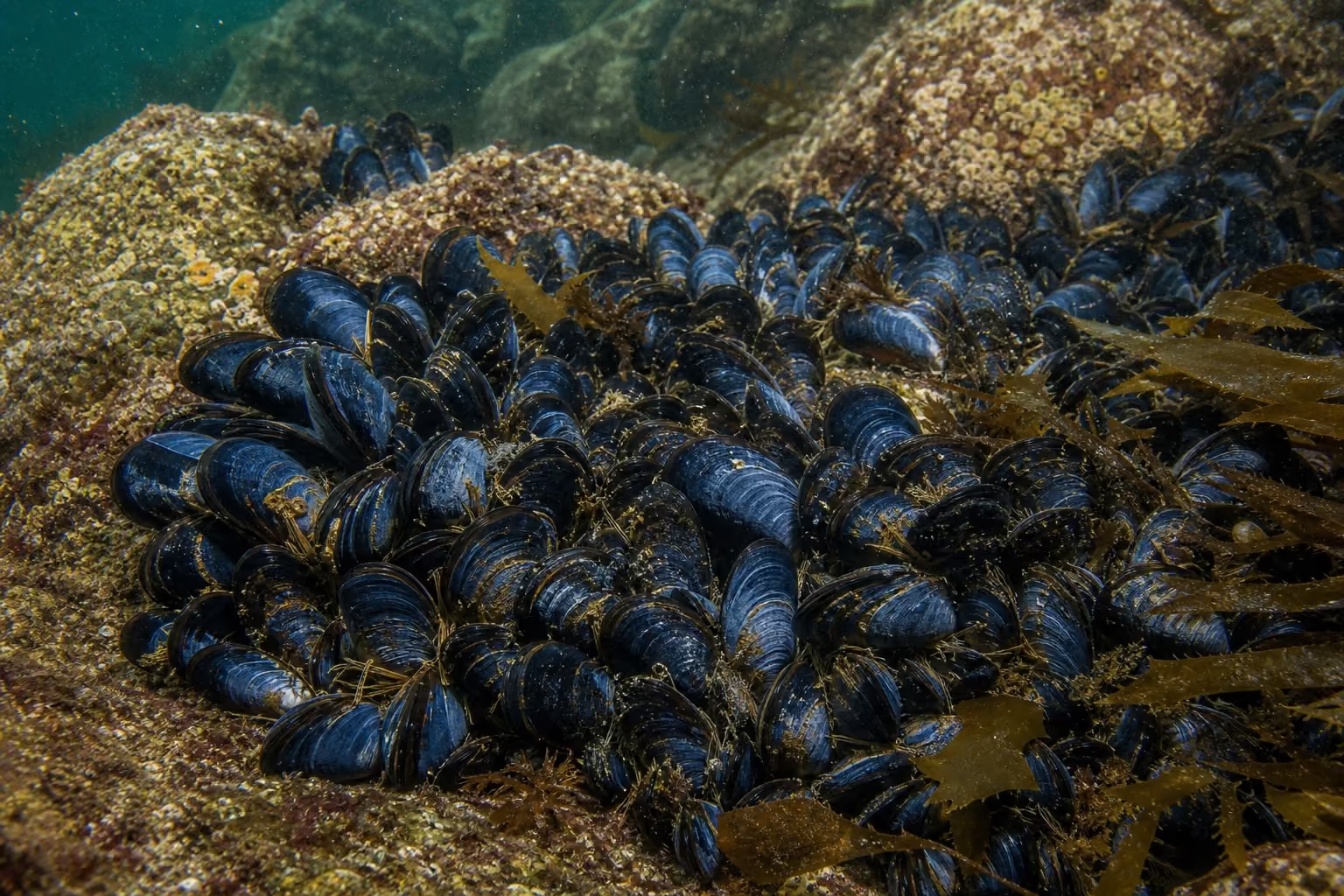
Blue mussel

Details

Blue mussel

Mytilus edulis

Size
5–10 cm
Diet
Filter Feeder
Activity
Cathemeral
Sociality
Colony
Lifespan

An edible bivalve common on northern Atlantic coasts. It has blue-black shells and forms dense beds attached by byssal threads.
Range

Habitat range map
Native range Occasional / Transient
Atlantic OceanAtlantic OceanAtlantic OceanAtlantic OceanAtlantic OceanArctic OceanArctic OceanArctic Ocean

Map: Ecoregions 2017 © RESOLVE (CC BY 4.0) · Natural Earth (PD)

Details

Habitat

Lives in cool-temperate intertidal and shallow subtidal waters, attached to rocks, pilings, ropes, and other hard surfaces.

Appearance

The shell is elongated and triangular, usually blue-black to dark purple outside with a pearly interior.

Behavior

It anchors itself with tough byssal threads. Dense mussel beds resist wave action and create shelter for many small animals.

Feeding

It filters phytoplankton and organic particles from seawater using its gills. Food supply depends on water quality and currents.

Reproduction

Adults release eggs and sperm into the water. Larvae drift before settling onto hard substrate and growing their shells.

Notes

Blue mussels support fisheries and aquaculture and are used in water-quality monitoring. They can accumulate algal toxins during harmful blooms.