062 Featured Specimen
Atlantic puffin

Details

Atlantic puffin

Fratercula arctica

Size
26–30 cm · 300–600 g
Diet
Carnivore
Activity
Seasonal
Sociality
Colony
Lifespan
Several years to decades

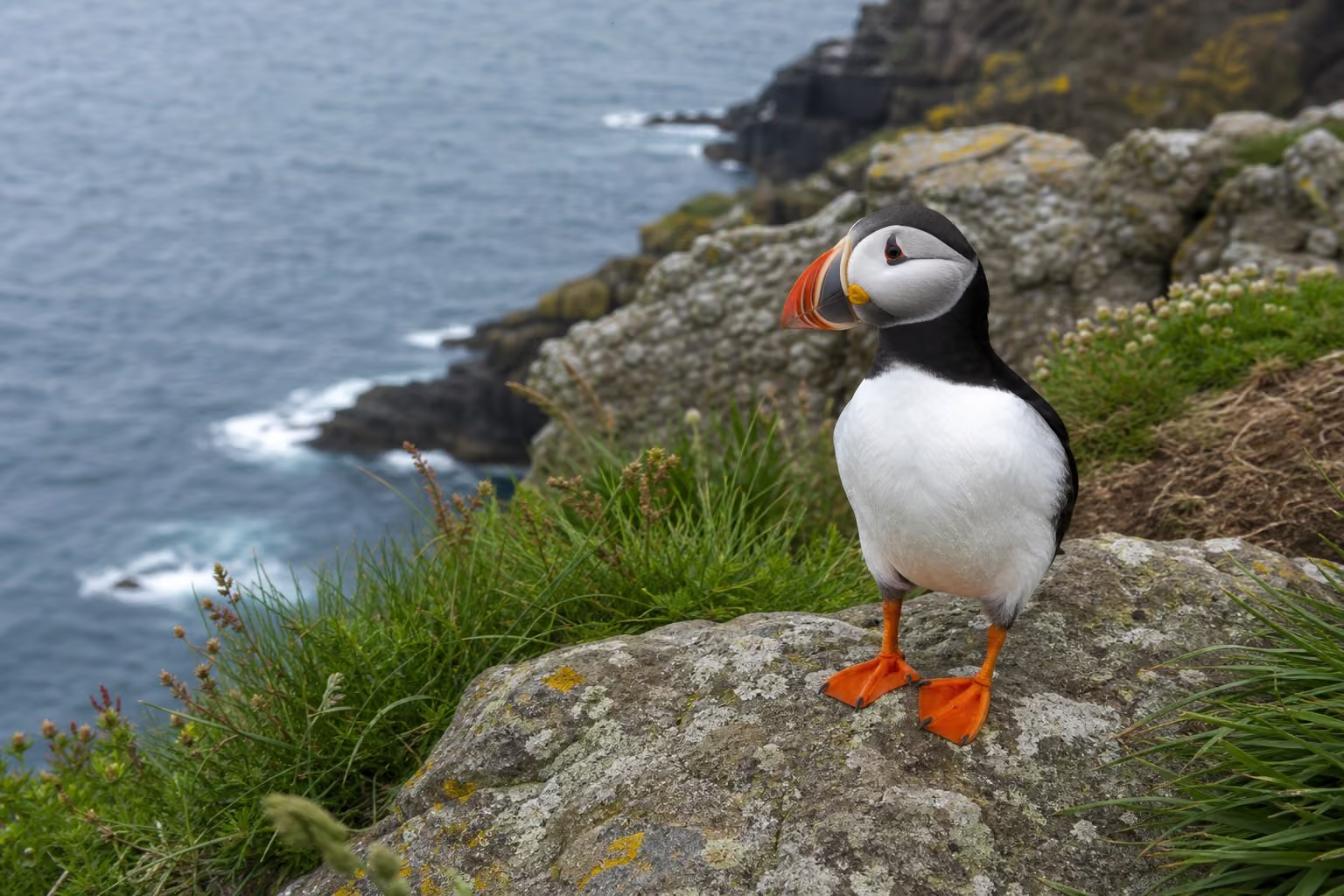
An iconic North Atlantic seabird famous for its broad, boldly marked red, yellow, and blue-grey bill. It gathers in dense clifftop colonies to breed, then spends the rest of the year alone far out at sea. A member of the auk family (Alcidae).
Range

Habitat range map
Native range Occasional / Transient
Atlantic OceanAtlantic OceanAtlantic OceanAtlantic OceanAtlantic OceanPalearcticPalearcticPalearcticPalearcticPalearcticPalearcticPalearcticPalearcticPalearcticPalearcticPalearcticPalearcticPalearcticPalearcticPalearcticPalearcticPalearcticPalearcticPalearcticPalearcticPalearcticPalearcticPalearcticPalearcticNearcticNearcticNearcticNearcticNearcticNearcticNearcticNearcticNearcticNearcticNearcticNearcticNearcticNearcticNearcticNearcticNearcticNearcticNearcticNearcticNearcticNearcticNearcticNearcticNearcticNearcticNearcticNearcticNearcticNearcticNearcticNearcticNearcticNearcticNearcticNearcticNearcticNearcticNearcticNearcticNearctic

Map: Ecoregions 2017 © RESOLVE (CC BY 4.0) · Natural Earth (PD)

Details

Habitat

It ranges across the North Atlantic from Iceland, Norway, Britain, and the Faroes to northeastern North America, with roughly 60% of the world population concentrated in Iceland. It breeds on predator-free coastal cliffs and grassy islands, then winters across open ocean from the North Sea to the Arctic Circle.

Appearance

A medium-sized seabird 26-30 cm long and weighing 300-600 g, with northern populations running larger. The crown, back, and wings are black, the cheeks pale grey, and the underparts white. Its hallmarks are the thick red, yellow, and blue-grey bill and bright orange legs, which are most vivid in the breeding season and dull in winter.

Behavior

At sea it lives alone, bobbing on the waves, but on land it forms tightly packed clifftop colonies. Its small wings beat rapidly, carrying it in direct flight just above the surface at speeds of around 80 km/h. Once a year it molts all its flight feathers at once and is briefly flightless.

Feeding

It feeds chiefly on fish such as sand eels, herring, capelin, and sprats. It pursues prey underwater, 'flying' with half-open wings and staying submerged for up to a minute. Inward-facing serrations along the bill and a muscular tongue let it hold a row of several fish at once to ferry back to the nest.

Reproduction

Monogamous and faithful to its nest site, it returns to the same burrow year after year. It digs a burrow in clifftop turf or reuses an existing hole and lays a single white egg each year. Both parents share incubation for about 39-45 days, and the chick fledges in roughly 38-44 days, leaving for the sea at night and not returning to land for two to three years.

Notes

The IUCN lists it as Vulnerable. Key threats include predation by introduced rats and cats, drowning in fishing nets, marine pollution, and food shortages driven by warming seas. In Iceland and the Faroe Islands it is still hunted and eaten as wild game.