104 Featured Specimen
Asian elephant

Details

Asian elephant

Elephas maximus

Size
5.5–6.4 m · 2.7–5 t
Diet
Herbivore
Activity
Cathemeral
Sociality
Herd
Lifespan
10-20 years

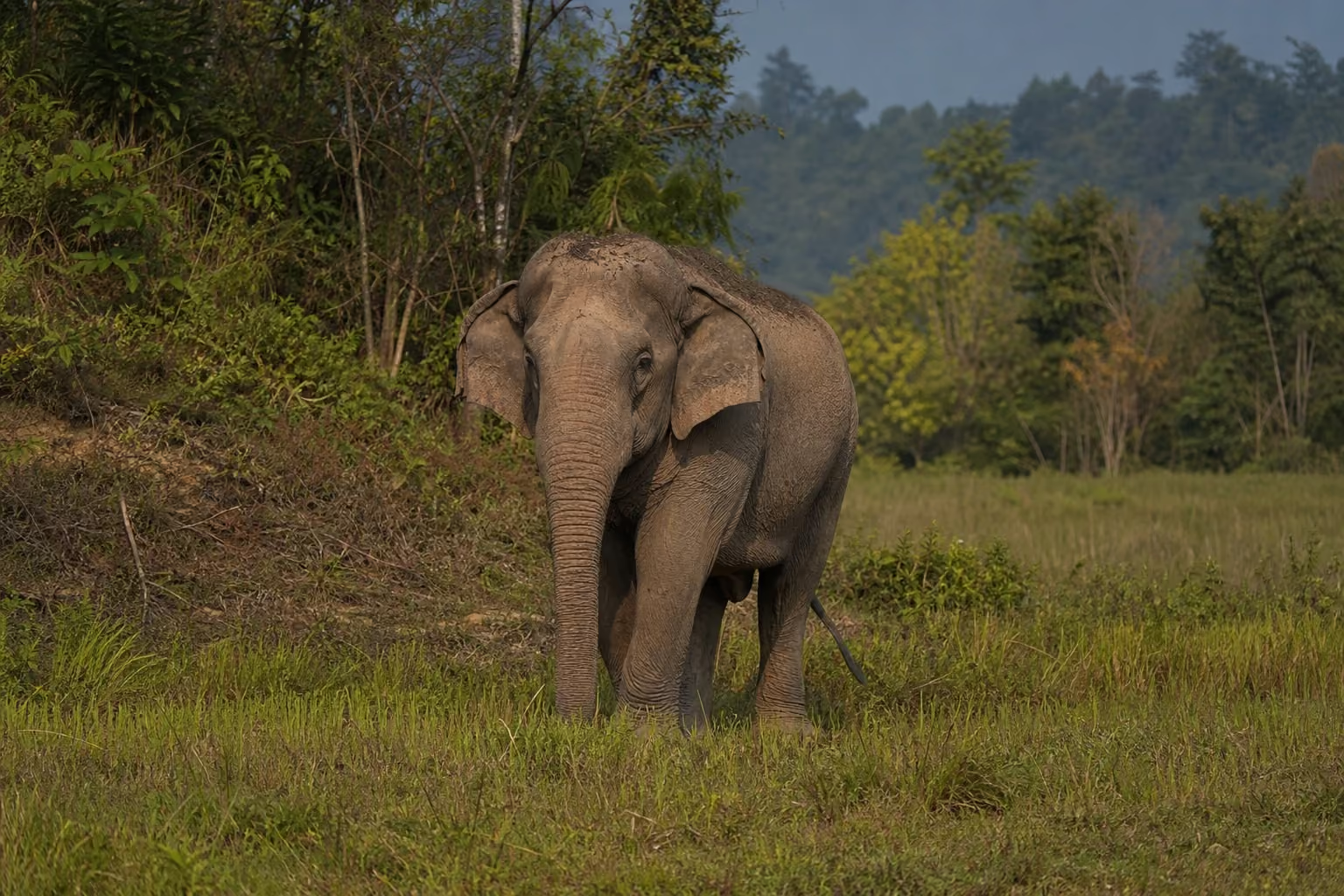
The Asian elephant is smaller than its African cousin, with twin domes on its forehead, smaller folded ears, and a trunk tipped by a single finger-like process. A highly intelligent grazer that lives in matriarchal family groups, it has one of the longest histories of partnership with people of any wild animal.
Range

Habitat range map
Native range Occasional / Transient
IndomalayanIndomalayanIndomalayanIndomalayanIndomalayanIndomalayanIndomalayanIndomalayanIndomalayanIndomalayanIndomalayanIndomalayanIndomalayanIndomalayanIndomalayan

Map: Ecoregions 2017 © RESOLVE (CC BY 4.0) · Natural Earth (PD)

Details

Habitat

It ranges across the Indomalayan realm from India east to Borneo and from Nepal south to Sumatra. The species occupies grasslands, tropical and subtropical evergreen and deciduous forests, and dry thorn forest, from sea level to above 3,000 m elevation.

Appearance

Body length runs about 550 to 640 cm and weight from 2.7 to 5.0 tonnes. Bulls stand around 2.75 m and carry long tusks; cows reach about 2.40 m and either lack tusks or hide them. The grey skin often shows pink depigmentation on the trunk, ears, and neck.

Behavior

Active by day and night, elephants spend more than half of each day feeding. Cows and calves form kin-based herds, while bulls leave to live alone or in loose bachelor groups as they mature. Once a year a bull enters musth, a period of surging testosterone and heightened aggression.

Feeding

A herbivore, it grazes mainly on grasses but also takes branches, leaves, bark, roots, and fruit. An adult can eat up to 150 kg of plant matter a day and needs 80 to 200 litres of water.

Reproduction

Gestation is long, around 18 to 22 months, and typically yields a single calf weighing roughly 100 kg at birth. Calves nurse for up to three years and are raised cooperatively by the herd's females, with cows reaching sexual maturity at about 10 to 15 years.

Notes

Listed as Endangered on the IUCN Red List, the species continues to decline through habitat loss and fragmentation, poaching for ivory, and conflict with people. Yet it has long served as a working animal and sacred figure, and is the national animal of Thailand and Laos.