152 Featured Specimen
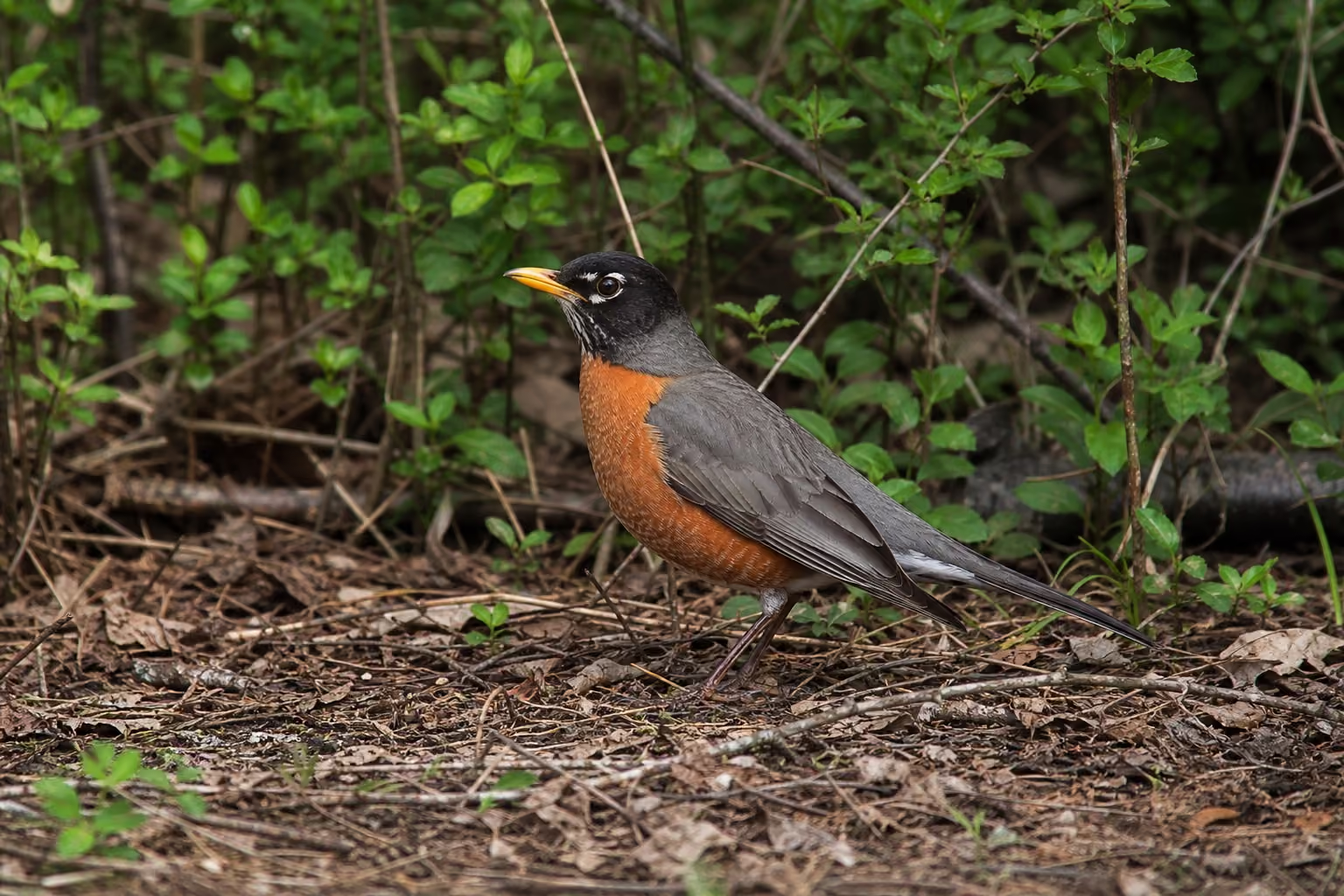
American robin

Details

American robin

Turdus migratorius

Size
Wingspan 31–41 cm · 70–95 g
Diet
Omnivore
Activity
Diurnal
Sociality
Loose group
Lifespan
8-25 years

The American robin is a diurnal thrush of North American forests and urban edges. It walks lawns and woodland margins, shifting foods by season.
Range

Habitat range map
Native range Occasional / Transient
NearcticNearcticNearcticNearcticNearcticNearcticNearcticNearcticNearcticNearcticNearcticNearcticNearcticNearcticNearcticNearcticNearcticNearcticNearcticNearcticNearcticNearcticNearcticNearcticNearcticNearcticNearcticNearcticNearcticNearcticNearcticNearcticNearcticNearcticNearcticNearcticNearcticNearcticNearcticNearcticNearctic

Map: Ecoregions 2017 © RESOLVE (CC BY 4.0) · Natural Earth (PD)

Details

Habitat

It uses forests, edges, parks, and gardens. Open ground provides feeding space, while nearby trees and shrubs offer nesting and cover.

Appearance

Wingspan is about 31-41 cm and weight about 70-95 g. A gray-brown back, orange breast, slim bill, and upright ground-walking posture are typical.

Behavior

Diurnal birds hold pairs and territories in breeding season, then may form loose groups. They pause and scan while foraging on the ground.

Feeding

It is omnivorous, eating earthworms, insects, and fruit. Animal prey is prominent in spring and summer, with berries important later.

Reproduction

The nest is a mud-and-grass cup placed on branches or ledges. Chicks receive insects and fruit and are fed for a period after fledging.

Notes

Its status is listed as Least Concern. It adapts well to towns and is a familiar seasonal bird across much of North America.