735 Featured Specimen
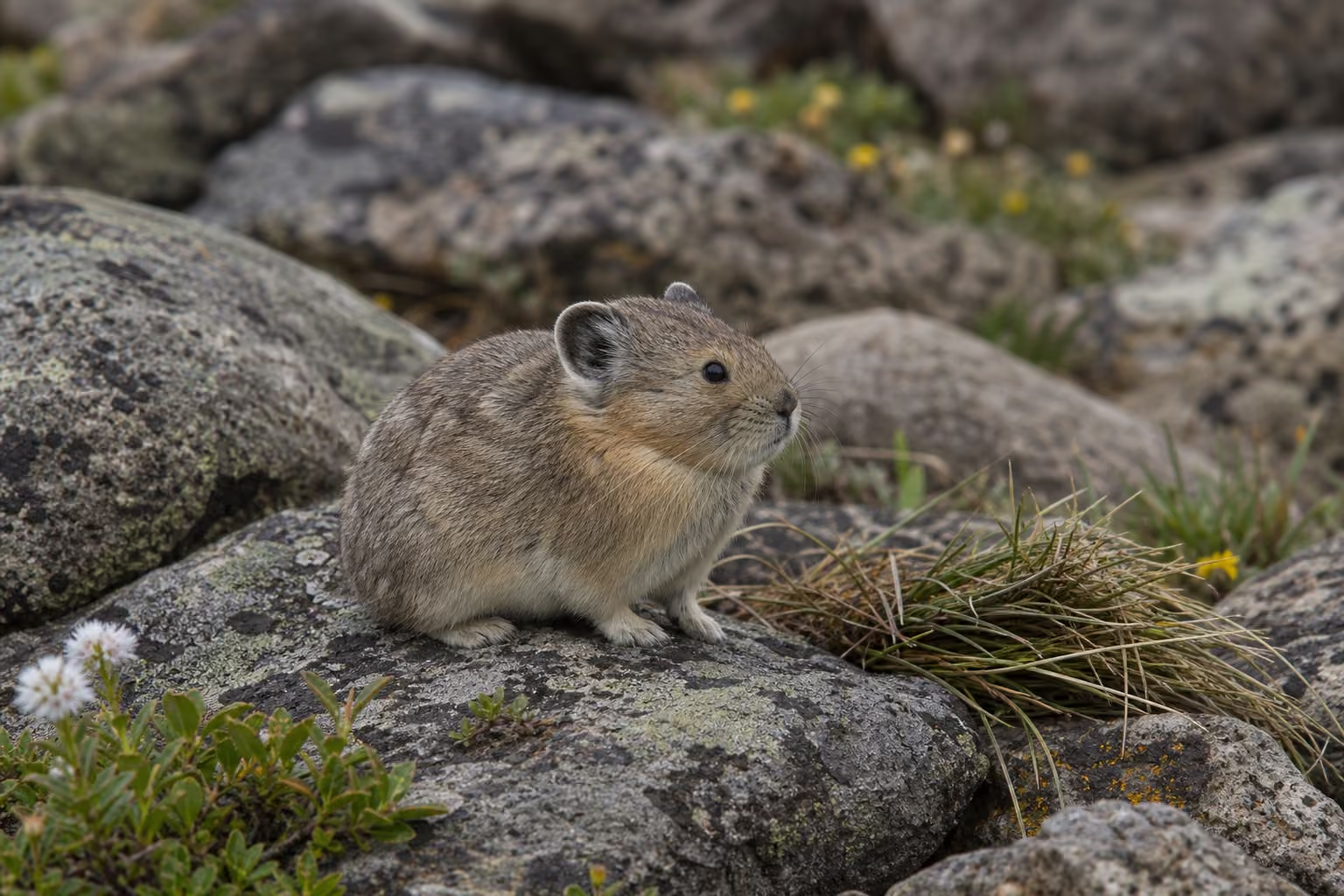
American pika

Details

American pika

Ochotona princeps

Size
16–22 cm · 120–180 g
Diet
Herbivore
Activity
Diurnal
Sociality
Solitary
Lifespan

A small pika of western North American alpine rock fields, with round ears, short limbs, and hay-storing behavior.
Range

Habitat range map
Native range Occasional / Transient
NearcticNearcticNearcticNearcticNearcticNearcticNearcticNearcticNearcticNearcticNearcticNearcticNearcticNearcticNearcticNearcticNearcticNearcticNearcticNearcticNearcticNearcticNearcticNearcticNearcticNearcticNearcticNearcticNearcticNearcticNearcticNearcticNearcticNearcticNearcticNearcticNearcticNearcticNearcticNearcticNearctic

Map: Ecoregions 2017 © RESOLVE (CC BY 4.0) · Natural Earth (PD)

Details

Habitat

Occurs in alpine and subalpine talus, rock fields, and meadow edges where cool crevices lie close to foraging areas.

Appearance

The body is rounded, ears are short and round, and the tail is barely visible. Gray-brown fur blends with rock.

Behavior

Active by day, it gives sharp calls to mark territory. From summer to autumn it cuts plants and stores hay piles under rocks.

Feeding

Forbs, sedges, flowers, and leaves are eaten. Stored plants are dried and used as winter food.

Reproduction

Nests are placed in rock crevices, and small litters are born from spring into summer. Young develop in the nest before emerging.

Notes

The species is low-risk overall, but heat sensitivity makes some low-elevation populations vulnerable to warming.