102 Featured Specimen
African wild dog

Details

African wild dog

Lycaon pictus

Size
0.8–1.1 m · 18–36 kg
Diet
Carnivore
Activity
Diurnal
Sociality
Social
Lifespan
10-20 years

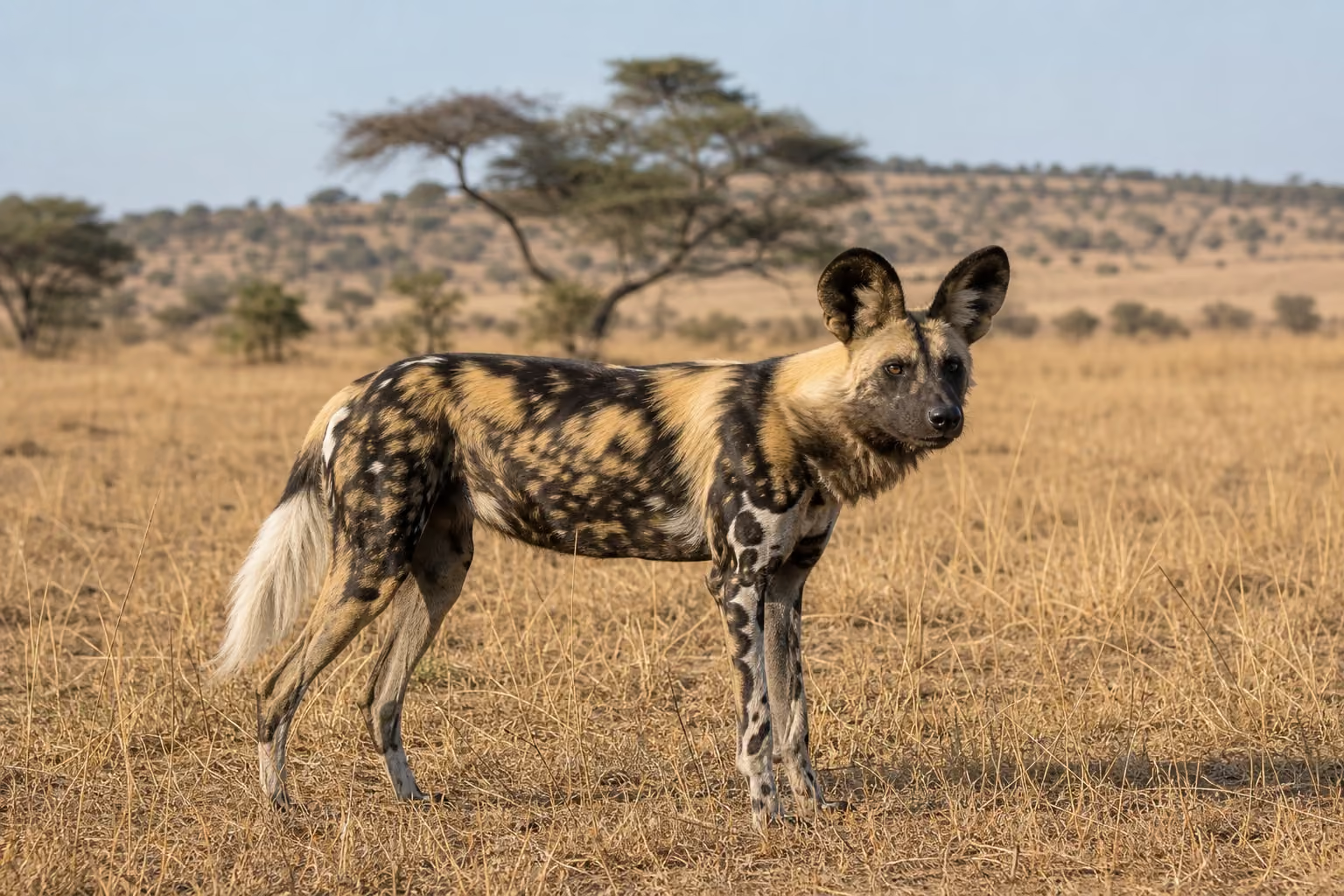
The African wild dog is Africa's largest wild canid, instantly known by its mottled coat of black, tan, and white in a pattern unique to each individual. It is a highly social pack hunter and one of the continent's most cooperative predators.
Range

Habitat range map
Native range Occasional / Transient
AfrotropicalAfrotropicalAfrotropicalAfrotropical

Map: Ecoregions 2017 © RESOLVE (CC BY 4.0) · Natural Earth (PD)

Details

Habitat

Found across sub-Saharan Africa, mainly in the east and south, it favours open savanna, grassland, and arid country and generally avoids forest. Now largely gone from North and West Africa, its range survives only as scattered, fragmented populations.

Appearance

A medium-sized canid measuring about 75-110 cm long and weighing 18-36 kg, with a coarse coat blotched in black, tan, and white in a pattern that differs from dog to dog. Its large rounded ears aid heat loss, its legs are long, and each foot has four toes, lacking dewclaws.

Behavior

Active by day, it hunts especially around dawn and dusk. Packs of a few to several dozen form around related males, with pups, while breeding is reserved for the dominant pair; members reach hunting decisions through distinctive sneeze-like calls.

Feeding

A carnivore preying chiefly on medium-sized antelope such as impala, gazelle, and wildebeest. The pack coordinates long, fast pursuits at over 60 km/h to wear quarry down, achieving high success rates, and every member regurgitates food to share with pups and packmates.

Reproduction

Gestation lasts roughly 69-73 days, producing a large litter averaging around ten pups and sometimes more. Females den in abandoned aardvark burrows, and the whole pack guards and provisions the young, with pups given priority to feed first at a kill.

Notes

Listed as Endangered by the IUCN, with an estimated population of only around 6,600 adults. Habitat fragmentation, persecution and road deaths, and diseases caught from domestic dogs are the main threats, leaving small populations especially vulnerable.