550 Featured Specimen
African clawed frog

Details

African clawed frog

Xenopus laevis

Size
5–12 cm
Diet
Carnivore
Activity
Nocturnal
Sociality
Solitary
Lifespan

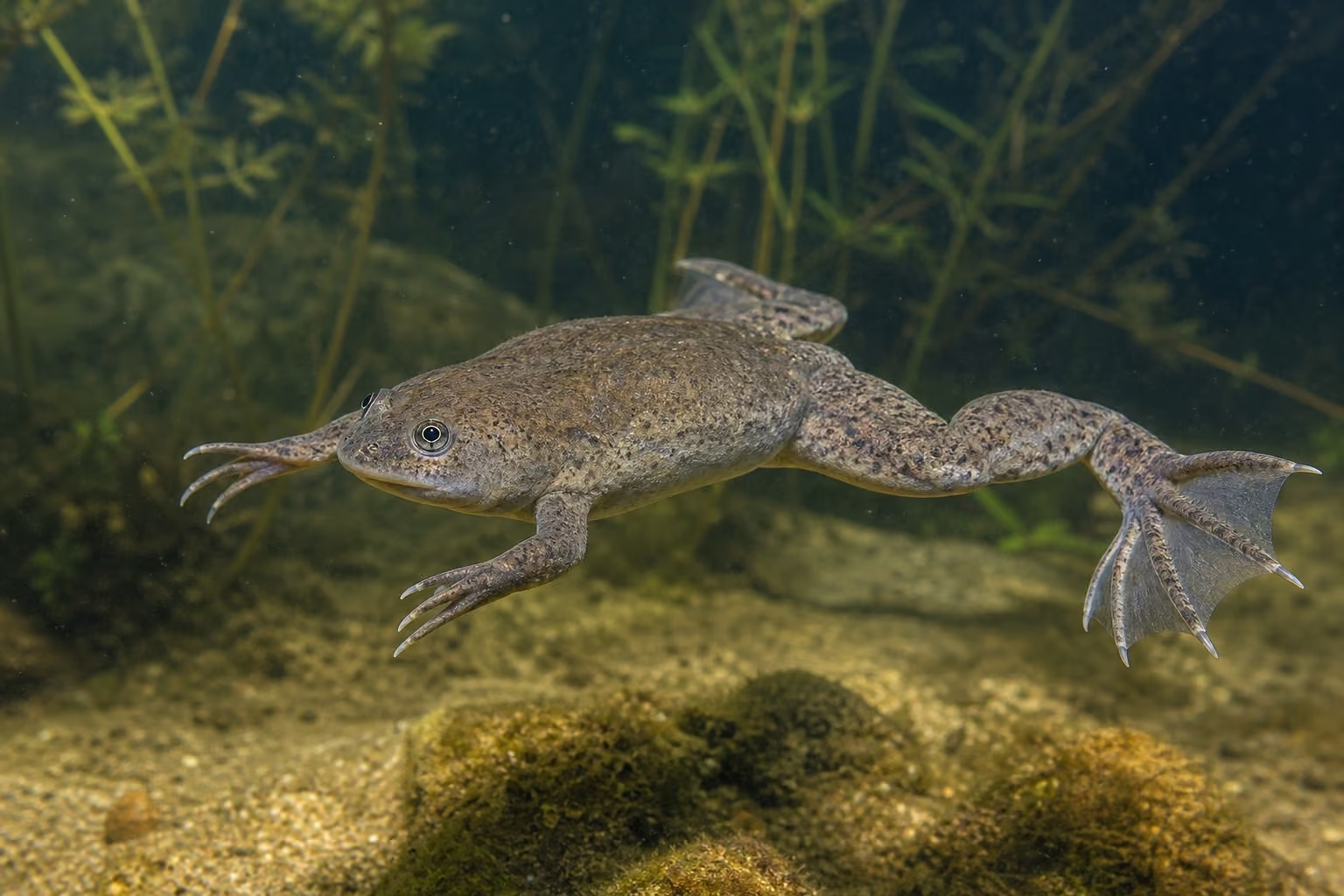
The African clawed frog is a fully aquatic frog of sub-Saharan Africa. Lacking a tongue, it uses black hind-foot claws and quick forelimbs to tear and handle food.
Range

Habitat range map
Native range Occasional / Transient
AfrotropicalAfrotropicalAfrotropicalAfrotropical

Map: Ecoregions 2017 © RESOLVE (CC BY 4.0) · Natural Earth (PD)

Details

Habitat

It inhabits ponds, lakes, marshes and slow channels across southern and eastern Africa. It can survive dry periods in mud and has become introduced in many countries.

Appearance

Adults are 5-12 cm long. The flattened body, upward-facing eyes and fully webbed hind feet suit life in water, while the front fingers push food into the mouth.

Behavior

Mostly nocturnal and almost entirely aquatic, it surfaces to breathe. Vibrations and scent help it locate prey in murky water.

Feeding

Aquatic insects, crustaceans, worms, small fish, eggs and carrion are eaten. Suction feeding and forelimb movements draw food into the mouth.

Reproduction

Pairs clasp underwater, and females attach many eggs to vegetation or other submerged surfaces. Tadpoles are translucent and feed by filtering particles.

Notes

This species became a major laboratory animal and was once used in pregnancy testing. Introduced populations can prey on native amphibians and spread pathogens.