101 Featured Specimen
Aardvark

Details

Aardvark

Orycteropus afer

Size
1–1.3 m · 40–82 kg
Diet
Omnivore
Activity
Nocturnal
Sociality
Solitary
Lifespan
10-20 years

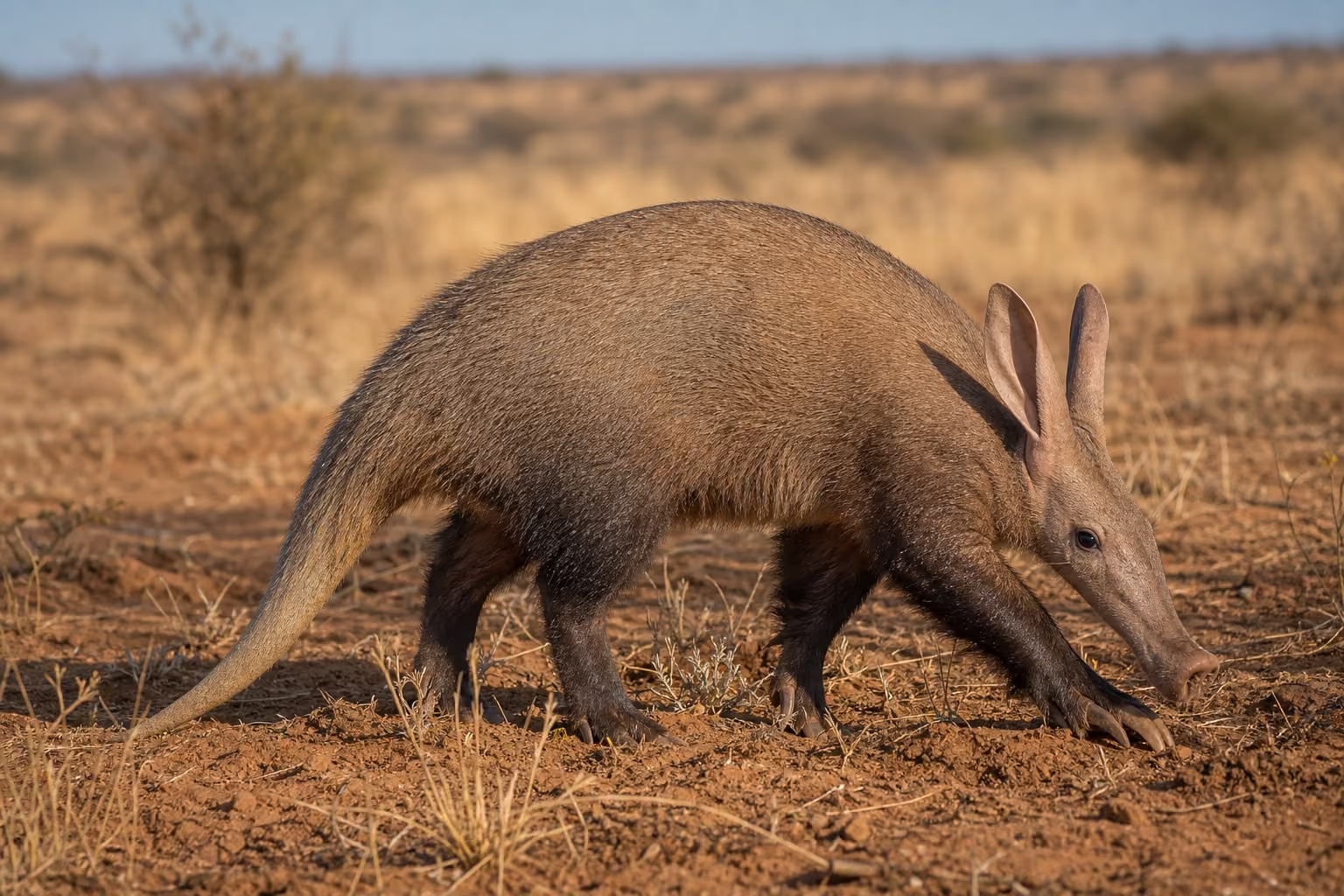
The aardvark is the sole living member of the order Tubulidentata, an African mammal often called a living fossil. With its long snout, oversized ears, and spade-like claws, it is a specialist digger that lives almost entirely on ants and termites.
Range

Habitat range map
Native range Occasional / Transient
AfrotropicalAfrotropicalAfrotropicalAfrotropical

Map: Ecoregions 2017 © RESOLVE (CC BY 4.0) · Natural Earth (PD)

Details

Habitat

It ranges widely across sub-Saharan Africa, from Ethiopia south to the Cape, inhabiting savannas, grasslands, open woodland, and bushland. It favors areas rich in ants and termites and avoids swamp forest and rocky ground.

Appearance

Body length runs about 100-130 cm and weight 40-82 kg, with a stout, strongly arched back. The pale yellowish-grey coat is often stained reddish-brown by soil; the long ears, tubular snout, sticky tongue, and powerful spade-shaped claws are unmistakable. It has no incisors or canines, retaining only cement-covered cheek teeth.

Behavior

Nocturnal and solitary, it spends the day in dark, self-dug burrows and forages at night, covering 2-5 km and occasionally close to 30 km. A formidable excavator, it can dig a yard of tunnel in roughly five minutes and is also a capable swimmer.

Feeding

It feeds almost exclusively on ants and termites, switching to ants in the dry season and termites in the wet. Locating nests by smell and hearing, it rips them open with strong claws and laps up the insects with its long, sticky tongue, taking tens of thousands in a single night.

Reproduction

After a gestation of about seven months a female bears a single young, rarely two, weighing under 2 kg. The cub shelters in the mother's burrow, begins digging its own around six months of age, and reaches sexual maturity at about two years.

Notes

The IUCN lists the aardvark as Least Concern, as its vast range keeps overall threat low. Locally, however, it is sensitive to drought: when dry spells cut termite numbers the animals can suffer heavily, raising concern over the effects of a changing climate.