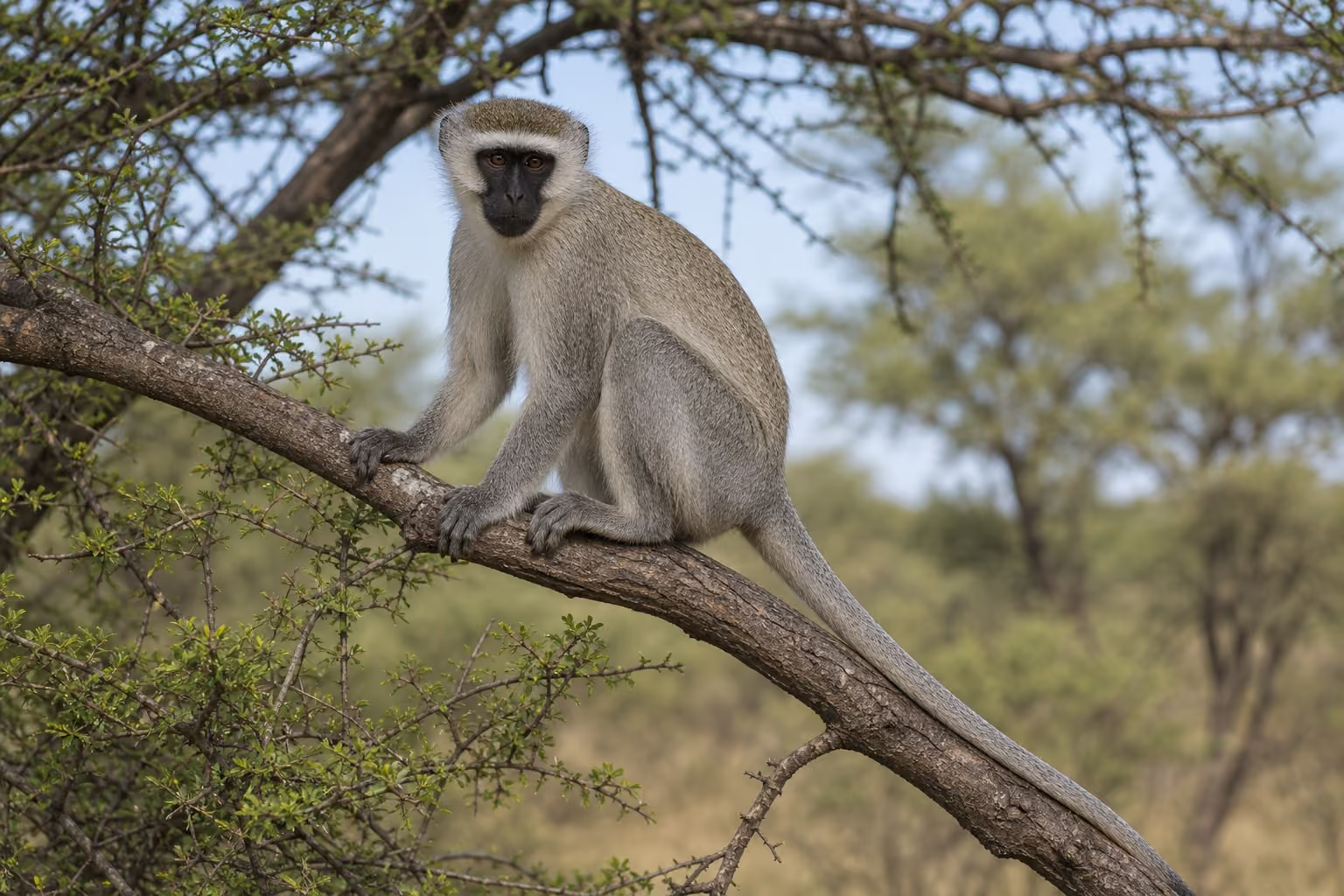
Vervet monkey

Details

Vervet monkey

Chlorocebus pygerythrus

Size
0.8–1.3 m · 3–8 kg
Diet
Omnivore
Activity
Diurnal
Sociality
Social
Lifespan

A widespread African guenon with a dark face, gray body, and long tail. It adapts well to woodland, farms, and towns with trees.

View in catalog
Key facts

  • Vervet monkey (Chlorocebus pygerythrus) is an omnivore animal classified as Mammal · Primates · Cercopithecidae.
  • Primary habitats are savanna · forest · urban, with a range across Afrotropical.
  • Activity is diurnal, sociality is social, and conservation status is LC (Least Concern).
  • A widespread African guenon with a dark face, gray body, and long tail.
  • Vervet monkeys use savanna woodland, riparian forest, forest edges, farms, and urban green spaces.

Range

Habitat range map
Native rangeOccasional / Transient
AfrotropicalAfrotropicalAfrotropicalAfrotropical

Map: Ecoregions 2017 © RESOLVE (CC BY 4.0) · Natural Earth (PD)

Details

Habitat

Vervet monkeys use savanna woodland, riparian forest, forest edges, farms, and urban green spaces. Trees and water are important habitat features.

Appearance

They have gray fur, a black face, pale brow band, and long tail. Males are larger than females and have conspicuous blue scrotal skin.

Behavior

They are diurnal and live in female-centered troops. Vervets move on the ground and in trees and are famous for predator-specific alarm calls.

Feeding

They eat fruit, leaves, flowers, seeds, insects, small animals, and crops. Diet shifts with season and human land use.

Reproduction

Breeding occurs within troops, and females rear infants. Juveniles learn social relationships through play, grooming, and repeated interactions.

Notes

Vervets are important in studies of communication and learning, while human-habituated groups can create crop and feeding conflicts.