Olive baboon

Details

Olive baboon

Papio anubis

Size
60–86 cm · 13–37 kg
Diet
Omnivore
Activity
Diurnal
Sociality
Social
Lifespan
25–30 years

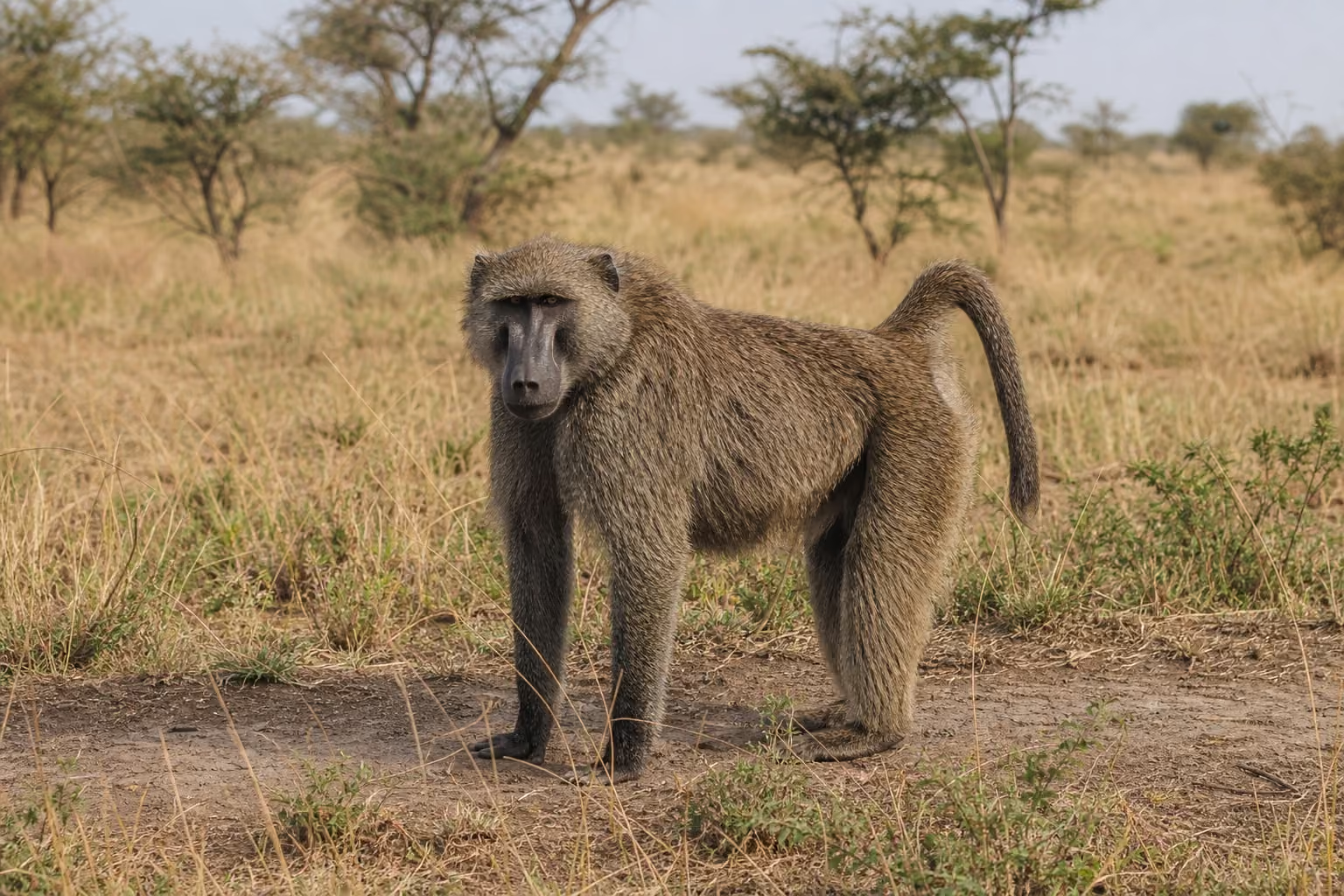
The olive baboon is a large African monkey of savannas and woodland edges. Troops travel on the ground and eat a wide mix of plant and animal foods.

View in catalog
Key facts

  • Olive baboon (Papio anubis) is an omnivore animal classified as Mammal · Primates · Cercopithecidae.
  • Primary habitats are savanna · grassland · forest, with a range across Afrotropical.
  • Activity is diurnal, sociality is social, and conservation status is LC (Least Concern).
  • The olive baboon is a large African monkey of savannas and woodland edges.
  • It lives in Afrotropical savanna, grassland, and forest edge.
  • Typical lifespan: 25–30 years

Range

Habitat range map
Native rangeOccasional / Transient
AfrotropicalAfrotropicalAfrotropicalAfrotropical

Map: Ecoregions 2017 © RESOLVE (CC BY 4.0) · Natural Earth (PD)

Details

Habitat

It lives in Afrotropical savanna, grassland, and forest edge. Water, sleeping cliffs or trees, and open feeding grounds are all important.

Appearance

Length 60-86 cm; weight 13-37 kg. Coarse olive-grey fur, a long doglike muzzle, and powerful limbs define the species. Males are larger and have stronger canines.

Behavior

Diurnal and social, it lives in multi-male, multi-female troops. Rank, grooming, calls, and alliances structure group life.

Feeding

An omnivore, it eats grasses, roots, fruit, seeds, insects, and small vertebrates. It digs, turns stones, and searches widely on the ground.

Reproduction

Breeding occurs within the troop, and females usually raise a single infant. Young cling to the mother at first and later play with troop mates.

Notes

It is listed as Least Concern. Its adaptability is high, but crop-raiding can create conflict with people.