Three-spined stickleback

Details

Three-spined stickleback

Gasterosteus aculeatus

Size
4–11 cm · 1–6 g
Diet
Carnivore
Activity
Diurnal
Sociality
Loose group
Lifespan

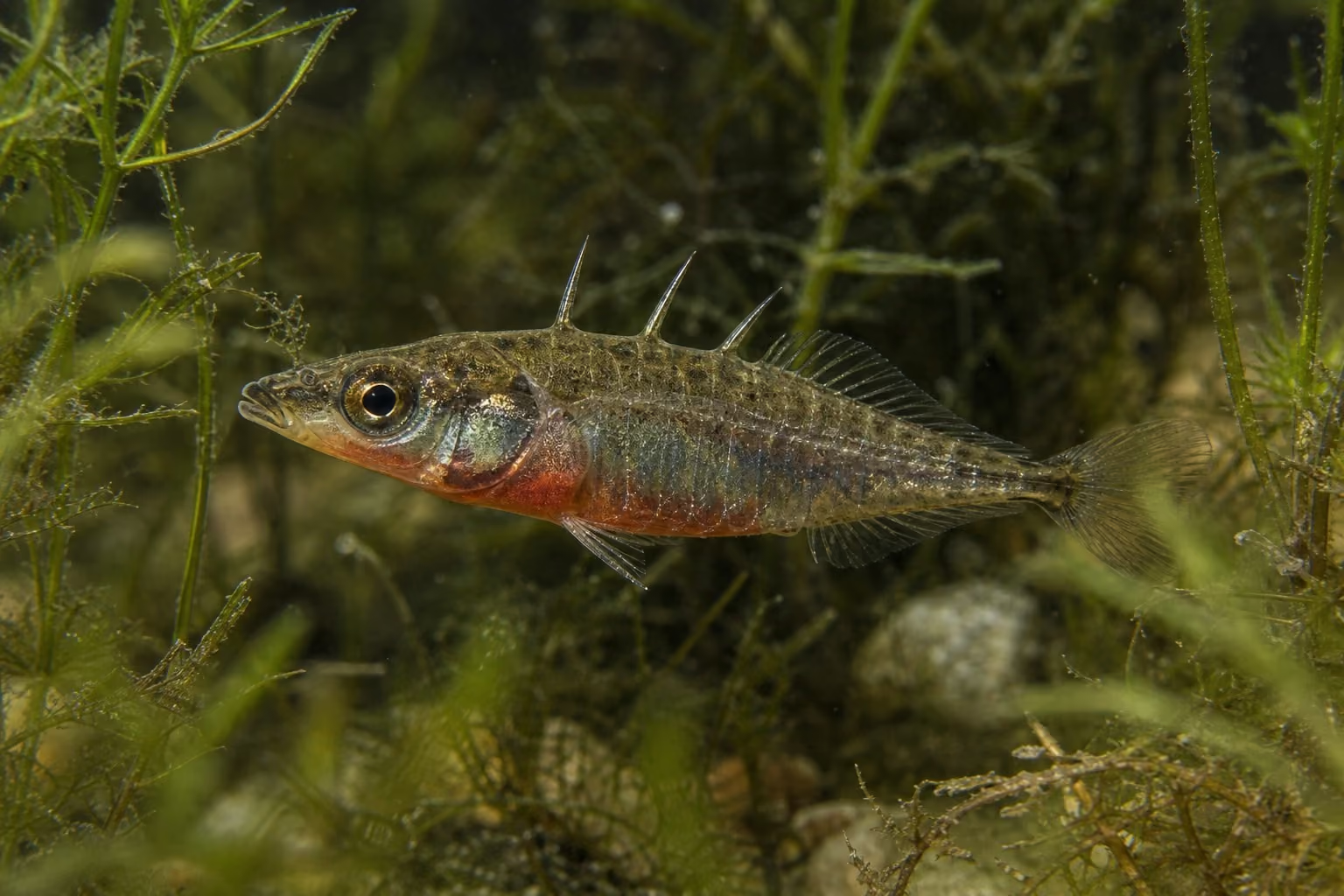
A small fish with three dorsal spines. Marine, migratory, and freshwater forms make it a classic model for studying rapid evolution.

View in catalog
Key facts

  • Three-spined stickleback (Gasterosteus aculeatus) is a carnivore animal classified as Fish · Gasterosteiformes · Gasterosteidae.
  • Primary habitats are freshwater · coast, with a range across Palearctic · Nearctic · Arctic Ocean.
  • Activity is diurnal, sociality is loose group, and conservation status is LC (Least Concern).
  • A small fish with three dorsal spines.
  • Widespread in Northern Hemisphere coasts, estuaries, lakes, and streams, especially cool shallow freshwater and brackish habitats.

Range

Habitat range map
Native rangeOccasional / Transient
Arctic OceanArctic OceanArctic OceanPalearcticPalearcticPalearcticPalearcticPalearcticPalearcticPalearcticPalearcticPalearcticPalearcticPalearcticPalearcticPalearcticPalearcticPalearcticPalearcticPalearcticPalearcticPalearcticPalearcticPalearcticPalearcticPalearcticPalearcticNearcticNearcticNearcticNearcticNearcticNearcticNearcticNearcticNearcticNearcticNearcticNearcticNearcticNearcticNearcticNearcticNearcticNearcticNearcticNearcticNearcticNearcticNearcticNearcticNearcticNearcticNearcticNearcticNearcticNearcticNearcticNearcticNearcticNearcticNearcticNearcticNearcticNearcticNearcticNearcticNearctic

Map: Ecoregions 2017 © RESOLVE (CC BY 4.0) · Natural Earth (PD)

Details

Habitat

Widespread in Northern Hemisphere coasts, estuaries, lakes, and streams, especially cool shallow freshwater and brackish habitats.

Appearance

The body is slender, with three sharp dorsal spines. Breeding males develop a red belly and bluish-green sheen.

Behavior

Males build nests among vegetation or bottom material and defend territories during breeding. The fish is small but strongly territorial.

Feeding

It eats small crustaceans, insect larvae, zooplankton, and fish eggs, picking prey quickly in shallow water.

Reproduction

A male attracts females to his nest, then guards and fans the eggs and larvae to keep fresh water flowing.

Notes

Freshwater populations often evolve changes in armor, spines, and body shape, making the species central to adaptation research.