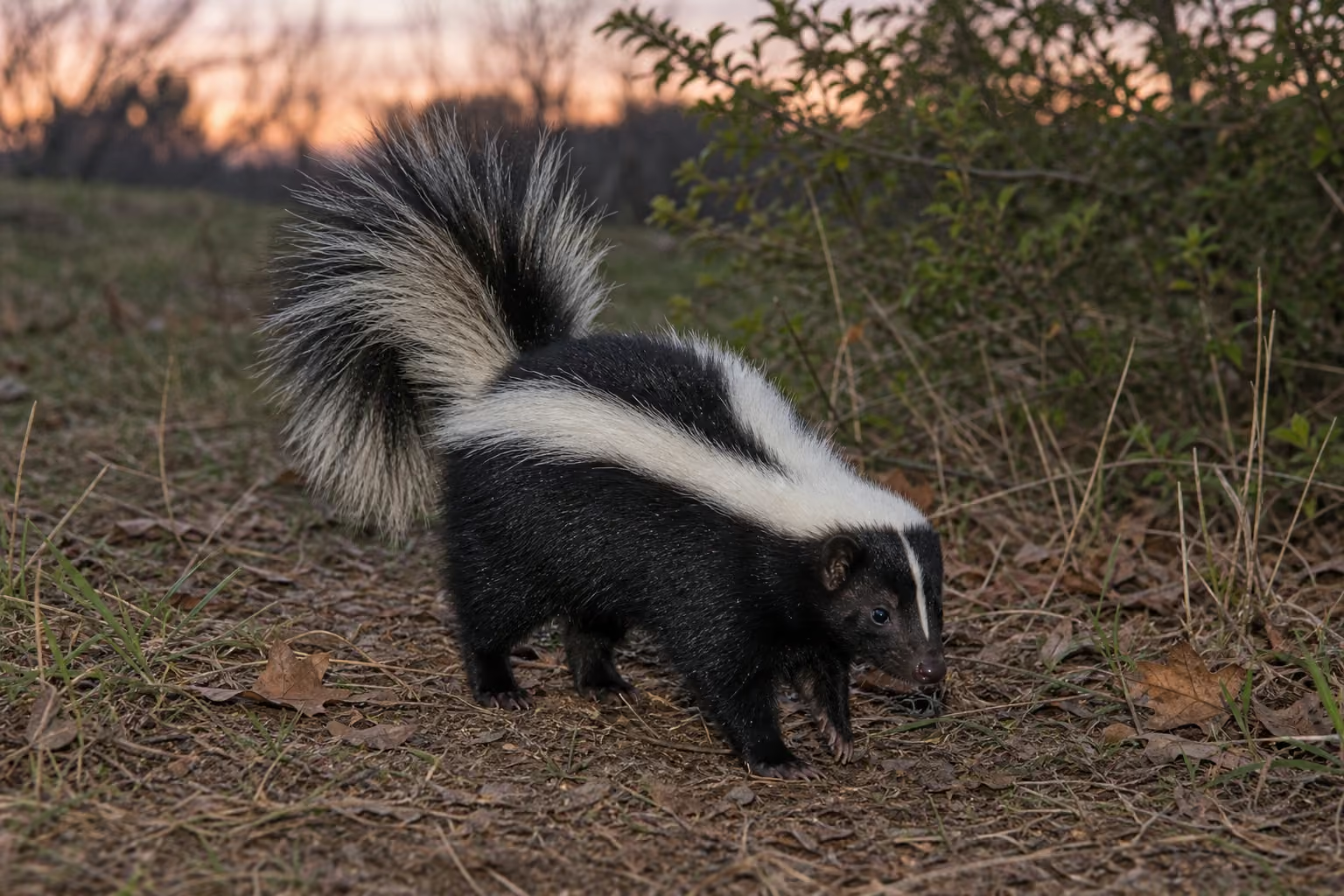
Striped skunk

Details

Striped skunk

Mephitis mephitis

Size
52–77 cm · 1.8–4.5 kg
Diet
Omnivore
Activity
Nocturnal
Sociality
Solitary
Lifespan

A widespread North American skunk with bold black-and-white warning coloration. It avoids many predators with a powerful defensive spray.

View in catalog
Key facts

  • Striped skunk (Mephitis mephitis) is an omnivore animal classified as Mammal · Carnivora · Mephitidae.
  • Primary habitats are forest · grassland · urban, with a range across Nearctic.
  • Activity is nocturnal, sociality is solitary, and conservation status is LC (Least Concern).
  • A widespread North American skunk with bold black-and-white warning coloration.
  • Striped skunks use grasslands, forest edges, farms, suburbs, gardens, and riparian areas.

Range

Habitat range map
Native rangeOccasional / Transient
NearcticNearcticNearcticNearcticNearcticNearcticNearcticNearcticNearcticNearcticNearcticNearcticNearcticNearcticNearcticNearcticNearcticNearcticNearcticNearcticNearcticNearcticNearcticNearcticNearcticNearcticNearcticNearcticNearcticNearcticNearcticNearcticNearcticNearcticNearcticNearcticNearcticNearcticNearcticNearcticNearctic

Map: Ecoregions 2017 © RESOLVE (CC BY 4.0) · Natural Earth (PD)

Details

Habitat

Striped skunks use grasslands, forest edges, farms, suburbs, gardens, and riparian areas. Dens occur in burrows, hollow logs, or spaces under buildings.

Appearance

The body is black with white head markings and back stripes, plus a bushy tail. Stripe width and pattern vary among individuals.

Behavior

They are nocturnal and give warning displays by stomping, raising the tail, and turning the body. If threatened further, they spray from anal scent glands.

Feeding

They eat insects, larvae, small mammals, eggs, fruit, seeds, carrion, and refuse. Digging for grubs and insects is common.

Reproduction

Mating occurs from late winter into spring. Females rear litters in dens, and in cold regions winter activity may be reduced.

Notes

Because they live close to people, striped skunks are locally important in wildlife disease monitoring, including rabies management.