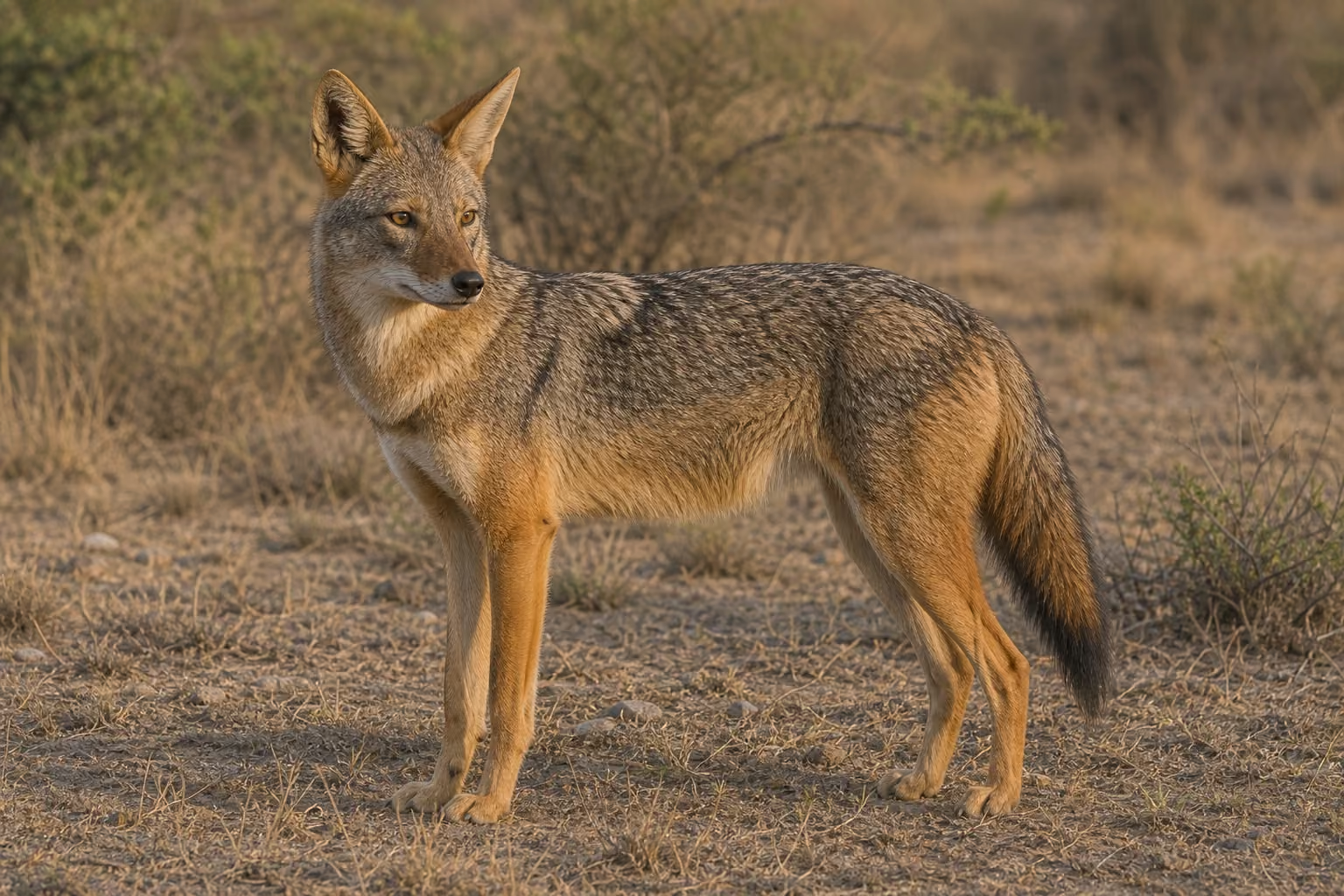
Golden jackal

Details

Golden jackal

Canis aureus

Size
0.7–1.1 m · 7–15 kg
Diet
Omnivore
Activity
Crepuscular
Sociality
Pair
Lifespan

A medium-sized canid of southeastern Europe, North Africa, western Asia, and South Asia. Its broad diet and habitat tolerance make it highly adaptable.

View in catalog
Key facts

  • Golden jackal (Canis aureus) is an omnivore animal classified as Mammal · Carnivora · Canidae.
  • Primary habitats are grassland · savanna · forest · urban, with a range across Palearctic · Indomalayan · Afrotropical.
  • Activity is crepuscular, sociality is pair, and conservation status is LC (Least Concern).
  • A medium-sized canid of southeastern Europe, North Africa, western Asia, and South Asia.
  • Golden jackals use grassland, savanna, farmland, wetlands, forest edges, and settlement margins where cover and feeding areas are close.

Range

Habitat range map
Native rangeOccasional / Transient
PalearcticPalearcticPalearcticPalearcticPalearcticPalearcticPalearcticPalearcticPalearcticPalearcticPalearcticPalearcticPalearcticPalearcticPalearcticPalearcticPalearcticPalearcticPalearcticPalearcticPalearcticPalearcticPalearcticPalearcticAfrotropicalAfrotropicalAfrotropicalAfrotropicalIndomalayanIndomalayanIndomalayanIndomalayanIndomalayanIndomalayanIndomalayanIndomalayanIndomalayanIndomalayanIndomalayanIndomalayanIndomalayanIndomalayanIndomalayan

Map: Ecoregions 2017 © RESOLVE (CC BY 4.0) · Natural Earth (PD)

Details

Habitat

Golden jackals use grassland, savanna, farmland, wetlands, forest edges, and settlement margins where cover and feeding areas are close.

Appearance

They have tawny to gray-brown fur, slim legs, and a body larger than a fox but smaller than a wolf. Coat thickness and color vary seasonally.

Behavior

Pairs or small family groups communicate with howls. Activity often peaks at dawn, dusk, and night.

Feeding

They eat small mammals, birds, reptiles, insects, fruit, carrion, and human refuse. Diet changes quickly with local resources.

Reproduction

Breeding pairs rear pups in dens, sometimes with help from older offspring. Family groups defend territories together.

Notes

In parts of Europe the species has expanded, drawing attention as a canid able to live in agricultural and urban-edge landscapes.