Striped hyena

Details

Striped hyena

Hyaena hyaena

Size
0.9–1.3 m · 22–55 kg
Diet
Carnivore
Activity
Nocturnal
Sociality
Solitary
Lifespan
10-12 years

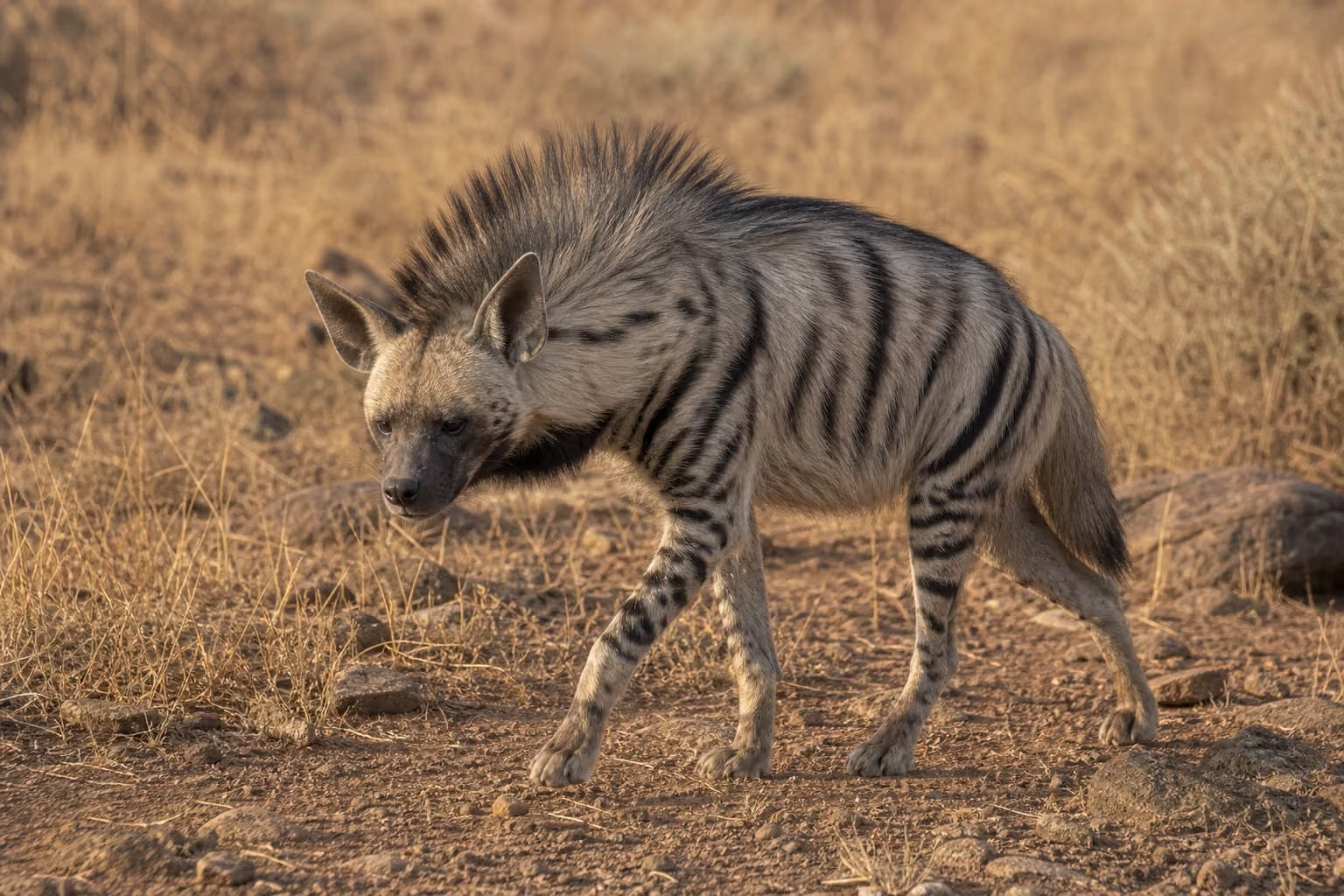
The striped hyena is a dry-country carnivore with dark stripes and a raised mane. At night it ranges widely in search of carrion and small prey.

View in catalog
Key facts

  • Striped hyena (Hyaena hyaena) is a carnivore animal classified as Mammal · Carnivora · Hyaenidae.
  • Primary habitats are desert · savanna · grassland, with a range across Afrotropical · Palearctic · Indomalayan.
  • Activity is nocturnal, sociality is solitary, and conservation status is NT (Near Threatened).
  • The striped hyena is a dry-country carnivore with dark stripes and a raised mane.
  • It occurs across North Africa, the Middle East, Central Asia, and parts of the Indian subcontinent.
  • Typical lifespan: 10-12 years

Range

Habitat range map
Native rangeOccasional / Transient
PalearcticPalearcticPalearcticPalearcticPalearcticPalearcticPalearcticPalearcticPalearcticPalearcticPalearcticPalearcticPalearcticPalearcticPalearcticPalearcticPalearcticPalearcticPalearcticPalearcticPalearcticPalearcticPalearcticPalearcticAfrotropicalAfrotropicalAfrotropicalAfrotropicalIndomalayanIndomalayanIndomalayanIndomalayanIndomalayanIndomalayanIndomalayanIndomalayanIndomalayanIndomalayanIndomalayanIndomalayanIndomalayanIndomalayanIndomalayan

Map: Ecoregions 2017 © RESOLVE (CC BY 4.0) · Natural Earth (PD)

Details

Habitat

It occurs across North Africa, the Middle East, Central Asia, and parts of the Indian subcontinent. Dry grassland, savanna, semi-desert, scrub, caves, and old burrows are used.

Appearance

Length 85-130 cm; weight 22-55 kg. Grey fur is crossed by dark stripes, and a long dorsal mane can be raised to appear larger. Long forelegs give the back a sloping profile.

Behavior

Nocturnal and mostly solitary, it moves cautiously through open terrain. When threatened it raises the mane and withdraws in a low posture.

Feeding

A carnivore, it eats carrion, small to medium animals, bones, and sometimes fruit. Strong jaws crack bones and help it use sparse food resources.

Reproduction

Females give birth in dens and nurse the cubs for an extended period. Young grow in dark shelter before exploring nearby ground and learning food sources.

Notes

It is listed as Near Threatened. Persecution, road mortality, and reduced food resources are pressures, though it plays an important scavenging role.