Orange sea pen

Details

Orange sea pen

Ptilosarcus gurneyi

Size
15–50 cm · 20–200 g
Diet
Filter Feeder
Activity
Cathemeral
Sociality
Colony
Lifespan
5–15 years

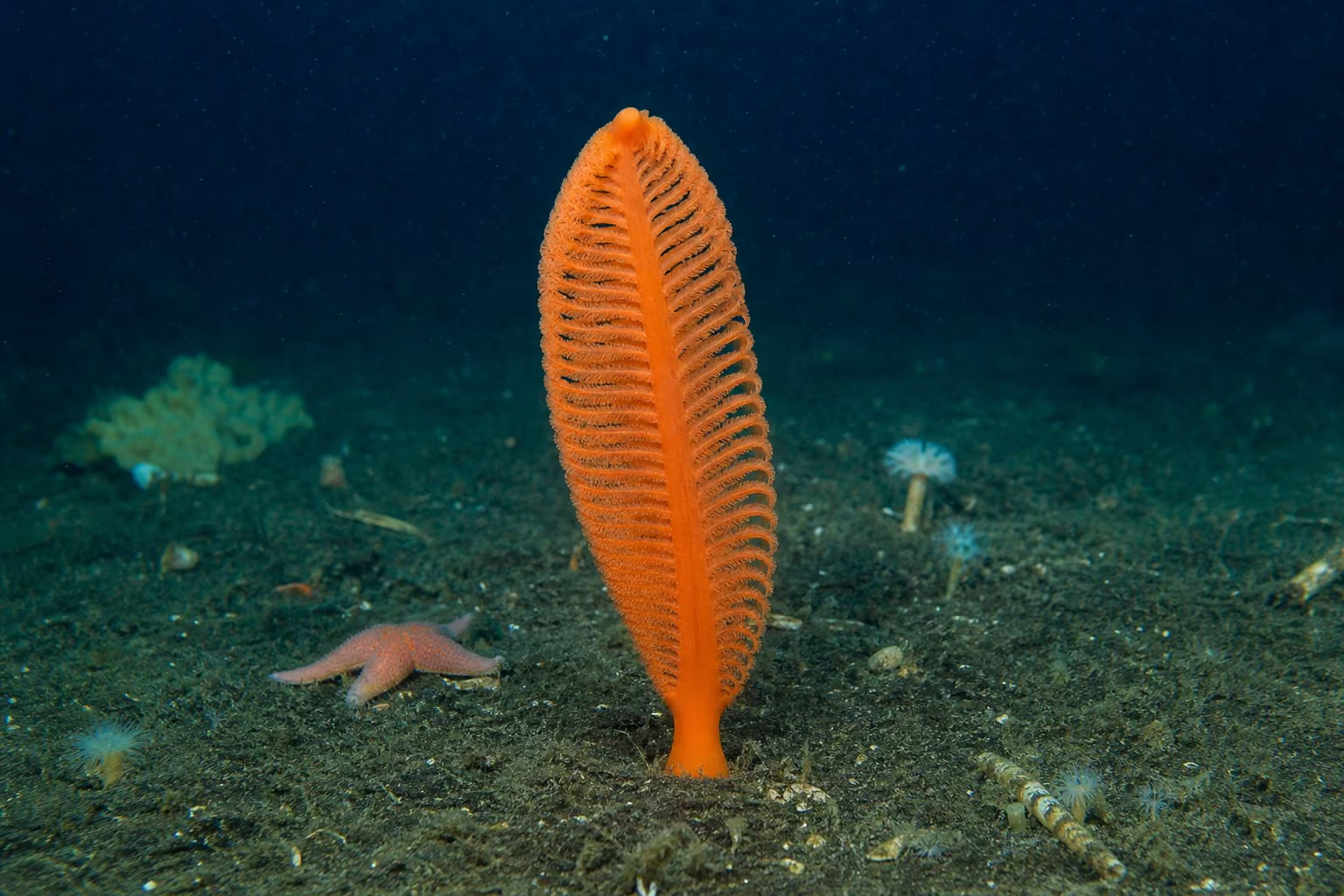
The orange sea pen is a colonial cnidarian shaped like a feather quill. Anchored in soft sediment, it catches suspended food with rows of tiny polyps.

View in catalog
Key facts

  • Orange sea pen (Ptilosarcus gurneyi) is a filter feeder animal classified as Invertebrate · Scleralcyonacea · Pennatulidae.
  • Primary habitats are coast · open ocean, with a range across Pacific Ocean.
  • Activity is cathemeral, sociality is colony, and conservation status is LC (Least Concern).
  • The orange sea pen is a colonial cnidarian shaped like a feather quill.
  • It lives on Pacific muddy and sandy bottoms, bays, and deeper coastal seafloors.
  • Typical lifespan: 5–15 years

Range

Habitat range map
Native rangeOccasional / Transient
Pacific OceanPacific OceanPacific Ocean

Map: Ecoregions 2017 © RESOLVE (CC BY 4.0) · Natural Earth (PD)

Details

Habitat

It lives on Pacific muddy and sandy bottoms, bays, and deeper coastal seafloors. Soft sediment and steady currents are important.

Appearance

Height 15-50 cm; weight 20-200 g. Orange side branches extend from a central stalk, each lined with small polyps. A fleshy lower peduncle anchors the colony in the bottom.

Behavior

Cathemeral and colonial, it opens polyps when currents carry food. When disturbed it can contract and withdraw toward the sediment.

Feeding

A filter-feeder, it captures plankton and organic particles with tentacled polyps. The colony presents its branches into the flow to gather food efficiently.

Reproduction

Adults release eggs and sperm into the water, while the colony also grows by adding polyps. Larvae drift before settling into soft bottom.

Notes

It is listed as Least Concern. Its upright soft-bottom form can be vulnerable to trawling and other seafloor disturbance.