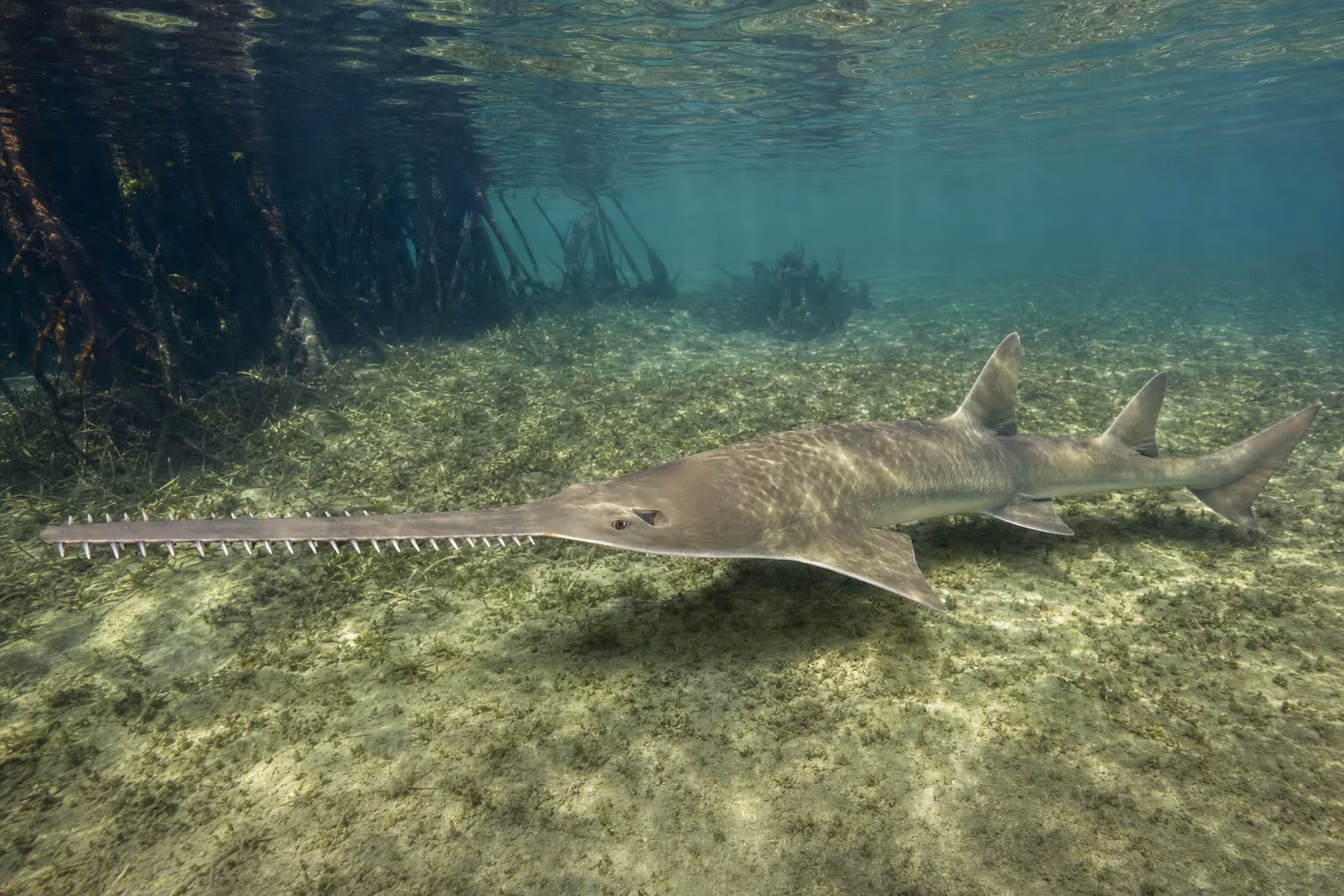
Largetooth sawfish

Details

Largetooth sawfish

Pristis pristis

Size
3–6.5 m · 200–600 kg
Diet
Carnivore
Activity
Cathemeral
Sociality
Loose group
Lifespan
5-20 years

The largetooth sawfish is a huge ray that uses both coastal and freshwater habitats. Its saw-like rostrum detects and strikes prey near the bottom.

View in catalog
Key facts

  • Largetooth sawfish (Pristis pristis) is a carnivore animal classified as Fish · Rhinopristiformes · Pristidae.
  • Primary habitats are coast · freshwater, with a range across Atlantic Ocean · Indian Ocean · Pacific Ocean.
  • Activity is cathemeral, sociality is loose group, and conservation status is CR (Critically Endangered).
  • The largetooth sawfish is a huge ray that uses both coastal and freshwater habitats.
  • It occurs in coasts, estuaries, mangroves, and freshwaters of the Atlantic, Indian, and Pacific regions.
  • Typical lifespan: 5-20 years

Range

Habitat range map
Native rangeOccasional / Transient
Pacific OceanPacific OceanPacific OceanAtlantic OceanAtlantic OceanAtlantic OceanAtlantic OceanAtlantic OceanIndian Ocean

Map: Ecoregions 2017 © RESOLVE (CC BY 4.0) · Natural Earth (PD)

Details

Habitat

It occurs in coasts, estuaries, mangroves, and freshwaters of the Atlantic, Indian, and Pacific regions. Young use shallow, often turbid nursery areas.

Appearance

Length is about 300-650 cm and weight about 200-600 kg. A flattened body and long rostrum edged with tooth-like projections make it unmistakable.

Behavior

It swims slowly near the bottom, sensing prey in sand or mud with the rostrum. It is mostly solitary, though feeding areas can overlap loosely.

Feeding

It is carnivorous, eating fish and crustaceans. The saw can slash at small fish and probe the bottom for hidden prey.

Reproduction

It is live-bearing, with young developing inside the mother before birth. Juveniles grow in shallow coastal and estuarine waters before ranging more widely.

Notes

Its status is listed as Critically Endangered. The rostrum tangles easily in fishing gear, while habitat change and bycatch remain major threats.