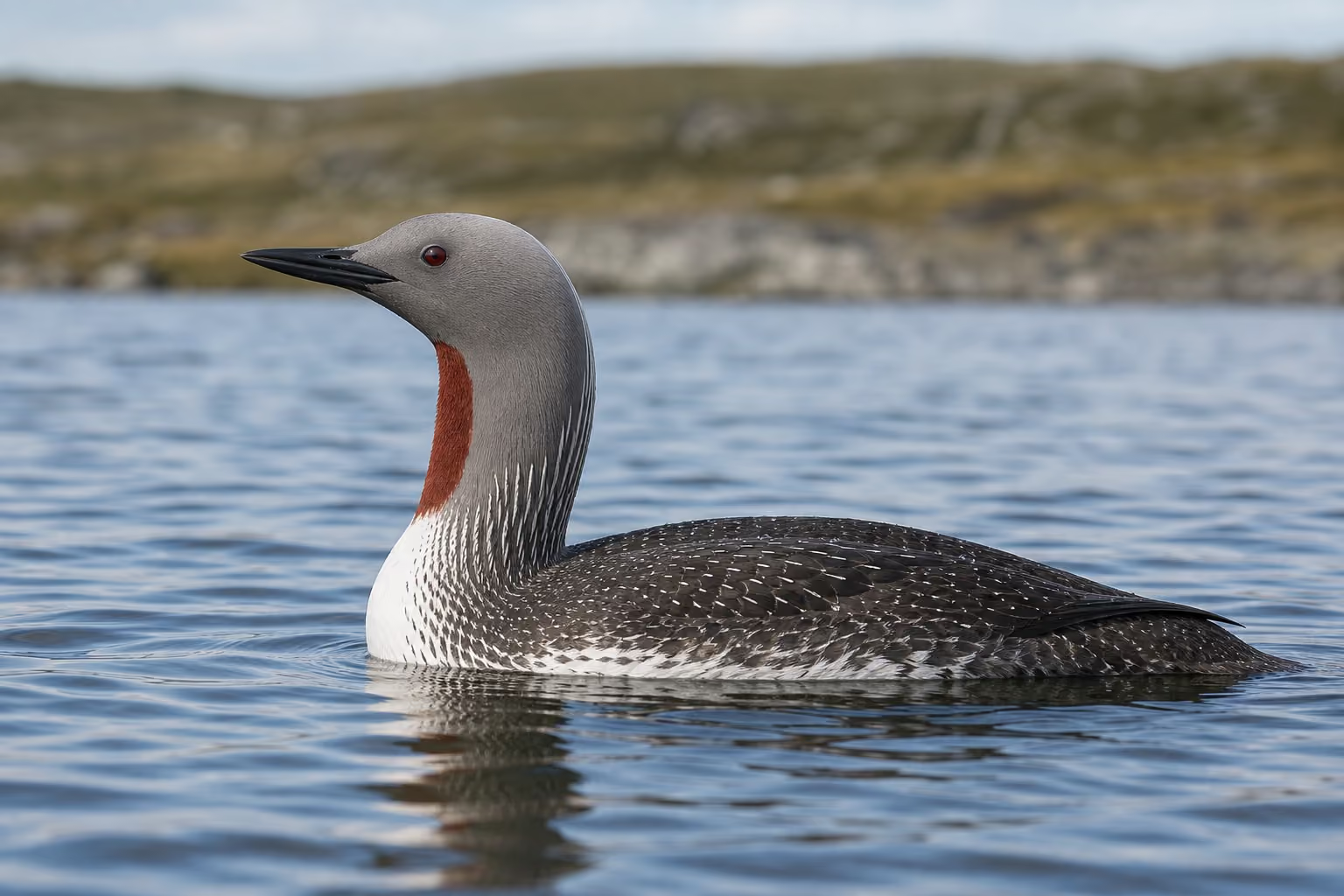
Red-throated loon

Details

Red-throated loon

Gavia stellata

Size
53–69 cm · 1–2.7 kg
Diet
Carnivore
Activity
Diurnal
Sociality
Pair
Lifespan

A small loon that breeds on tundra lakes across the northern hemisphere and winters on coasts, named for its red breeding throat.

View in catalog
Key facts

  • Red-throated loon (Gavia stellata) is a carnivore animal classified as Bird · Gaviiformes · Gaviidae.
  • Primary habitats are freshwater · coast · open ocean, with a range across Nearctic · Palearctic · Arctic Ocean · Atlantic Ocean · Pacific Ocean.
  • Activity is diurnal, sociality is pair, and conservation status is LC (Least Concern).
  • A small loon that breeds on tundra lakes across the northern hemisphere and winters on coasts, named for its red breeding throat.
  • Breeds on small Arctic and subarctic lakes and ponds, then winters in bays, estuaries, and coastal seas.

Range

Habitat range map
Native rangeOccasional / Transient
Pacific OceanPacific OceanPacific OceanAtlantic OceanAtlantic OceanAtlantic OceanAtlantic OceanAtlantic OceanArctic OceanArctic OceanArctic OceanPalearcticPalearcticPalearcticPalearcticPalearcticPalearcticPalearcticPalearcticPalearcticPalearcticPalearcticPalearcticPalearcticPalearcticPalearcticPalearcticPalearcticPalearcticPalearcticPalearcticPalearcticPalearcticPalearcticPalearcticNearcticNearcticNearcticNearcticNearcticNearcticNearcticNearcticNearcticNearcticNearcticNearcticNearcticNearcticNearcticNearcticNearcticNearcticNearcticNearcticNearcticNearcticNearcticNearcticNearcticNearcticNearcticNearcticNearcticNearcticNearcticNearcticNearcticNearcticNearcticNearcticNearcticNearcticNearcticNearcticNearctic

Map: Ecoregions 2017 © RESOLVE (CC BY 4.0) · Natural Earth (PD)

Details

Habitat

Breeds on small Arctic and subarctic lakes and ponds, then winters in bays, estuaries, and coastal seas.

Appearance

It has a slim bill often held slightly upturned. Breeding adults show a gray head and reddish throat; winter birds are plainer.

Behavior

It runs across water to take off and dives after fish. Pairs defend breeding lakes during the nesting season.

Feeding

Small fish dominate the diet, with aquatic insects, crustaceans, and amphibians also taken.

Reproduction

Nests are placed low by water. Both parents incubate and bring small fish to the chicks.

Notes

Smaller than most loons, it often winters in shallow bays and estuaries. Oil pollution and fishing nets are important threats.