Red-eared slider

Details

Red-eared slider

Trachemys scripta

Size
13–30 cm · 0.2–2 kg
Diet
Omnivore
Activity
Diurnal
Sociality
Loose group
Lifespan
20–40 years

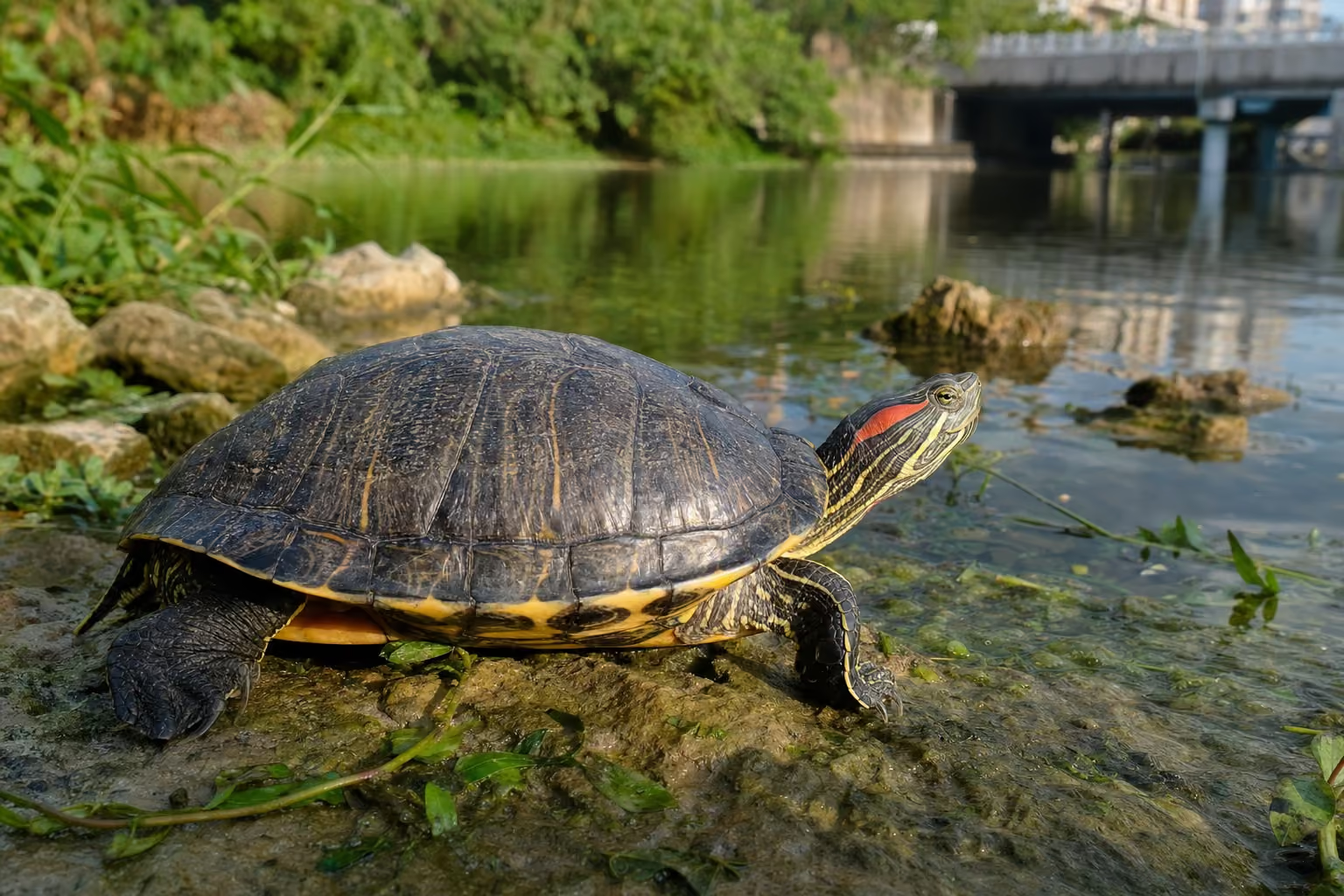
The red-eared slider is a freshwater turtle recognized by the red patch behind each eye. Hardy and adaptable, it has spread far beyond its native range.

View in catalog
Key facts

  • Red-eared slider (Trachemys scripta) is an omnivore animal classified as Reptile · Testudines · Emydidae.
  • Primary habitats are freshwater · urban, with a range across Nearctic · Palearctic · Indomalayan.
  • Activity is diurnal, sociality is loose group, and conservation status is LC (Least Concern).
  • The red-eared slider is a freshwater turtle recognized by the red patch behind each eye.
  • Native to the Nearctic, it has been introduced in Palearctic and Indomalayan regions and elsewhere.
  • Typical lifespan: 20–40 years

Range

Habitat range map
Native rangeOccasional / Transient
PalearcticPalearcticPalearcticPalearcticPalearcticPalearcticPalearcticPalearcticPalearcticPalearcticPalearcticPalearcticPalearcticPalearcticPalearcticPalearcticPalearcticPalearcticPalearcticPalearcticPalearcticPalearcticPalearcticPalearcticNearcticNearcticNearcticNearcticNearcticNearcticNearcticNearcticNearcticNearcticNearcticNearcticNearcticNearcticNearcticNearcticNearcticNearcticNearcticNearcticNearcticNearcticNearcticNearcticNearcticNearcticNearcticNearcticNearcticNearcticNearcticNearcticNearcticNearcticNearcticNearcticNearcticNearcticNearcticNearcticNearcticIndomalayanIndomalayanIndomalayanIndomalayanIndomalayanIndomalayanIndomalayanIndomalayanIndomalayanIndomalayanIndomalayanIndomalayanIndomalayanIndomalayanIndomalayan

Map: Ecoregions 2017 © RESOLVE (CC BY 4.0) · Natural Earth (PD)

Details

Habitat

Native to the Nearctic, it has been introduced in Palearctic and Indomalayan regions and elsewhere. Ponds, rivers, canals, and basking sites are key.

Appearance

Shell length 13-30 cm; weight 200 g-2 kg. The greenish-brown shell is striped, and a red band sits behind the eye. Webbed feet aid swimming.

Behavior

Diurnal and loosely social, it basks on logs and rocks. When alarmed it slides quickly into water.

Feeding

An omnivore, it eats aquatic plants, algae, insects, fish, and carrion. Young take more animal food, while adults include more plants.

Reproduction

Females dig nests on land and lay eggs. Hatchlings move to water and grow in shallow areas.

Notes

It is listed as Least Concern. Released pets have established invasive populations that can affect native turtles and aquatic ecosystems.