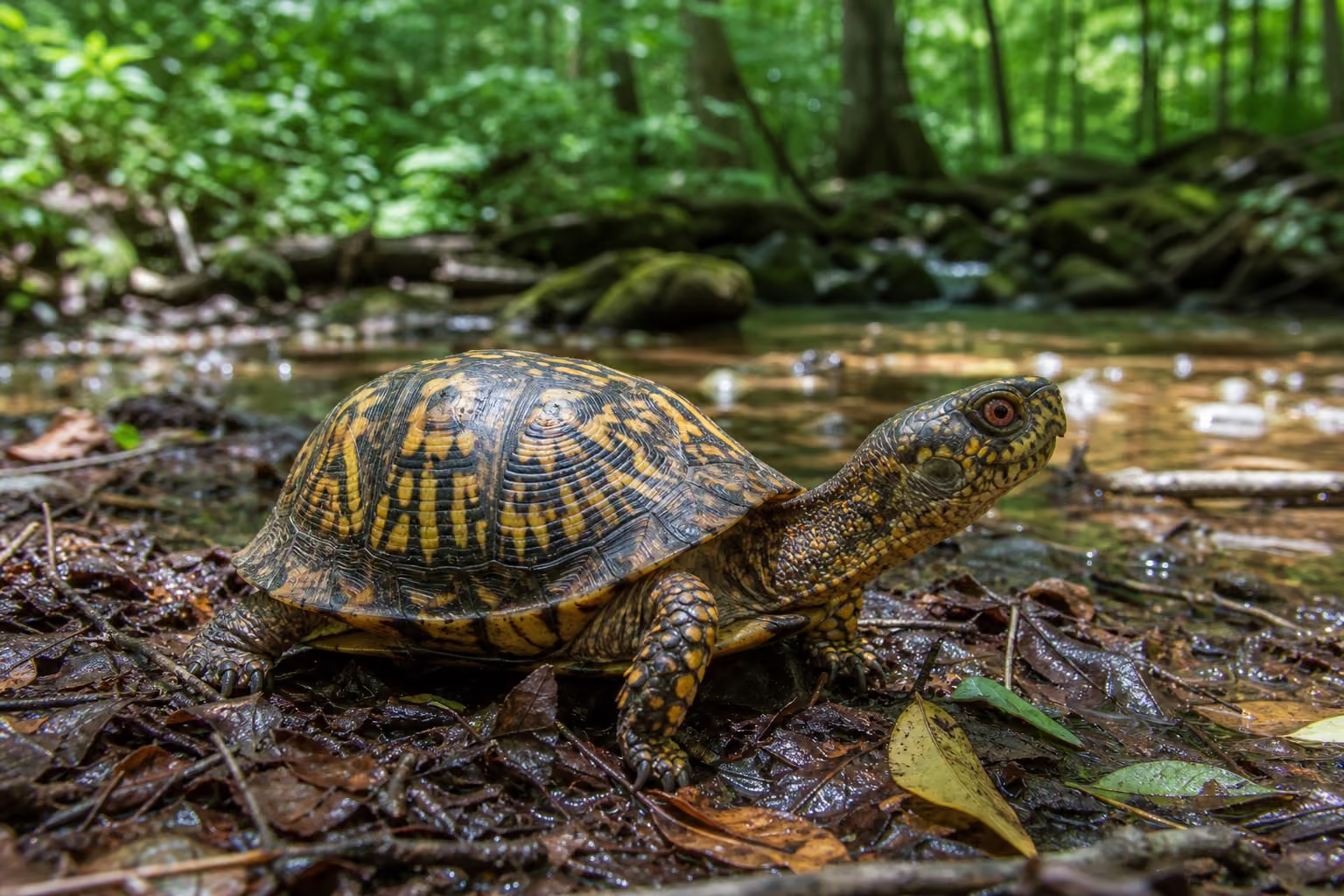
Eastern box turtle

Details

Eastern box turtle

Terrapene carolina

Size
11–20 cm · 300–900 g
Diet
Omnivore
Activity
Diurnal
Sociality
Solitary
Lifespan
10-40 years

The eastern box turtle is a mostly terrestrial turtle of Nearctic forests and freshwater edges. Diurnal and solitary, it can close its shell tightly for defense.

View in catalog
Key facts

  • Eastern box turtle (Terrapene carolina) is an omnivore animal classified as Reptile · Testudines · Emydidae.
  • Primary habitats are forest · freshwater, with a range across Nearctic.
  • Activity is diurnal, sociality is solitary, and conservation status is VU (Vulnerable).
  • The eastern box turtle is a mostly terrestrial turtle of Nearctic forests and freshwater edges.
  • It uses deciduous forest, edges, moist meadows, shallow wetlands, and stream margins.
  • Typical lifespan: 10-40 years

Range

Habitat range map
Native rangeOccasional / Transient
NearcticNearcticNearcticNearcticNearcticNearcticNearcticNearcticNearcticNearcticNearcticNearcticNearcticNearcticNearcticNearcticNearcticNearcticNearcticNearcticNearcticNearcticNearcticNearcticNearcticNearcticNearcticNearcticNearcticNearcticNearcticNearcticNearcticNearcticNearcticNearcticNearcticNearcticNearcticNearcticNearctic

Map: Ecoregions 2017 © RESOLVE (CC BY 4.0) · Natural Earth (PD)

Details

Habitat

It uses deciduous forest, edges, moist meadows, shallow wetlands, and stream margins. Damp soil, leaf litter, sun, and shade all matter.

Appearance

Shell length is about 11-20 cm and weight about 300-900 g. A high domed shell and hinged plastron are key traits, with yellow or orange markings varying widely.

Behavior

It walks slowly by day and buries into leaves or soil during heat or drought. Individuals are solitary and may use small home areas for years.

Feeding

It is omnivorous, eating worms, insects, fungi, fruit, and soft plants. The balance of animal and plant foods changes with season.

Reproduction

Females dig soil nests and lay eggs. Young turtles hide in leaf litter or grass and feed on small invertebrates and other foods.

Notes

Its status is listed as Vulnerable. Roads, collection, and habitat fragmentation are serious because long-lived, slow-maturing turtles recover slowly.