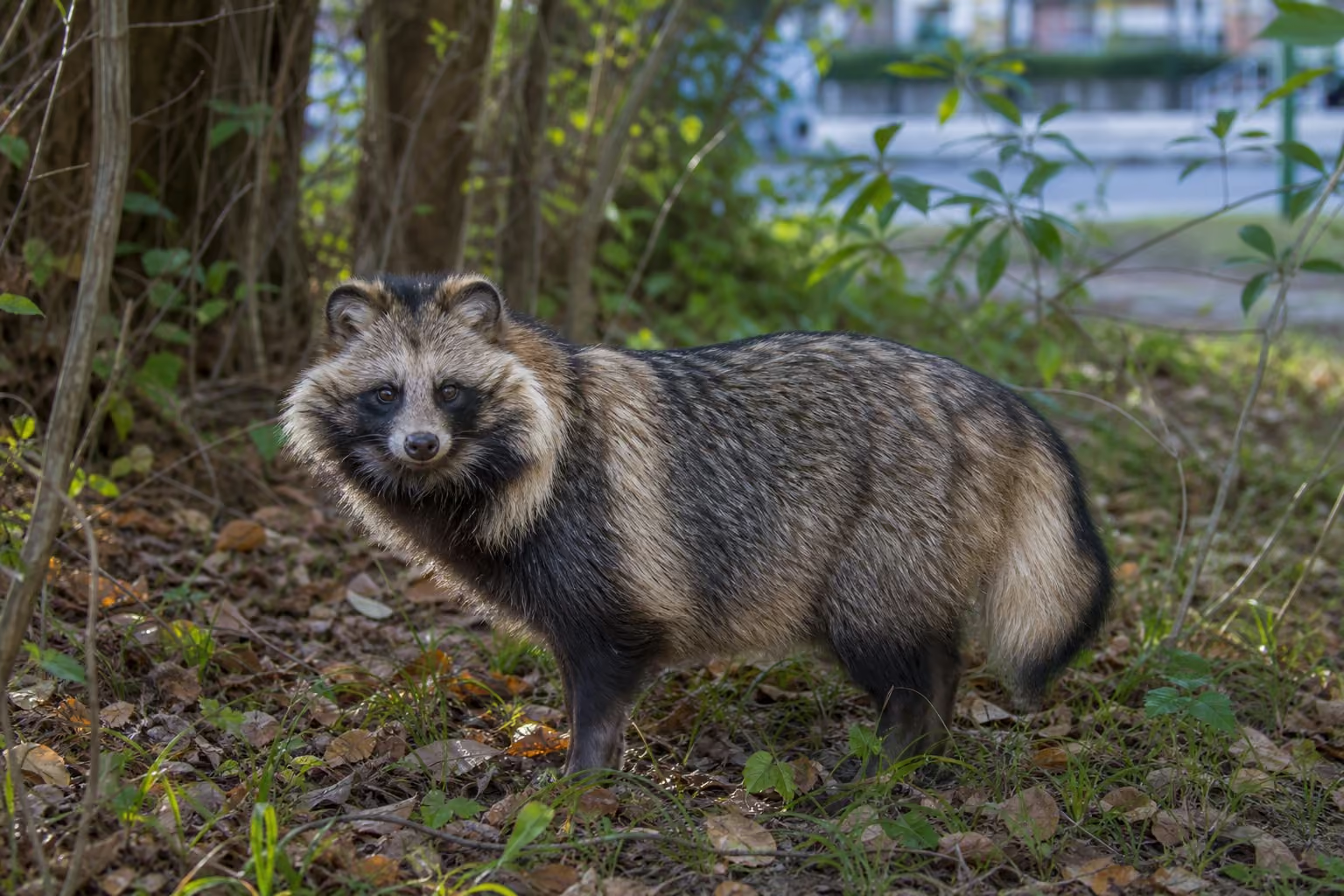
Raccoon dog

Details

Raccoon dog

Nyctereutes procyonoides

Size
50–68 cm · 3–10 kg
Diet
Omnivore
Activity
Nocturnal
Sociality
Pair
Lifespan
10-20 years

The raccoon dog is a canid of Eurasian forests and urban edges. Nocturnal and often pair-based, it is highly adaptable.

View in catalog
Key facts

  • Raccoon dog (Nyctereutes procyonoides) is an omnivore animal classified as Mammal · Carnivora · Canidae.
  • Primary habitats are forest · urban, with a range across Palearctic.
  • Activity is nocturnal, sociality is pair, and conservation status is LC (Least Concern).
  • The raccoon dog is a canid of Eurasian forests and urban edges.
  • It uses forest, farmland edges, and green spaces near towns.
  • Typical lifespan: 10-20 years

Range

Habitat range map
Native rangeOccasional / Transient
PalearcticPalearcticPalearcticPalearcticPalearcticPalearcticPalearcticPalearcticPalearcticPalearcticPalearcticPalearcticPalearcticPalearcticPalearcticPalearcticPalearcticPalearcticPalearcticPalearcticPalearcticPalearcticPalearcticPalearctic

Map: Ecoregions 2017 © RESOLVE (CC BY 4.0) · Natural Earth (PD)

Details

Habitat

It uses forest, farmland edges, and green spaces near towns. Water, thickets, and cover support feeding and resting.

Appearance

Body length is about 50-68 cm and weight about 3-10 kg. Short legs, a rounded body, dark facial mask, and thick fur are distinctive.

Behavior

Nocturnal animals may move as pairs or small family units. Dens and thickets provide shelter, and activity changes with season.

Feeding

It is omnivorous, eating fruit, insects, small animals, fish, and fallen foods. Near settlements it may also use scraps or crops.

Reproduction

Young are born in dens and are often cared for by both parents. As they grow, they follow adults on night foraging trips.

Notes

Its status is listed as Least Concern. Its adaptability is high, but road mortality and contact with people can be local issues.