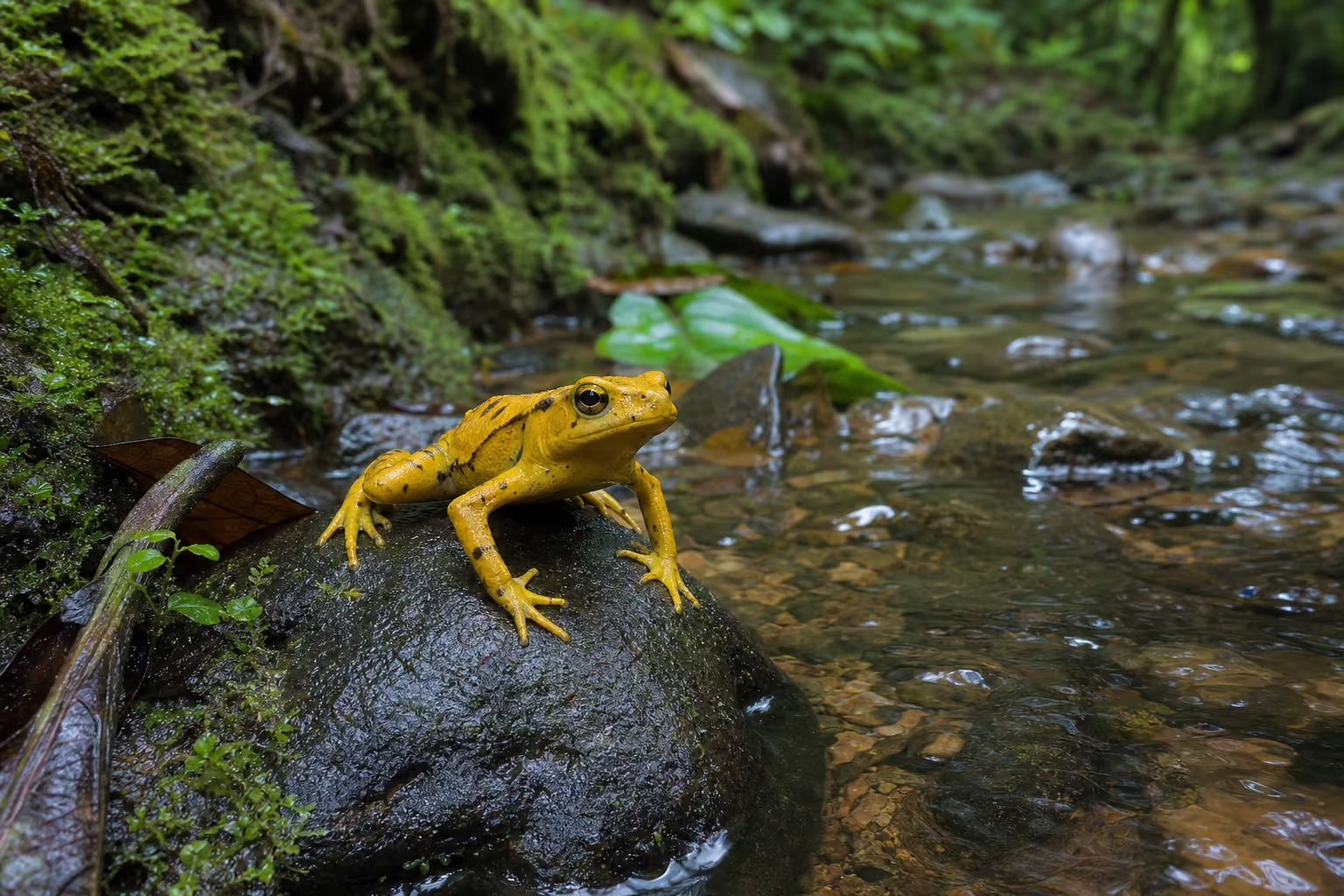
Panamanian golden frog

Details

Panamanian golden frog

Atelopus zeteki

Size
3–6 cm · 3–15 g
Diet
Carnivore
Activity
Nocturnal
Sociality
Solitary
Lifespan
4-15 years

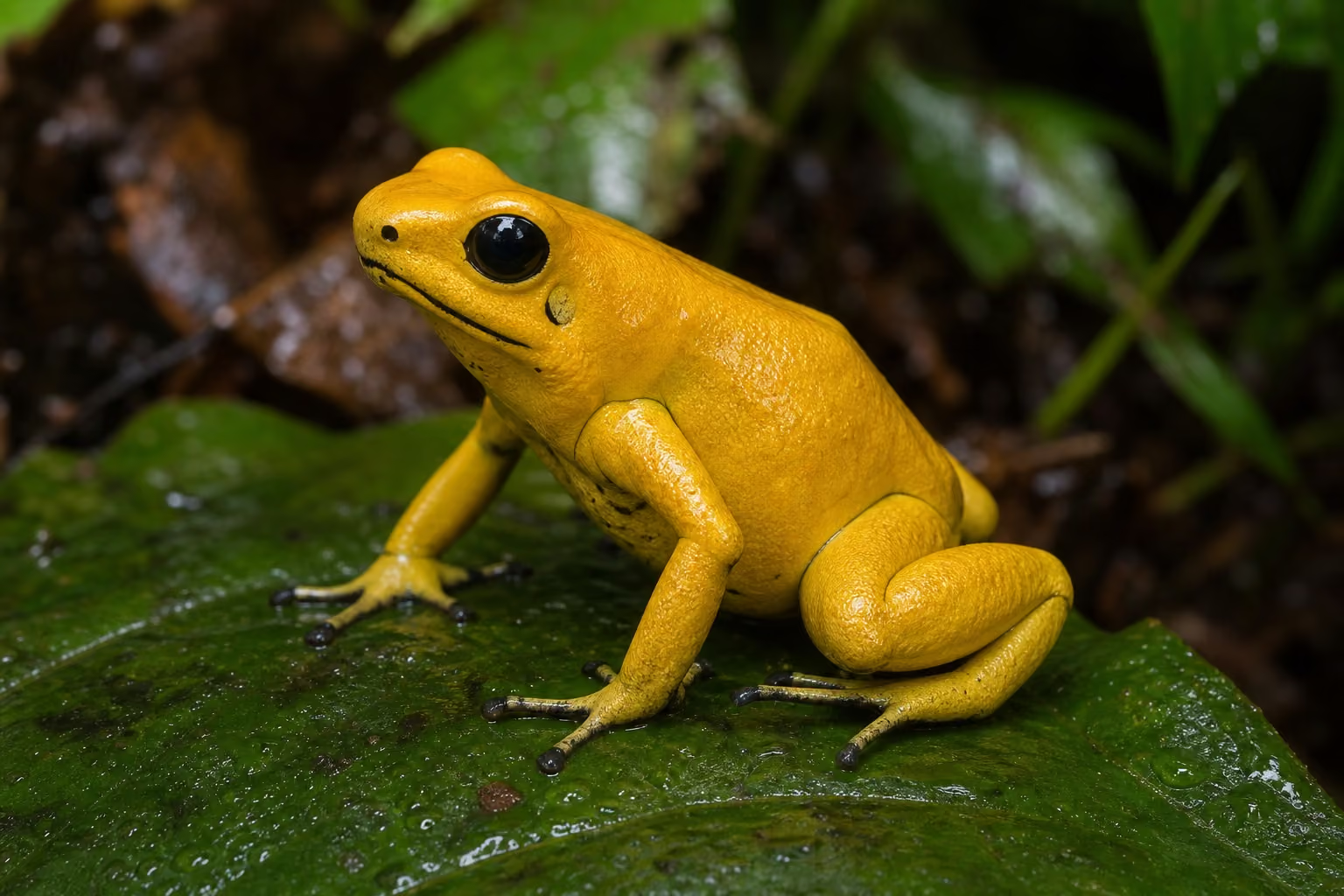
The Panamanian golden frog is a small toad-like amphibian linked to Neotropical forest streams. It is treated here as a solitary nocturnal carnivore.

View in catalog
Key facts

  • Panamanian golden frog (Atelopus zeteki) is a carnivore animal classified as Amphibian · Anura · Bufonidae.
  • Primary habitats are freshwater · forest, with a range across Neotropical.
  • Activity is nocturnal, sociality is solitary, and conservation status is CR (Critically Endangered).
  • The Panamanian golden frog is a small toad-like amphibian linked to Neotropical forest streams.
  • It uses clear forest streams and damp ravines.
  • Typical lifespan: 4-15 years

Range

Habitat range map
Native rangeOccasional / Transient
NeotropicalNeotropicalNeotropicalNeotropicalNeotropicalNeotropicalNeotropicalNeotropical

Map: Ecoregions 2017 © RESOLVE (CC BY 4.0) · Natural Earth (PD)

Details

Habitat

It uses clear forest streams and damp ravines. Both freshwater and surrounding forest are necessary for its life cycle.

Appearance

Body length is about 3-6 cm and weight about 3-15 g. Golden to yellow skin with dark marks likely functions as warning coloration.

Behavior

It is solitary and treated as nocturnal. Along noisy streams, it can use visual signals such as forelimb waving.

Feeding

It is carnivorous, taking small insects and other invertebrates. It forages on damp ground near streams.

Reproduction

Breeding is tied to freshwater edges, and eggs or larvae depend on aquatic habitat. Its life history is adapted to flowing-water settings.

Notes

Its conservation status is CR. Habitat change and disease have made conservation breeding especially important.