Amazon milk frog

Details

Amazon milk frog

Trachycephalus resinifictrix

Size
6–10 cm · 10–50 g
Diet
Carnivore
Activity
Nocturnal
Sociality
Solitary
Lifespan
4-15 years

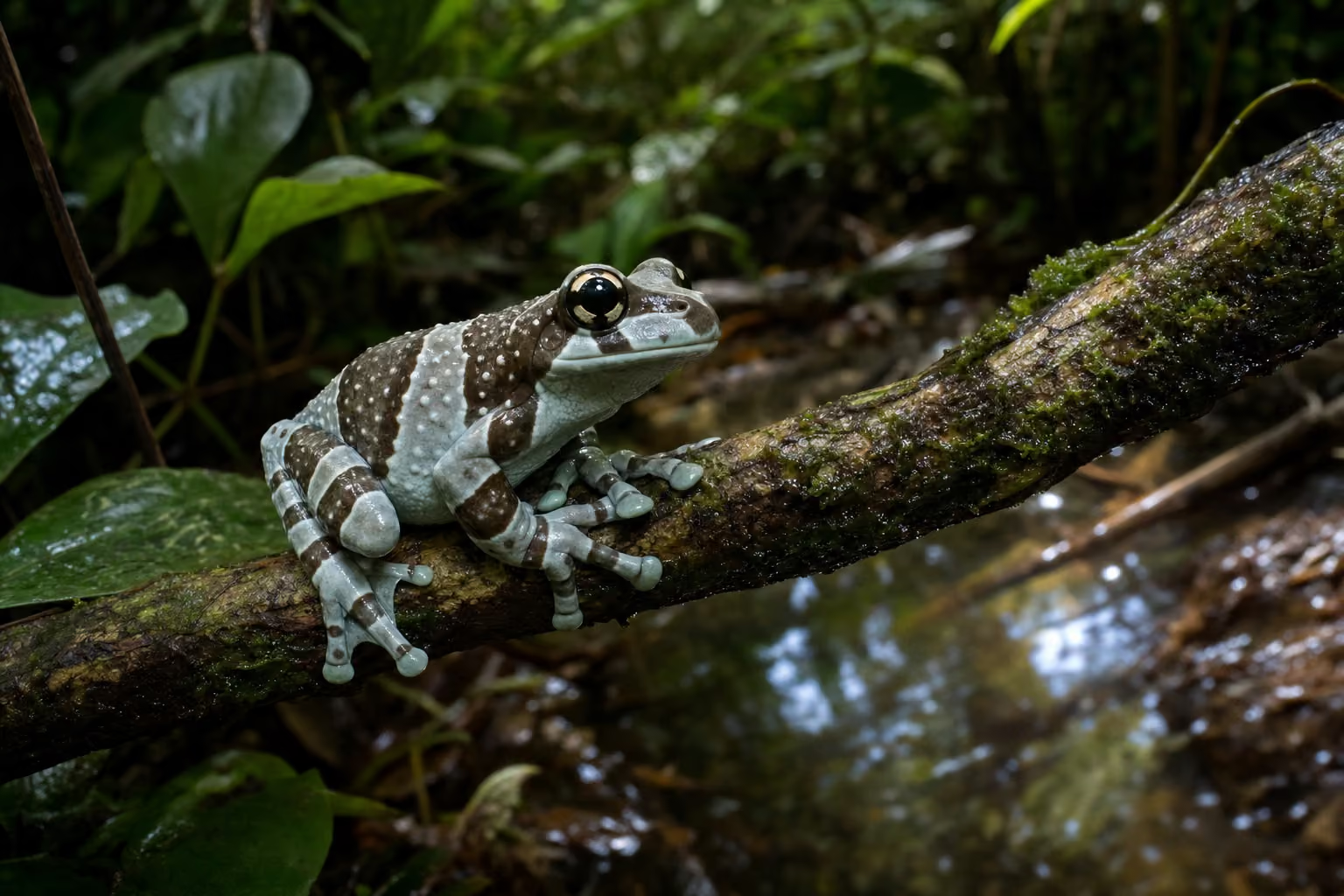
The Amazon milk frog is a tree frog of Neotropical forest and freshwater habitats. It is a solitary nocturnal carnivore.

View in catalog
Key facts

  • Amazon milk frog (Trachycephalus resinifictrix) is a carnivore animal classified as Amphibian · Anura · Hylidae.
  • Primary habitats are forest · freshwater, with a range across Neotropical.
  • Activity is nocturnal, sociality is solitary, and conservation status is LC (Least Concern).
  • The Amazon milk frog is a tree frog of Neotropical forest and freshwater habitats.
  • It lives in humid Amazonian forest, using tree holes and water-filled cavities.
  • Typical lifespan: 4-15 years

Range

Habitat range map
Native rangeOccasional / Transient
NeotropicalNeotropicalNeotropicalNeotropicalNeotropicalNeotropicalNeotropicalNeotropical

Map: Ecoregions 2017 © RESOLVE (CC BY 4.0) · Natural Earth (PD)

Details

Habitat

It lives in humid Amazonian forest, using tree holes and water-filled cavities. Standing water in trees is important for breeding.

Appearance

Body length is about 6-10 cm and weight about 10-50 g. The gray-blue to greenish body has dark bands and can release a white defensive secretion.

Behavior

It is nocturnal and solitary. By day it rests in arboreal shelters, then climbs branches and trunks at night to hunt.

Feeding

It is carnivorous, eating insects and other small invertebrates. A sticky tongue captures nearby prey.

Reproduction

Eggs are laid in water-filled tree holes or similar pools. Tadpoles develop there, while males call from breeding sites.

Notes

Its conservation status is LC. The name milk frog refers to the pale defensive secretion released from the skin.