Painted turtle

Details

Painted turtle

Chrysemys picta

Size
10–25 cm · 300–500 g
Diet
Omnivore
Activity
Diurnal
Sociality
Loose group
Lifespan
20–40 years

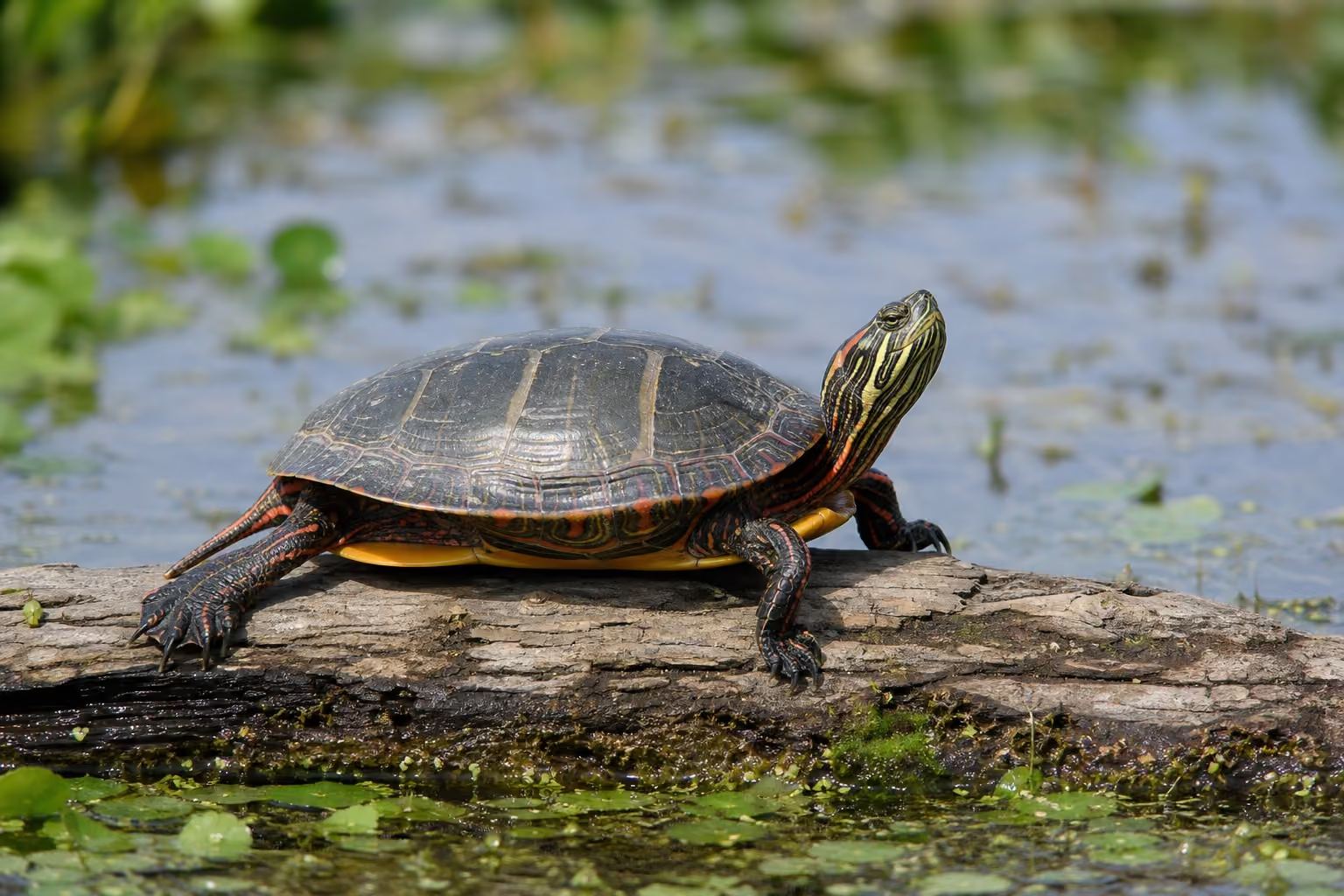
The painted turtle is a small North American freshwater turtle marked with red and yellow. It basks on logs and feeds on plants and small animals in quiet water.

View in catalog
Key facts

  • Painted turtle (Chrysemys picta) is an omnivore animal classified as Reptile · Testudines · Emydidae.
  • Primary habitats are freshwater, with a range across Nearctic.
  • Activity is diurnal, sociality is loose group, and conservation status is LC (Least Concern).
  • The painted turtle is a small North American freshwater turtle marked with red and yellow.
  • It inhabits Nearctic ponds, lakes, marshes, and slow rivers.
  • Typical lifespan: 20–40 years

Range

Habitat range map
Native rangeOccasional / Transient
NearcticNearcticNearcticNearcticNearcticNearcticNearcticNearcticNearcticNearcticNearcticNearcticNearcticNearcticNearcticNearcticNearcticNearcticNearcticNearcticNearcticNearcticNearcticNearcticNearcticNearcticNearcticNearcticNearcticNearcticNearcticNearcticNearcticNearcticNearcticNearcticNearcticNearcticNearcticNearcticNearctic

Map: Ecoregions 2017 © RESOLVE (CC BY 4.0) · Natural Earth (PD)

Details

Habitat

It inhabits Nearctic ponds, lakes, marshes, and slow rivers. Shallow vegetated water with logs or rocks for basking is favored.

Appearance

Shell length 10-25 cm; weight 300-500 g. The smooth dark shell has red markings along the edge, and yellow lines mark the head and neck. The body is flattened for swimming.

Behavior

Diurnal and loosely social, it often basks in groups on sunny days. At danger it slides quickly into the water.

Feeding

An omnivore, it eats aquatic plants, algae, insects, snails, and carrion. Young turtles tend to take more animal food.

Reproduction

Females dig nests on land and lay eggs in soil. Hatchlings emerge and move toward water.

Notes

It is listed as Least Concern. Road mortality of nesting females and wetland loss can still affect local populations.