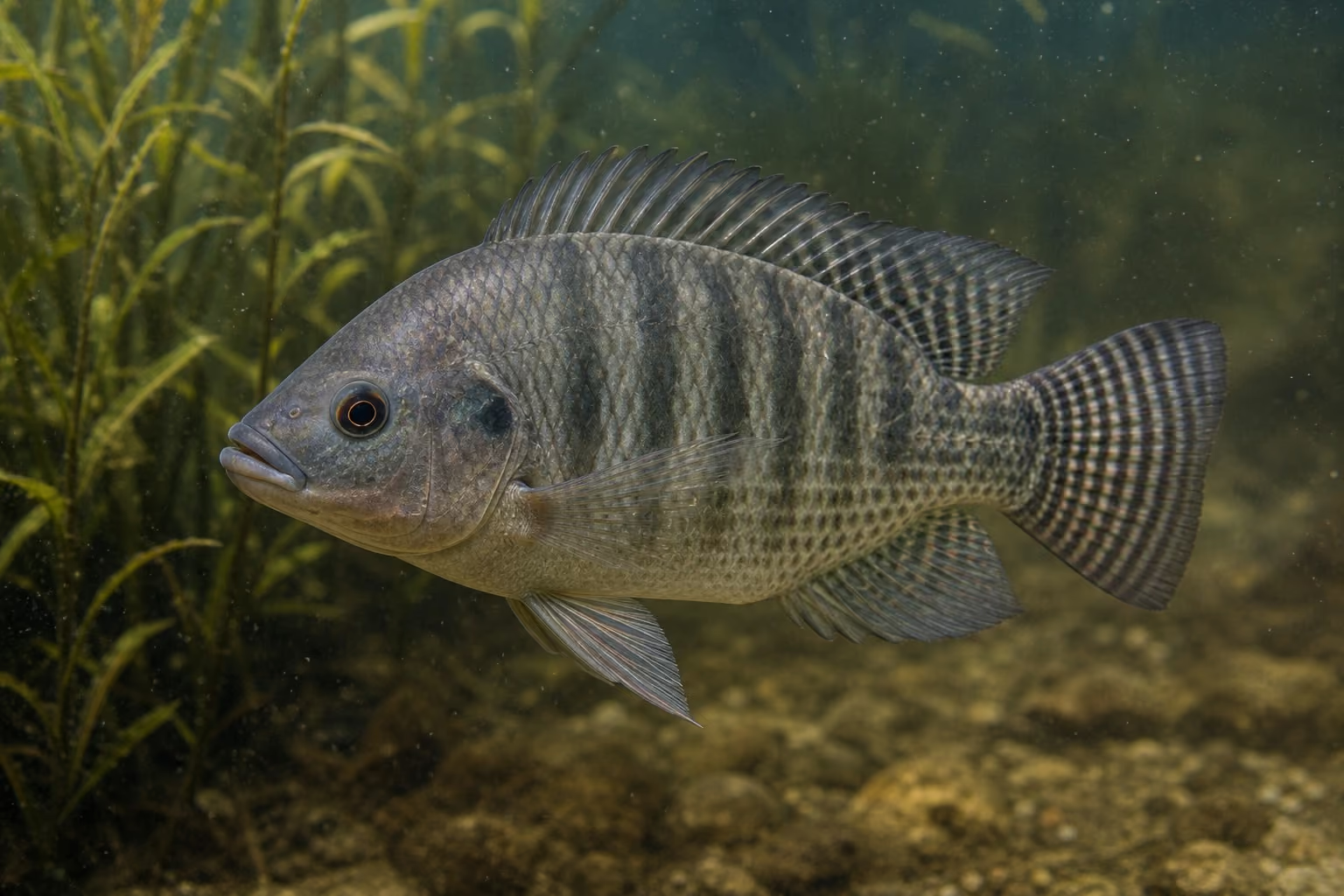
Nile tilapia

Details

Nile tilapia

Oreochromis niloticus

Size
20–60 cm · 0.3–4.3 kg
Diet
Omnivore
Activity
Diurnal
Sociality
Loose group
Lifespan

A hardy African freshwater fish and one of the world's most important aquaculture species. It grows quickly in warm lakes, rivers, ponds, and farms.

View in catalog
Key facts

  • Nile tilapia (Oreochromis niloticus) is an omnivore animal classified as Fish · Cichliformes · Cichlidae.
  • Primary habitats are freshwater, with a range across Afrotropical · Indomalayan · Neotropical.
  • Activity is diurnal, sociality is loose group, and conservation status is LC (Least Concern).
  • A hardy African freshwater fish and one of the world's most important aquaculture species.
  • Native to the Nile basin and East African waters, it now occurs widely in tropical and subtropical reservoirs, rivers, ponds, and aquaculture systems.

Range

Habitat range map
Native rangeOccasional / Transient
NeotropicalNeotropicalNeotropicalNeotropicalNeotropicalNeotropicalNeotropicalNeotropicalAfrotropicalAfrotropicalAfrotropicalAfrotropicalIndomalayanIndomalayanIndomalayanIndomalayanIndomalayanIndomalayanIndomalayanIndomalayanIndomalayanIndomalayanIndomalayanIndomalayanIndomalayanIndomalayanIndomalayan

Map: Ecoregions 2017 © RESOLVE (CC BY 4.0) · Natural Earth (PD)

Details

Habitat

Native to the Nile basin and East African waters, it now occurs widely in tropical and subtropical reservoirs, rivers, ponds, and aquaculture systems.

Appearance

The body is deep and laterally compressed, with a long dorsal fin. Vertical bars cross the body, and fine stripes mark the tail.

Behavior

It forms loose groups in shallow water. Breeding males excavate nest pits and defend small territories.

Feeding

It eats algae, plant material, plankton, and small invertebrates, and adapts well to formulated feeds in farms.

Reproduction

Females mouthbrood fertilized eggs and young fry. Warm water allows repeated breeding cycles.

Notes

The species is valuable for food production, but introduced populations can compete with native fishes and alter ecosystems.