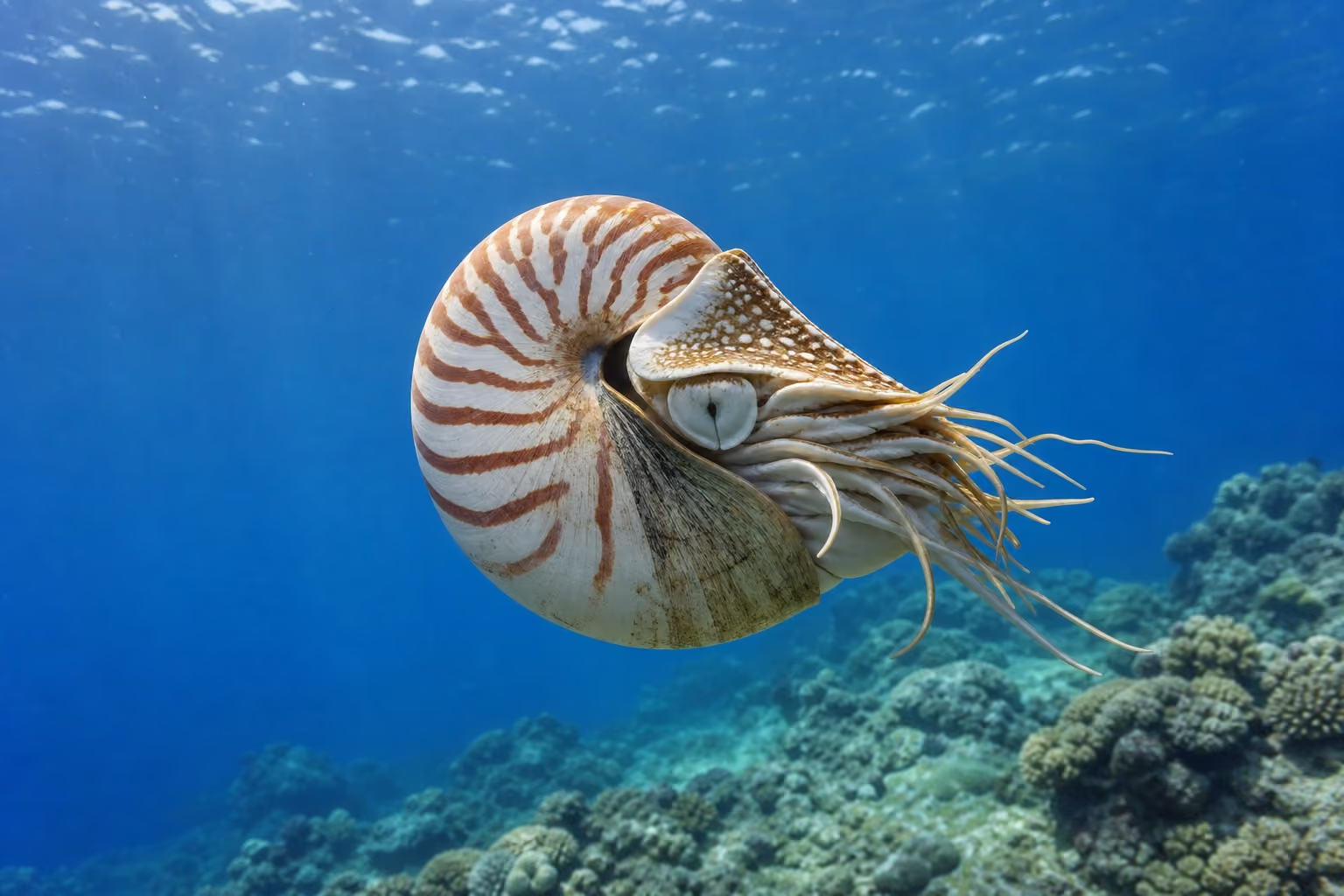
Chambered nautilus

Details

Chambered nautilus

Nautilus pompilius

Size
15–25 cm · 0.2–1.3 kg
Diet
Carnivore
Activity
Diurnal
Sociality
Solitary
Lifespan
1-5 years

The chambered nautilus is a shelled cephalopod of Indian and Pacific waters. It is a solitary carnivore using reef slopes and nearby ocean habitats.

View in catalog
Key facts

  • Chambered nautilus (Nautilus pompilius) is a carnivore animal classified as Invertebrate · Nautilida · Nautilidae.
  • Primary habitats are open ocean · coral reef, with a range across Indian Ocean · Pacific Ocean.
  • Activity is diurnal, sociality is solitary, and conservation status is LC (Least Concern).
  • The chambered nautilus is a shelled cephalopod of Indian and Pacific waters.
  • It lives around outer reefs and deep ocean slopes.
  • Typical lifespan: 1-5 years

Range

Habitat range map
Native rangeOccasional / Transient
Pacific OceanPacific OceanPacific OceanIndian Ocean

Map: Ecoregions 2017 © RESOLVE (CC BY 4.0) · Natural Earth (PD)

Details

Habitat

It lives around outer reefs and deep ocean slopes. It may shift depth between day and night while using the boundary between reef and open water.

Appearance

Shell diameter is about 15-25 cm, and weight about 0.2-1.3 kg. The spiral shell is divided into chambers used in buoyancy control.

Behavior

It is solitary and treated here as diurnal. It explores with many tentacles and moves by gentle jet propulsion.

Feeding

It is carnivorous, eating small animals and carrion. Tentacles grasp food, which is then cut with a beak.

Reproduction

Females lay relatively large eggs on hard seafloor surfaces. Young hatch with a small shell and begin independent life.

Notes

Its conservation status is LC. As a cephalopod with ancient-looking features, it is important for understanding mollusk evolution.