Mountain hare

Details

Mountain hare

Lepus timidus

Size
45–65 cm · 2.5–5.3 kg
Diet
Herbivore
Activity
Crepuscular
Sociality
Solitary
Lifespan

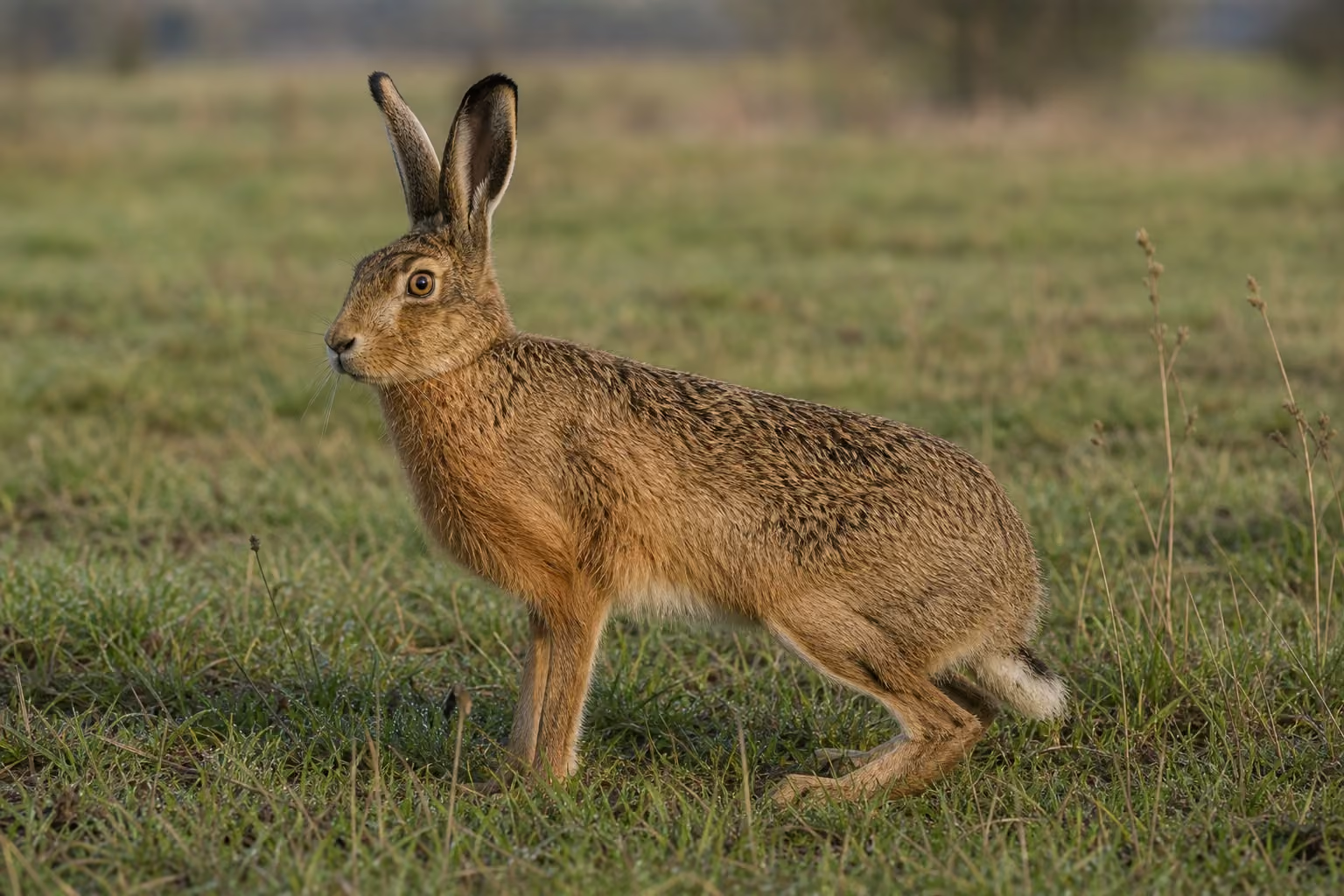
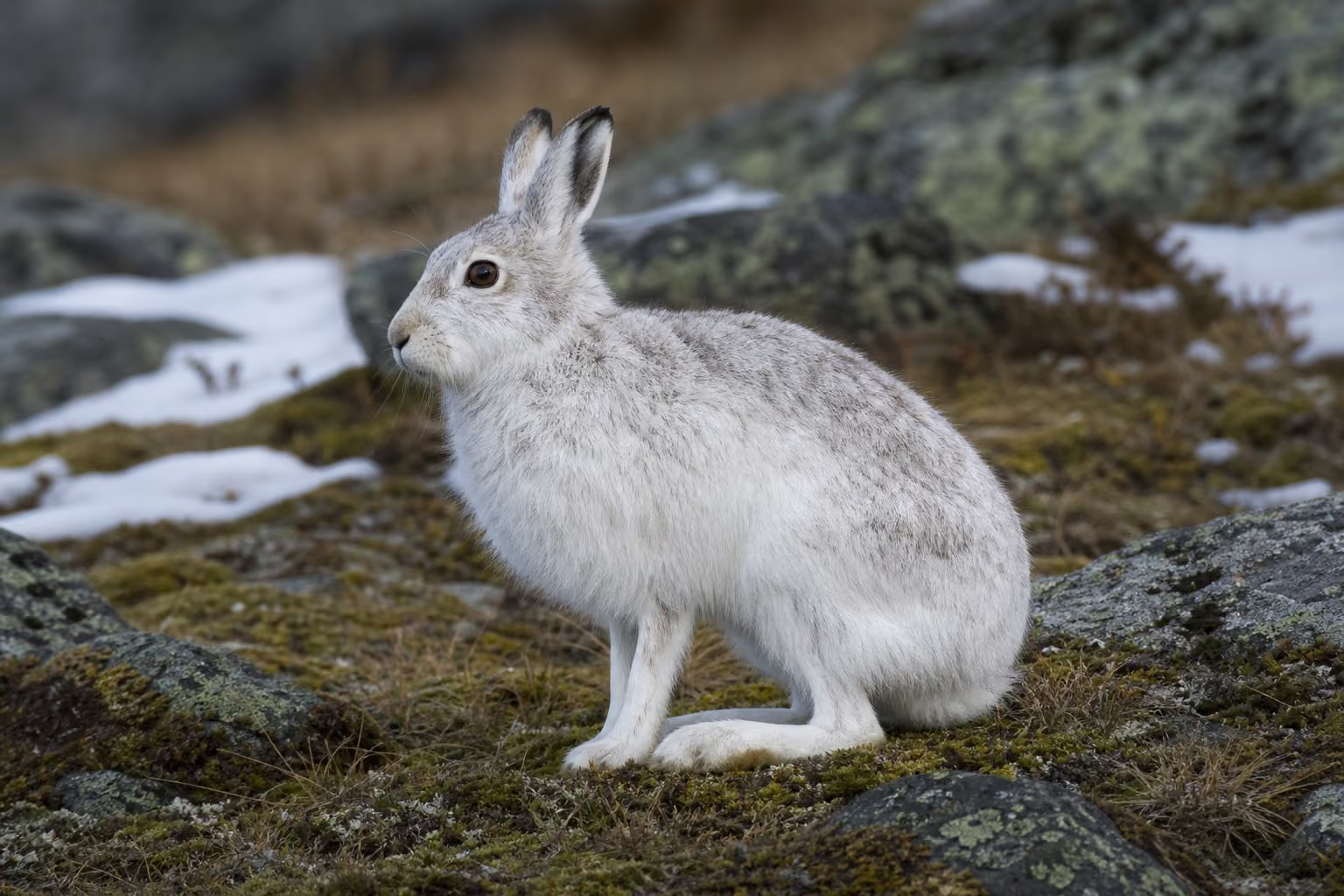
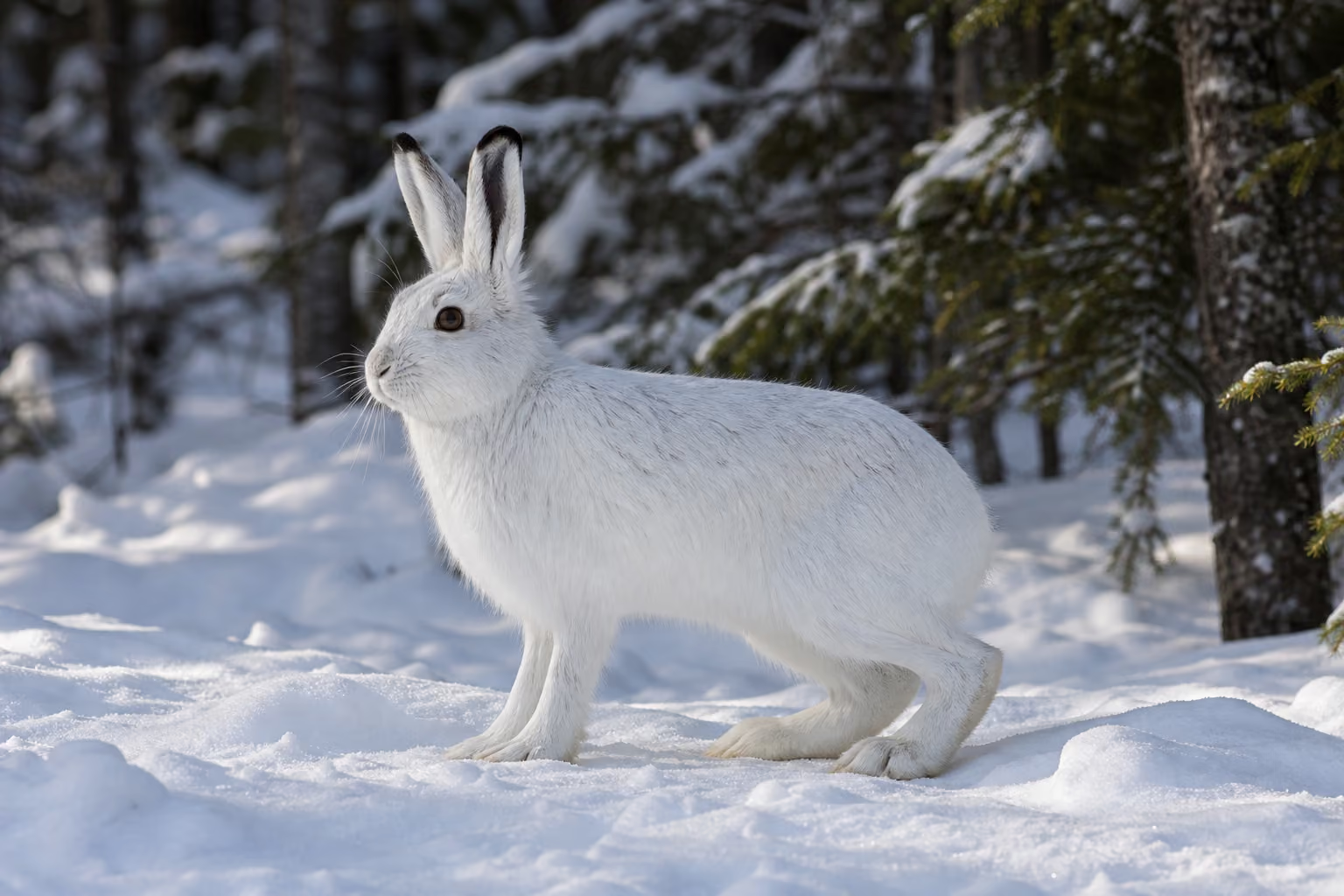
Mountain hare is a hare of cold regions and mountains, with many populations turning white in winter. Mismatch between snow cover and coat color can affect visibility to predators.

View in catalog
Key facts

  • Mountain hare (Lepus timidus) is a herbivore animal classified as Mammal · Lagomorpha · Leporidae.
  • Primary habitats are forest · grassland · mountains · polar, with a range across Palearctic.
  • Activity is crepuscular, sociality is solitary, and conservation status is LC (Least Concern).
  • Mountain hare is a hare of cold regions and mountains, with many populations turning white in winter.
  • It ranges across northern Eurasian forests, tundra, grasslands, and mountains.

Range

Habitat range map
Native rangeOccasional / Transient
PalearcticPalearcticPalearcticPalearcticPalearcticPalearcticPalearcticPalearcticPalearcticPalearcticPalearcticPalearcticPalearcticPalearcticPalearcticPalearcticPalearcticPalearcticPalearcticPalearcticPalearcticPalearcticPalearcticPalearctic

Map: Ecoregions 2017 © RESOLVE (CC BY 4.0) · Natural Earth (PD)

Details

Habitat

It ranges across northern Eurasian forests, tundra, grasslands, and mountains. Main habitat types in this guide are forest, grassland, mountain, polar.

Appearance

Typical length 45-65 cm, weight 2.5 kg-5.3 kg. Long hind legs and a short tail are typical; brown summer fur may be replaced by white winter fur.

Behavior

It is most active around dawn and dusk and usually solitary. It is usually solitary, moving between open feeding areas and cover and fleeing rapidly when alarmed.

Feeding

It is herbivorous. Grasses, herbs, buds, bark, and twigs are used according to season.

Reproduction

Females give birth in shallow ground forms, and young are born furred and open-eyed.

Notes

Although still widespread in places, it remains sensitive to habitat change. Mismatch between snow cover and coat color can affect visibility to predators.