Mandrill

Details

Mandrill

Mandrillus sphinx

Size
55–95 cm · 11–33 kg
Diet
Omnivore
Activity
Diurnal
Sociality
Social
Lifespan
10-20 years

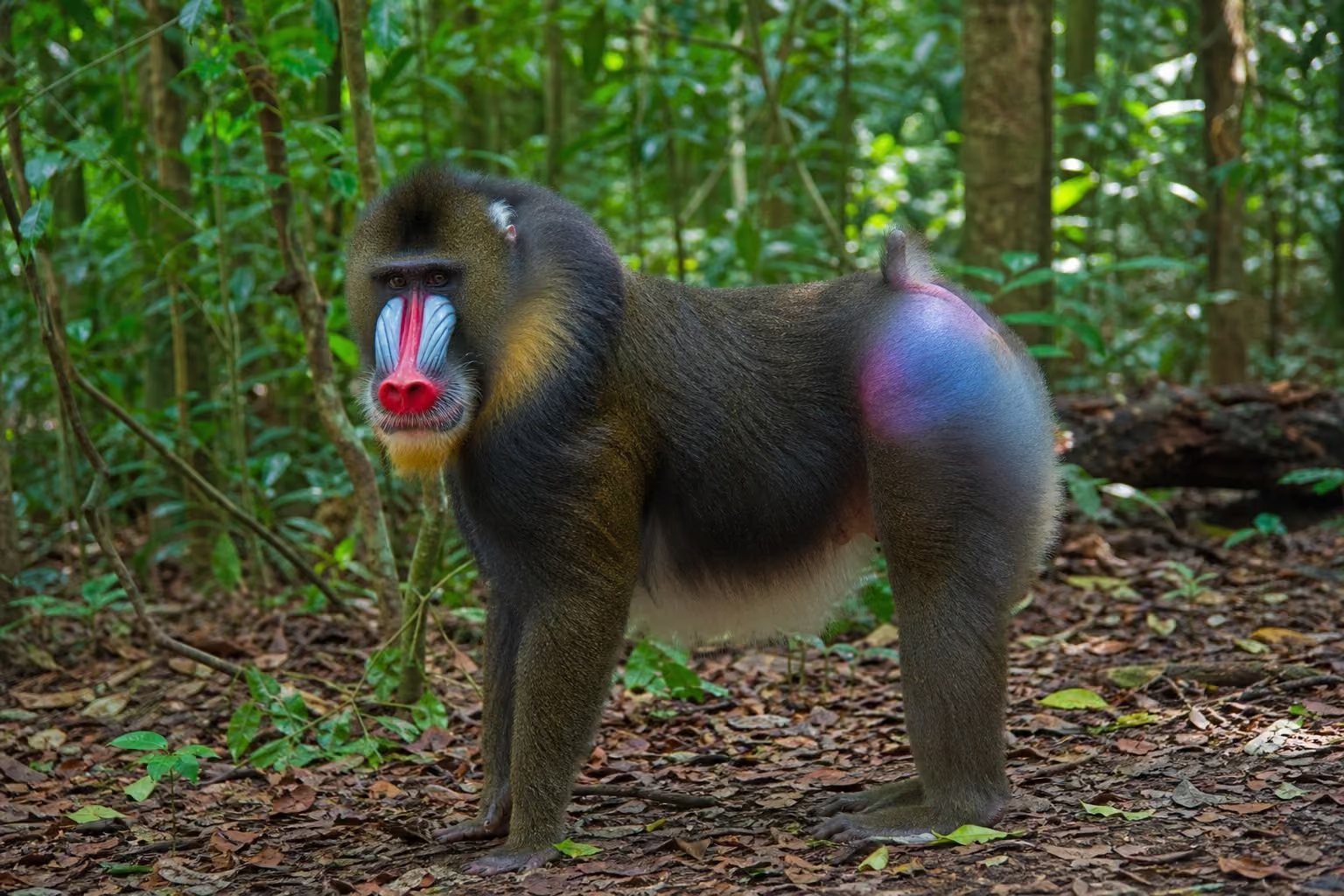
The mandrill is a large social primate of African forests. Diurnal groups forage on the forest floor and use trees for rest and safety.

View in catalog
Key facts

  • Mandrill (Mandrillus sphinx) is an omnivore animal classified as Mammal · Primates · Cercopithecidae.
  • Primary habitats are forest, with a range across Afrotropical.
  • Activity is diurnal, sociality is social, and conservation status is VU (Vulnerable).
  • The mandrill is a large social primate of African forests.
  • It uses tropical forest and dense neighboring vegetation.
  • Typical lifespan: 10-20 years

Range

Habitat range map
Native rangeOccasional / Transient
AfrotropicalAfrotropicalAfrotropicalAfrotropical

Map: Ecoregions 2017 © RESOLVE (CC BY 4.0) · Natural Earth (PD)

Details

Habitat

It uses tropical forest and dense neighboring vegetation. Fruit-rich woodland, water access, and secure resting areas are important.

Appearance

Body length is about 55-95 cm and weight about 11-33 kg. Large males show vivid blue and red facial skin, bright rump colors, and long canines.

Behavior

Diurnal and social, it often feeds on the ground while using trees when needed. Group life depends on spacing, signals, and rank.

Feeding

It is omnivorous, eating fruit, seeds, roots, insects, and small animals. Strong jaws allow it to process hard foods.

Reproduction

Infants are carried by the mother and learn social spacing within the group. Mature males become especially conspicuous during breeding periods.

Notes

Its status is listed as Vulnerable. Forest loss and hunting pressure are major concerns, especially for large groups.