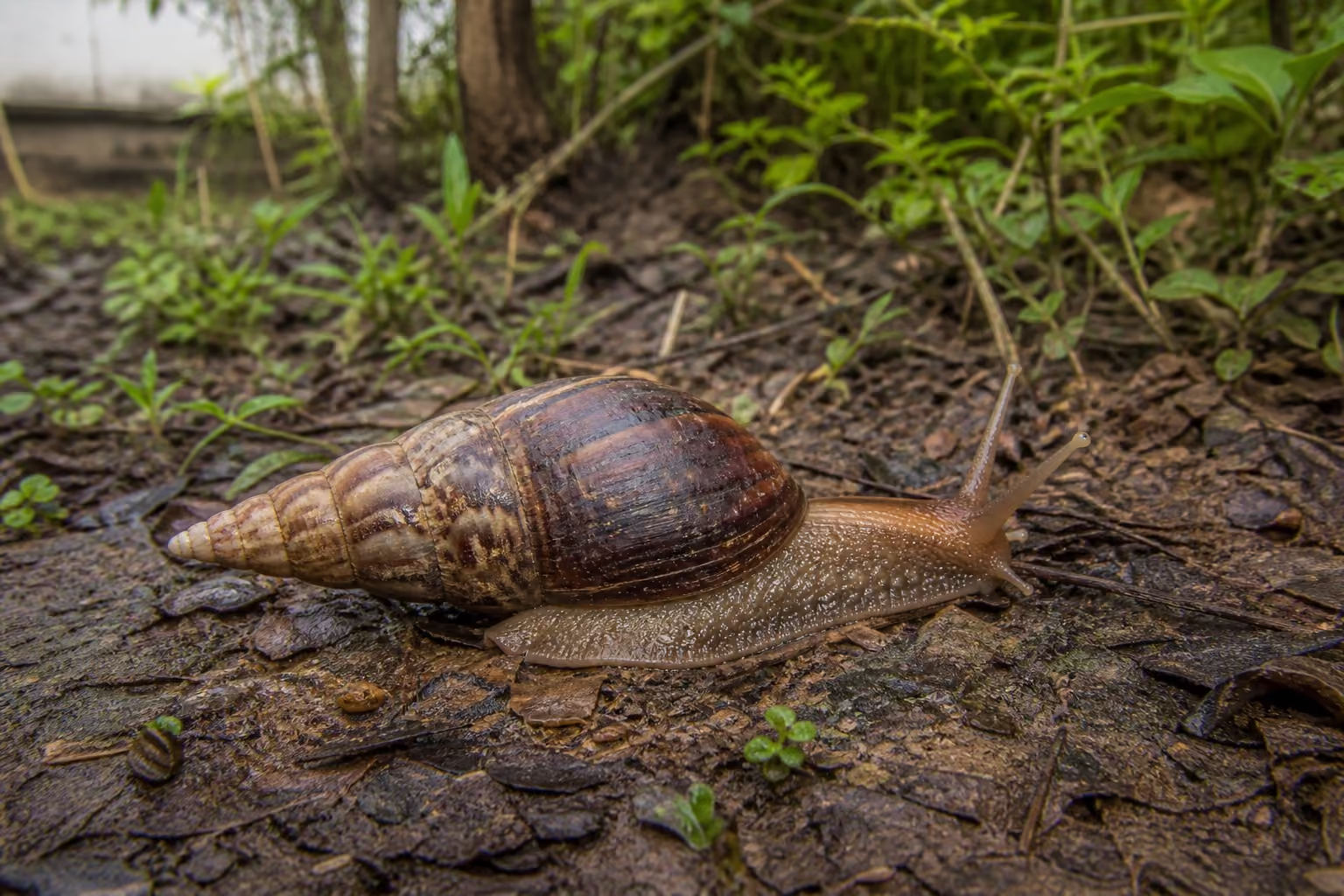
Giant African land snail

Details

Giant African land snail

Lissachatina fulica

Size
10–20 cm · 30–250 g
Diet
Herbivore
Activity
Diurnal
Sociality
Solitary
Lifespan
1-5 years

The giant African land snail is a large terrestrial mollusk of the Afrotropical realm. It is a solitary herbivore using forest and urban-edge habitats.

View in catalog
Key facts

  • Giant African land snail (Lissachatina fulica) is a herbivore animal classified as Invertebrate · Stylommatophora · Achatinidae.
  • Primary habitats are forest · urban, with a range across Afrotropical.
  • Activity is diurnal, sociality is solitary, and conservation status is LC (Least Concern).
  • The giant African land snail is a large terrestrial mollusk of the Afrotropical realm.
  • It adapts to humid forest, farms, gardens, and parks.
  • Typical lifespan: 1-5 years

Range

Habitat range map
Native rangeOccasional / Transient
AfrotropicalAfrotropicalAfrotropicalAfrotropical

Map: Ecoregions 2017 © RESOLVE (CC BY 4.0) · Natural Earth (PD)

Details

Habitat

It adapts to humid forest, farms, gardens, and parks. During dry periods it seals into the shell, becoming more active when humidity rises.

Appearance

Shell length is about 10-20 cm, and weight about 30-250 g. The long conical shell bears brown banding and protects the soft body.

Behavior

It is solitary and treated in the data as diurnal. It moves slowly on mucus, which reduces friction and helps protect against drying.

Feeding

It is herbivorous, eating leaves, fruit, and soft stems. It also uses calcium sources to support shell growth.

Reproduction

It is hermaphroditic and lays eggs in soil after mating. In favorable sites, many young snails can develop.

Notes

Its conservation status is LC. In introduced areas it can affect crops and native ecosystems.