Fleischmann's glass frog

Details

Fleischmann's glass frog

Hyalinobatrachium fleischmanni

Size
2–3.2 cm · 1–3 g
Diet
Carnivore
Activity
Nocturnal
Sociality
Solitary
Lifespan
5–10 years

Fleischmann's glass frog is a small frog of Neotropical streamside forests. It is a solitary nocturnal carnivore.

View in catalog
Key facts

  • Fleischmann's glass frog (Hyalinobatrachium fleischmanni) is a carnivore animal classified as Amphibian · Anura · Centrolenidae.
  • Primary habitats are forest · freshwater, with a range across Neotropical.
  • Activity is nocturnal, sociality is solitary, and conservation status is LC (Least Concern).
  • Fleischmann's glass frog is a small frog of Neotropical streamside forests.
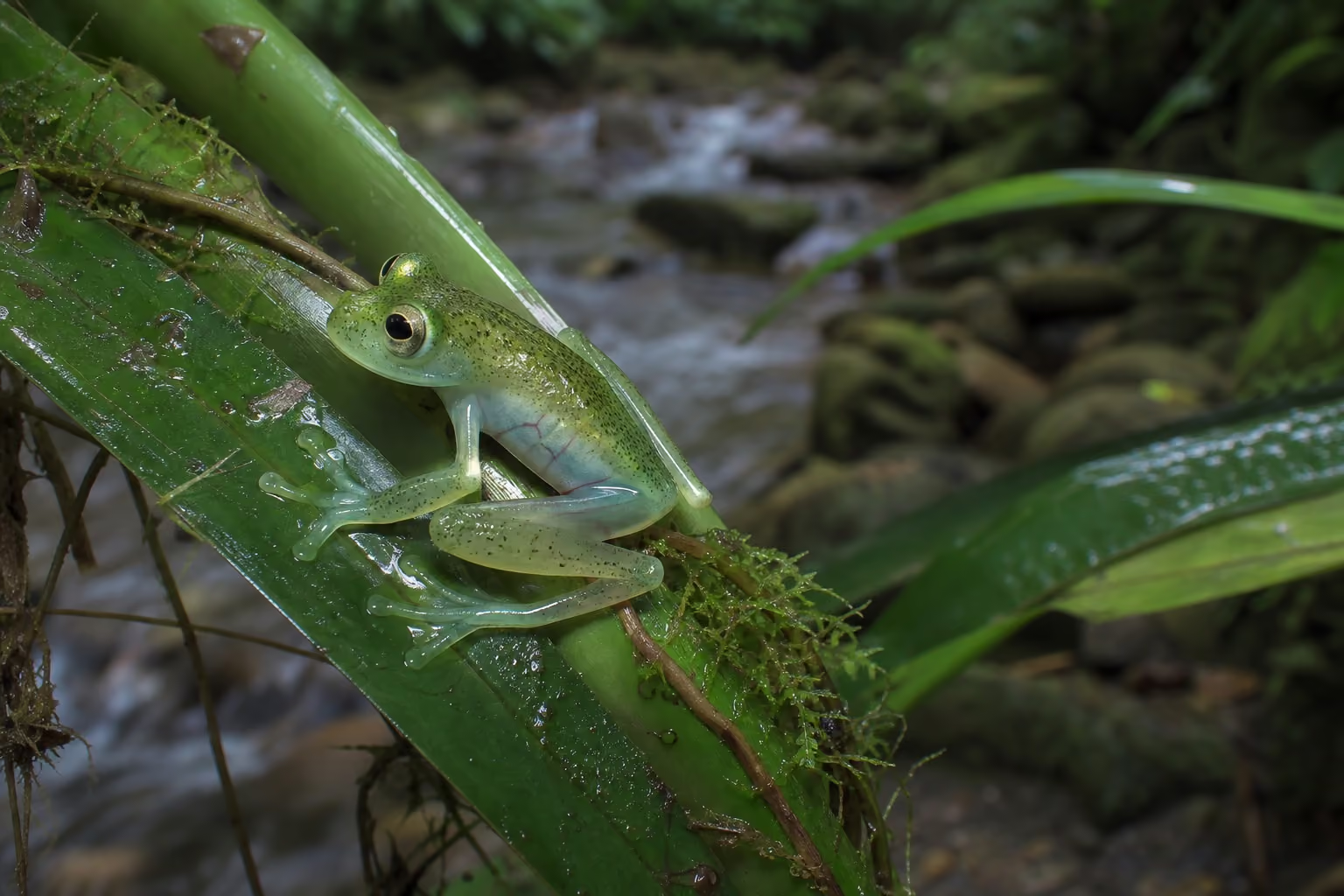
  • It uses leaves and branches along forest streams.
  • Typical lifespan: 5–10 years

Range

Habitat range map
Native rangeOccasional / Transient
NeotropicalNeotropicalNeotropicalNeotropicalNeotropicalNeotropicalNeotropicalNeotropical

Map: Ecoregions 2017 © RESOLVE (CC BY 4.0) · Natural Earth (PD)

Details

Habitat

It uses leaves and branches along forest streams. Eggs are laid above water, which receives the hatching tadpoles.

Appearance

Body length is about 2-3.2 cm and weight about 1-3 g. The back is green, while translucent belly skin can reveal internal organs.

Behavior

It is nocturnal and solitary. It rests on leaves, and males may guard egg clutches nearby.

Feeding

It is carnivorous, taking tiny insects and other arthropods. It hunts from leaves close to water.

Reproduction

Eggs are laid on leaf undersides or similar surfaces over water. Tadpoles drop into the stream or pool below and develop there.

Notes

Its conservation status is LC. The clear belly makes glass frogs especially distinctive to observers.