European tree frog

Details

European tree frog

Hyla arborea

Size
3–5 cm · 4–9 g
Diet
Carnivore
Activity
Nocturnal
Sociality
Solitary
Lifespan
4-15 years

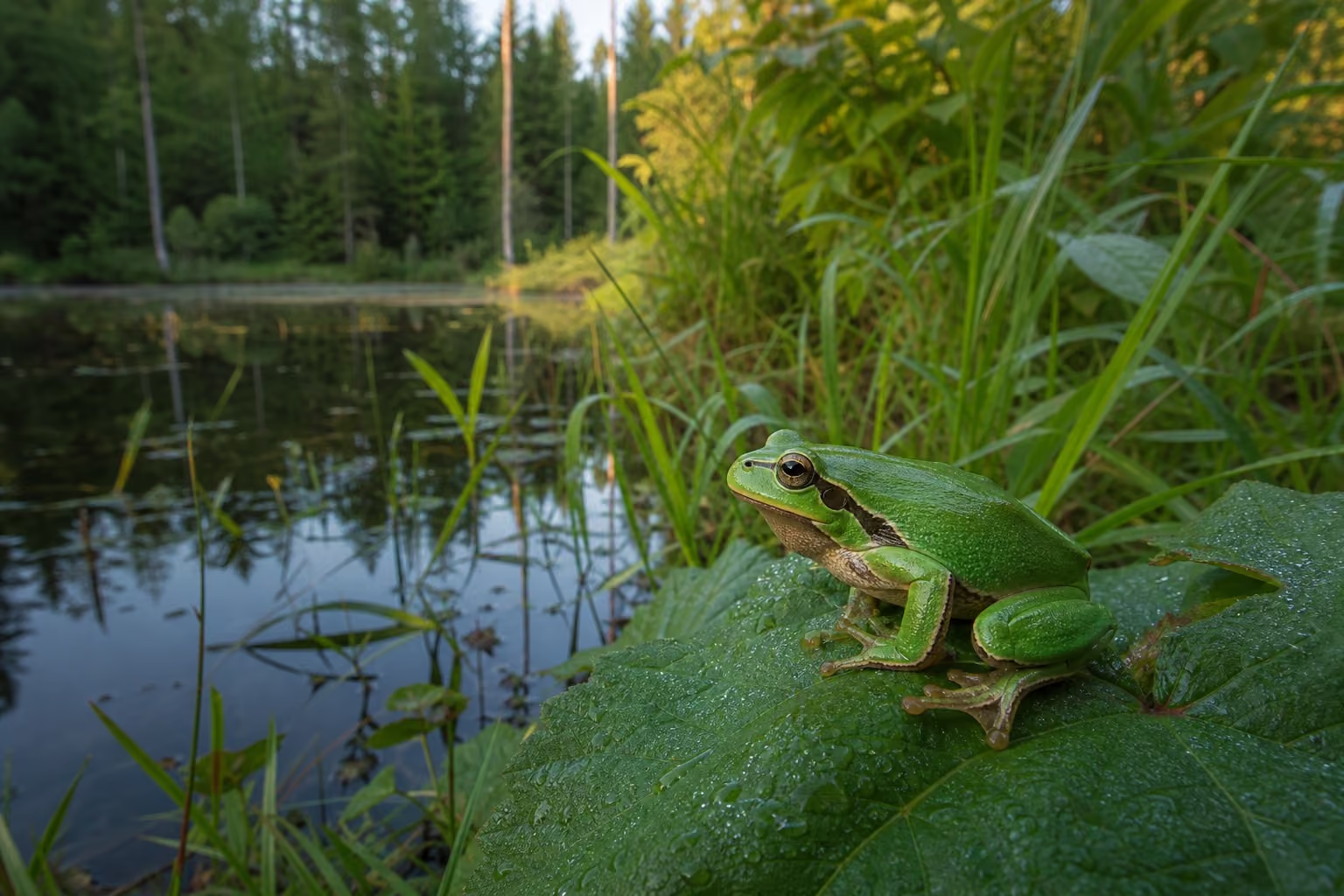
The European tree frog is a small arboreal frog of Palearctic forest and freshwater habitats. It is a solitary nocturnal carnivore.

View in catalog
Key facts

  • European tree frog (Hyla arborea) is a carnivore animal classified as Amphibian · Anura · Hylidae.
  • Primary habitats are forest · freshwater, with a range across Palearctic.
  • Activity is nocturnal, sociality is solitary, and conservation status is LC (Least Concern).
  • The European tree frog is a small arboreal frog of Palearctic forest and freshwater habitats.
  • It occurs along forest edges, shrubland, and wetland margins.
  • Typical lifespan: 4-15 years

Range

Habitat range map
Native rangeOccasional / Transient
PalearcticPalearcticPalearcticPalearcticPalearcticPalearcticPalearcticPalearcticPalearcticPalearcticPalearcticPalearcticPalearcticPalearcticPalearcticPalearcticPalearcticPalearcticPalearcticPalearcticPalearcticPalearcticPalearcticPalearctic

Map: Ecoregions 2017 © RESOLVE (CC BY 4.0) · Natural Earth (PD)

Details

Habitat

It occurs along forest edges, shrubland, and wetland margins. Ponds and temporary pools are used for breeding.

Appearance

Body length is about 3-5 cm and weight about 4-9 g. Bright green skin, a dark side stripe, and rounded toe pads are typical.

Behavior

It is nocturnal and solitary. By day it rests on leaves, then hunts from grasses and branches at night.

Feeding

It is carnivorous, taking flying insects and other small arthropods. A quick tongue strike captures nearby prey.

Reproduction

Males call loudly from watersides. Eggs are laid in water, and tadpoles develop in freshwater.

Notes

Its conservation status is LC. It is most readily found where wetlands meet shrubs or woodland.