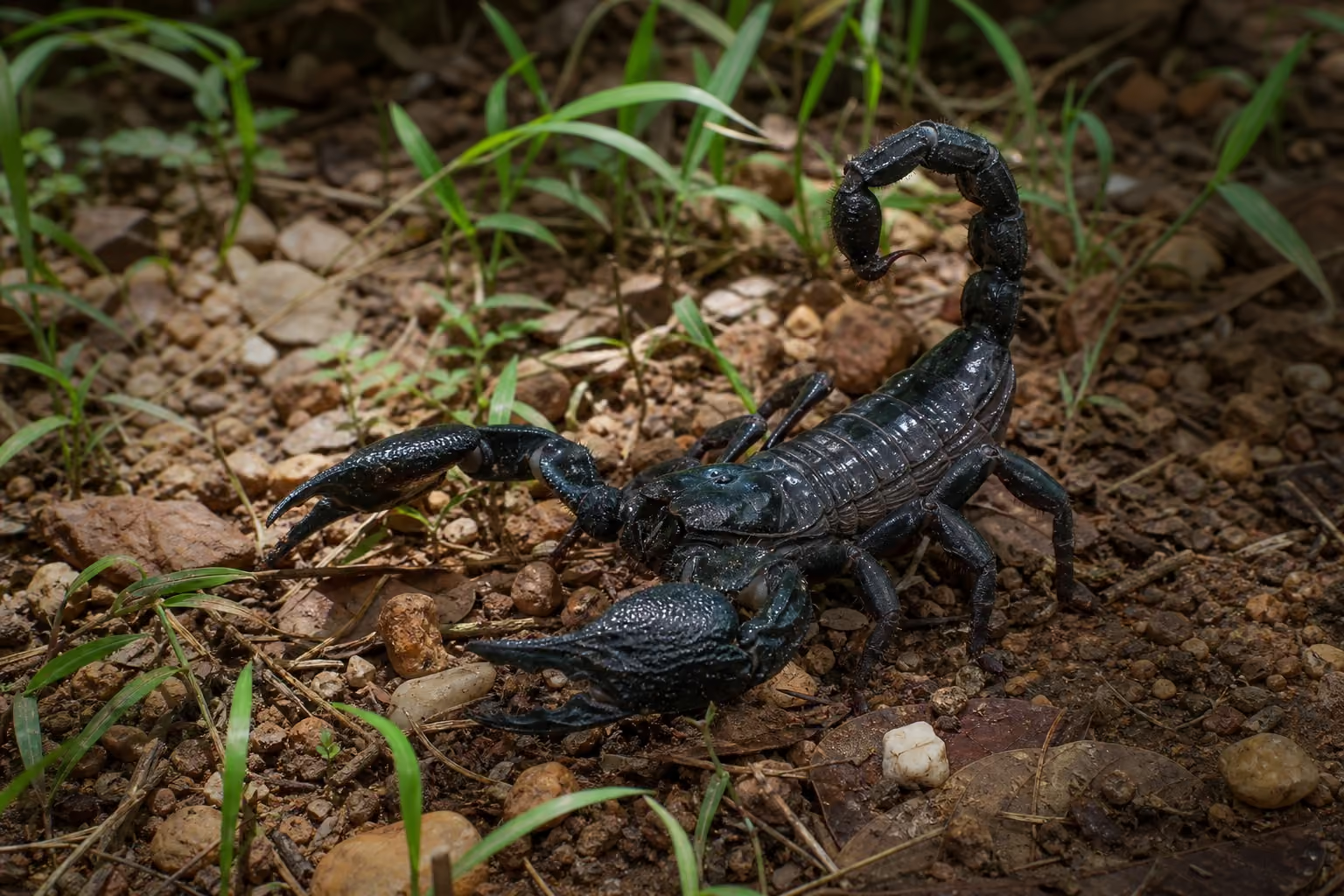
Emperor scorpion

Details

Emperor scorpion

Pandinus imperator

Size
15–20 cm · 25–30 g
Diet
Carnivore
Activity
Nocturnal
Sociality
Solitary
Lifespan
5–8 years

The emperor scorpion is a large scorpion of West African forest and savanna. It hunts insects at night around the ground and its burrow.

View in catalog
Key facts

  • Emperor scorpion (Pandinus imperator) is a carnivore animal classified as Invertebrate · Scorpiones · Scorpionidae.
  • Primary habitats are forest · savanna, with a range across Afrotropical.
  • Activity is nocturnal, sociality is solitary, and conservation status is LC (Least Concern).
  • The emperor scorpion is a large scorpion of West African forest and savanna.
  • It lives in forests and savannas of the Afrotropics.
  • Typical lifespan: 5–8 years

Range

Habitat range map
Native rangeOccasional / Transient
AfrotropicalAfrotropicalAfrotropicalAfrotropical

Map: Ecoregions 2017 © RESOLVE (CC BY 4.0) · Natural Earth (PD)

Details

Habitat

It lives in forests and savannas of the Afrotropics. Moist soil, logs, stones, and burrows provide daytime shelter.

Appearance

Length 15-20 cm; weight 25 g-30 g. A glossy black body, massive claws, and a relatively short stinger define the species. Under ultraviolet light the exoskeleton glows blue-green.

Behavior

Nocturnal and mostly solitary, it hides by day in burrows or under logs. At night it walks slowly while searching for prey.

Feeding

A carnivore, it captures insects, spiders, and small vertebrates. Strong claws hold prey, with the sting used when needed.

Reproduction

Females give birth to live young rather than laying eggs. The young ride on the mother’s back and remain protected through early molts.

Notes

It is listed as Least Concern, though local populations can still be affected by habitat change, collection, or pollution.