African bush elephant

Details

African bush elephant

Loxodonta africana

Size
6–7.5 m · 2.7–6 t
Diet
Herbivore
Activity
Cathemeral
Sociality
Herd
Lifespan
60–70 years

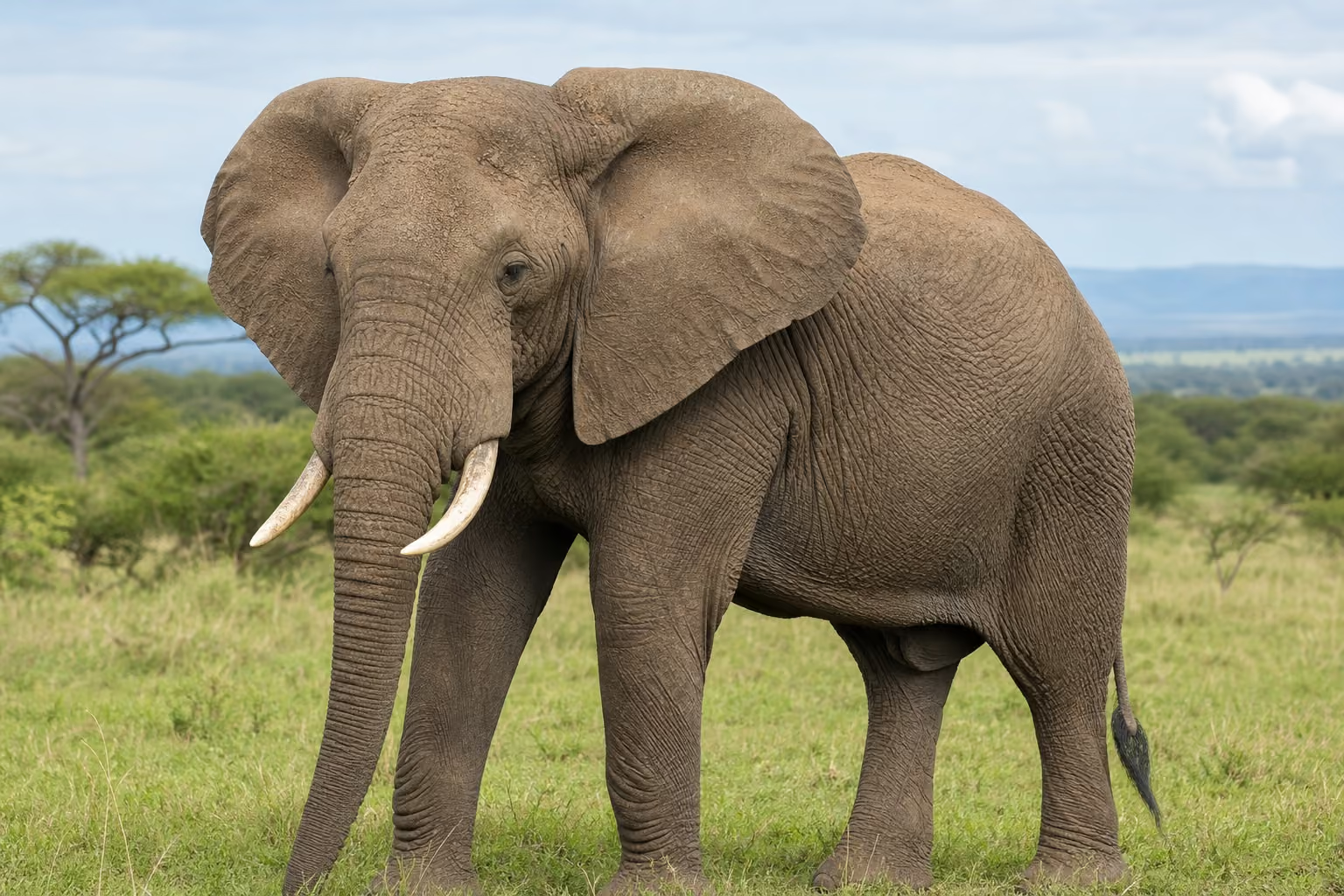
The largest land animal alive, cooling itself by fanning its huge thin ears and handling food and water with a long trunk tipped by two finger-like points. Females live in matriarchal herds and keep in touch with distant kin through low-frequency rumbles.

View in catalog
Key facts

  • African bush elephant (Loxodonta africana) is a herbivore animal classified as Mammal · Proboscidea · Elephantidae.
  • Primary habitats are savanna · forest, with a range across Afrotropical.
  • Activity is cathemeral, sociality is herd, and conservation status is EN (Endangered).
  • The largest land animal alive, cooling itself by fanning its huge thin ears and handling food and water with a long trunk tipped by two finger-like points.
  • Found across sub-Saharan Africa, it ranges through savanna grassland, woodland, wetland and forest.
  • Typical lifespan: 60–70 years

Range

Habitat range map
Native rangeOccasional / Transient

Map: Ecoregions 2017 © RESOLVE (CC BY 4.0) · Natural Earth (PD)

Details

Habitat

Found across sub-Saharan Africa, it ranges through savanna grassland, woodland, wetland and forest. It adapts from arid country to mountain slopes, with the location of water sources shaping its long seasonal movements.

Appearance

The largest terrestrial mammal, with a head-and-body length of 6 to 7.5 m and a weight of 2.7 to 6 tonnes. The grey skin is deeply wrinkled, the ears are large enough to cover the shoulders, and both sexes grow tusks. The trunk ends in two opposing finger-like tips.

Behavior

An older female leads each matriarchal herd of cows and their young, passing knowledge of feeding sites and waterholes down the generations. Bulls leave to live alone or in loose male groups. Elephants communicate with a wide range of calls and infrasonic rumbles.

Feeding

A herbivore, it browses and grazes on everything from grasses to woody branches and bark, using hundreds of plant species in some regions. It eats in bulk, drinks 100 to 300 litres of water a day, and digs in dry riverbeds for water in the dry season.

Reproduction

Gestation lasts about 22 months, the longest of any mammal, and a single calf is born. Nursing continues for two to three years, with several years between births. Calves are guarded by the whole herd, and elephants can live 60 to 80 years.

Notes

Heavy poaching for ivory and loss of habitat have caused steep declines, leaving the species endangered. In some heavily poached populations the proportion of tuskless individuals has risen. Conflict with farmers as land is developed remains a serious problem.