Dugong

Details

Dugong

Dugong dugon

Size
2.4–3 m · 230–400 kg
Diet
Herbivore
Activity
Cathemeral
Sociality
Loose group
Lifespan
50–70 years

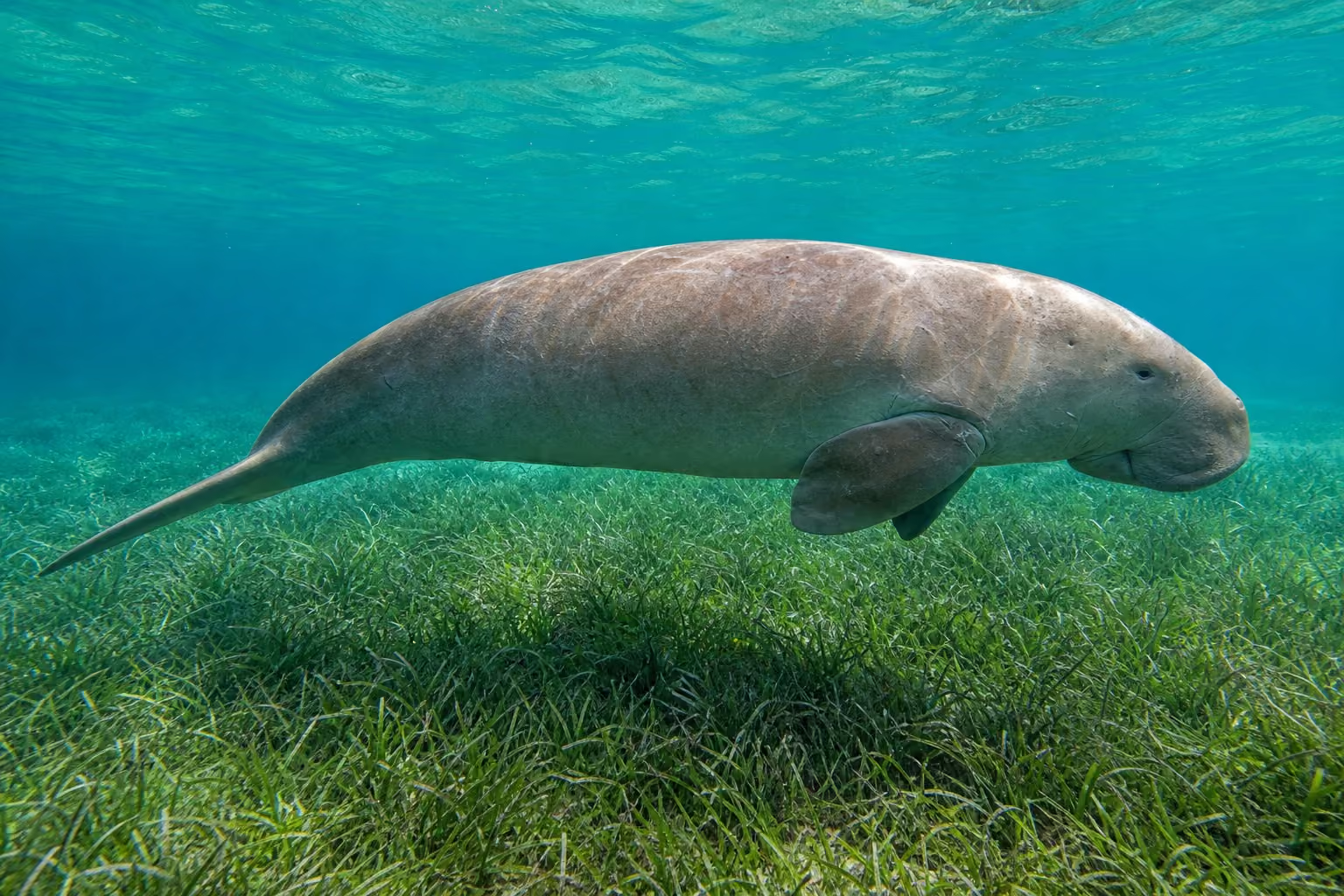
The dugong is a large marine mammal that grazes seagrass in warm shallow seas. Its rounded body and downturned mouth are built for feeding along the bottom.

View in catalog
Key facts

  • Dugong (Dugong dugon) is a herbivore animal classified as Mammal · Sirenia · Dugongidae.
  • Primary habitats are coast · open ocean · coral reef, with a range across Indian Ocean · Pacific Ocean.
  • Activity is cathemeral, sociality is loose group, and conservation status is VU (Vulnerable).
  • The dugong is a large marine mammal that grazes seagrass in warm shallow seas.
  • It inhabits Indian and Pacific coasts, shallow seas, seagrass beds, and reef lagoons.
  • Typical lifespan: 50–70 years

Range

Habitat range map
Native rangeOccasional / Transient
Pacific OceanPacific OceanPacific OceanIndian Ocean

Map: Ecoregions 2017 © RESOLVE (CC BY 4.0) · Natural Earth (PD)

Details

Habitat

It inhabits Indian and Pacific coasts, shallow seas, seagrass beds, and reef lagoons. Sheltered bays with abundant seagrass are key feeding areas.

Appearance

Length 240-300 cm; weight 230-400 kg. A spindle-shaped body, fluked tail, rounded head, and thick downturned muzzle are distinctive. The forelimbs are flippers and the body is greyish.

Behavior

Cathemeral and loosely social, it is seen alone or in small aggregations. It swims slowly over seagrass beds and surfaces to breathe.

Feeding

A herbivore, it feeds mainly on seagrasses. Flexible lips crop leaves and rhizomes, often leaving grazing trails on the bottom.

Reproduction

Females bear a single calf and nurse it for a long period. Calves stay close to mothers while learning seagrass feeding areas.

Notes

It is listed as Vulnerable. Seagrass loss, bycatch, boat strikes, and coastal development are major threats.