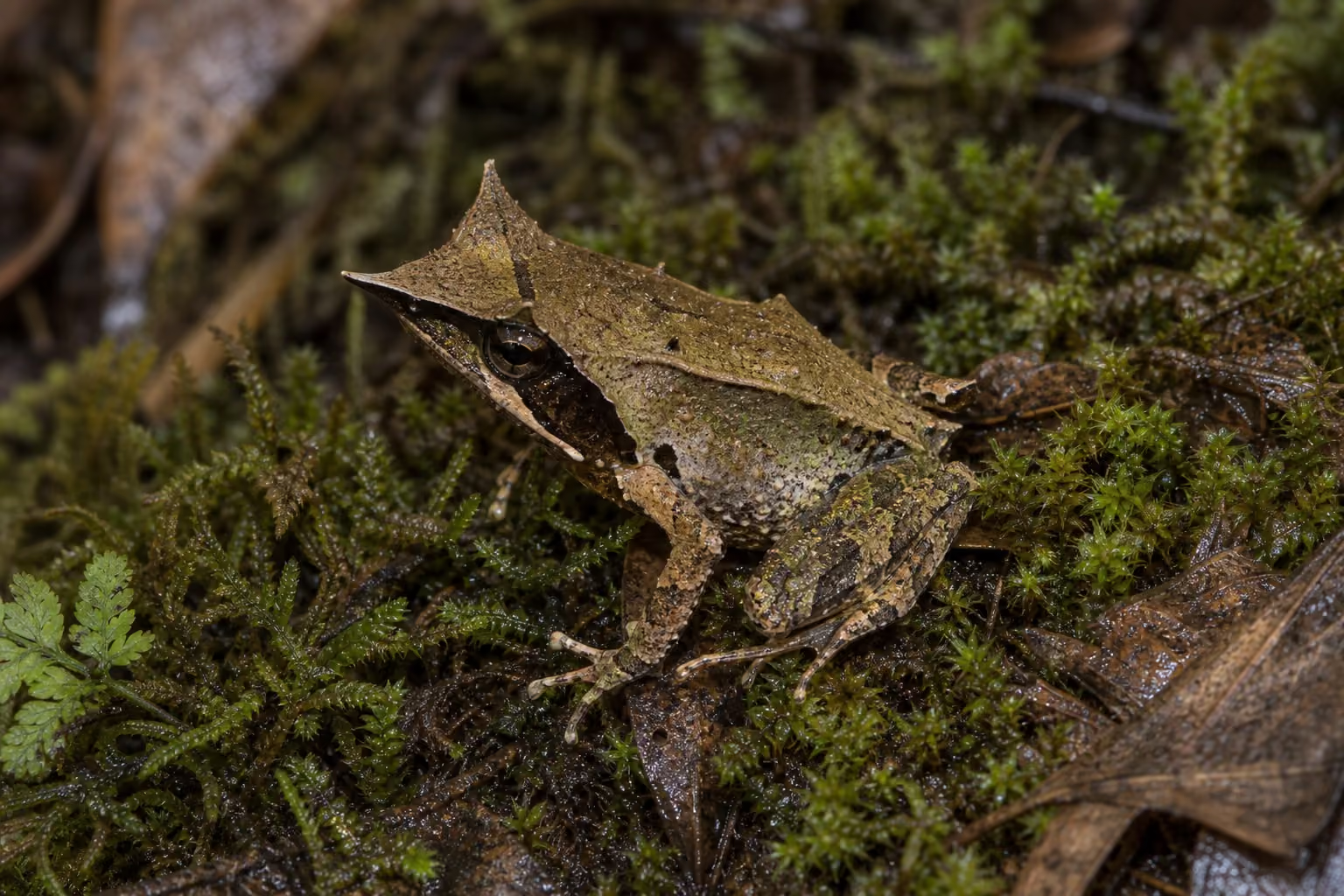
Darwin's frog

Details

Darwin's frog

Rhinoderma darwinii

Size
2.2–3.5 cm
Diet
Carnivore
Activity
Diurnal
Sociality
Solitary
Lifespan

Darwin's frog is a tiny frog of southern Chile and Argentina. Males brood tadpoles inside the vocal sac, one of the most unusual forms of amphibian parental care.

View in catalog
Key facts

  • Darwin's frog (Rhinoderma darwinii) is a carnivore animal classified as Amphibian · Anura · Rhinodermatidae.
  • Primary habitats are forest · freshwater, with a range across Neotropical.
  • Activity is diurnal, sociality is solitary, and conservation status is EN (Endangered).
  • Darwin's frog is a tiny frog of southern Chile and Argentina.
  • It lives in cool, wet temperate forest, mossy floor and streamside vegetation.

Range

Habitat range map
Native rangeOccasional / Transient
NeotropicalNeotropicalNeotropicalNeotropicalNeotropicalNeotropicalNeotropicalNeotropical

Map: Ecoregions 2017 © RESOLVE (CC BY 4.0) · Natural Earth (PD)

Details

Habitat

It lives in cool, wet temperate forest, mossy floor and streamside vegetation. Humid southern beech forest is especially important.

Appearance

Adults are only 2.2-3.5 cm long. A pointed snout and leaflike triangular outline help the brown or greenish body disappear among litter.

Behavior

Active by day on the forest floor, it freezes like a dead leaf when disturbed. Calls are quiet, and the frog moves through dense low vegetation.

Feeding

Small insects, mites, spiders and other tiny invertebrates are eaten. The frog hunts among damp leaf litter.

Reproduction

Females lay eggs on land, and males guard them. After hatching, tadpoles are taken into the male's vocal sac and emerge later as tiny froglets.

Notes

Logging, wetland degradation and disease threaten the species. Its close relative, the Chile Darwin's frog, may already be extinct, making remaining populations especially important.