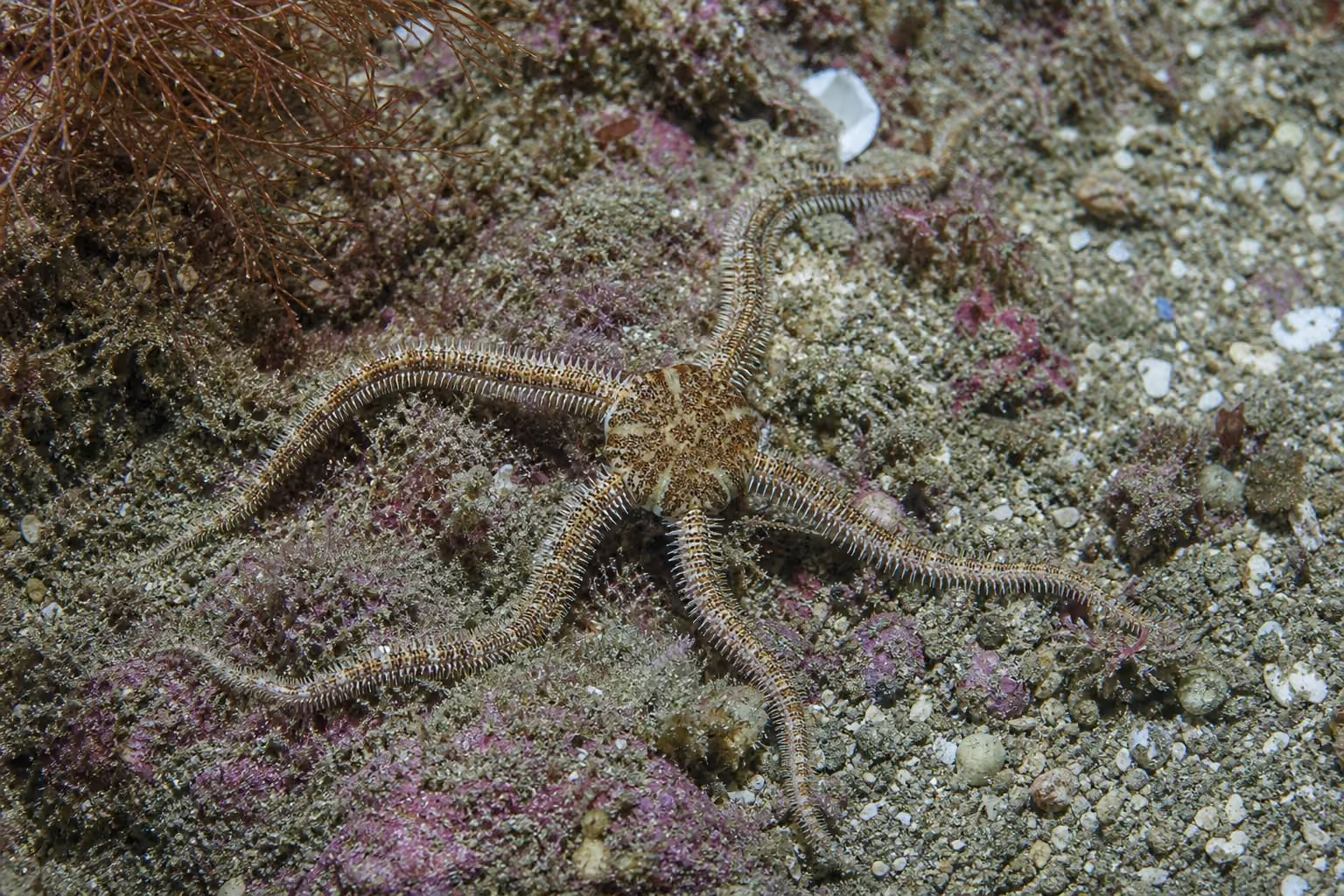
Common brittle star

Details

Common brittle star

Ophiothrix fragilis

Size
8–15 cm · 2–20 g
Diet
Filter Feeder
Activity
Nocturnal
Sociality
Colony
Lifespan
5–10 years

The common brittle star is a small echinoderm with thin, flexible arms. It can form dense seabed colonies that strain food from passing water.

View in catalog
Key facts

  • Common brittle star (Ophiothrix fragilis) is a filter feeder animal classified as Invertebrate · Amphilepidida · Ophiotrichidae.
  • Primary habitats are coast · open ocean, with a range across Atlantic Ocean · Palearctic.
  • Activity is nocturnal, sociality is colony, and conservation status is LC (Least Concern).
  • The common brittle star is a small echinoderm with thin, flexible arms.
  • It occurs along Atlantic and Palearctic coasts and deeper bottoms.
  • Typical lifespan: 5–10 years

Range

Habitat range map
Native rangeOccasional / Transient
Atlantic OceanAtlantic OceanAtlantic OceanAtlantic OceanAtlantic OceanPalearcticPalearcticPalearcticPalearcticPalearcticPalearcticPalearcticPalearcticPalearcticPalearcticPalearcticPalearcticPalearcticPalearcticPalearcticPalearcticPalearcticPalearcticPalearcticPalearcticPalearcticPalearcticPalearcticPalearctic

Map: Ecoregions 2017 © RESOLVE (CC BY 4.0) · Natural Earth (PD)

Details

Habitat

It occurs along Atlantic and Palearctic coasts and deeper bottoms. Rocky reefs, shell gravel, and mixed sediment with many crevices provide shelter.

Appearance

Arm span 8-15 cm; weight 2-20 g. Five long spiny arms extend from a small central disc. The arms break easily but can regenerate.

Behavior

Nocturnal and colonial, it often hides the disc while extending arms into current. When disturbed it flicks the arms rapidly and retreats.

Feeding

A filter-feeder, it catches plankton and organic particles with raised arms. It may also pick detritus and small fragments from the bottom.

Reproduction

Adults broadcast eggs and sperm into the sea, producing drifting larvae. Settled juveniles can build dense beds where conditions are favorable.

Notes

It is listed as Least Concern. In large aggregations it moves suspended particles into the benthic food web.