Budgett's frog

Details

Budgett's frog

Lepidobatrachus laevis

Size
7–12 cm
Diet
Carnivore
Activity
Nocturnal
Sociality
Solitary
Lifespan

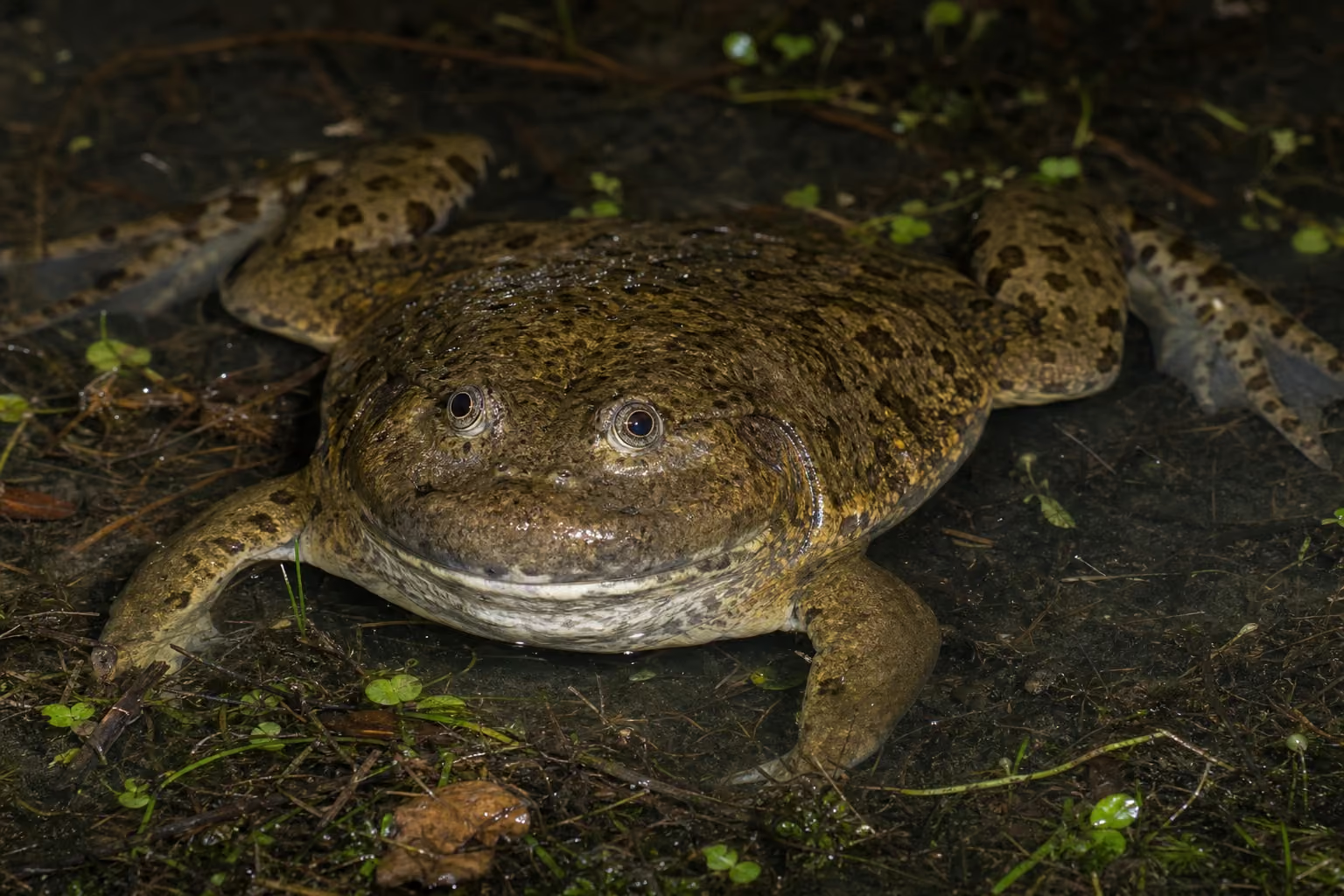
Budgett's frog is a broad-headed predator of South American Chaco wetlands. Its huge mouth, inflated body and loud defensive calls make it one of the most distinctive aquatic frogs.

View in catalog
Key facts

  • Budgett's frog (Lepidobatrachus laevis) is a carnivore animal classified as Amphibian · Anura · Ceratophryidae.
  • Primary habitats are freshwater · grassland, with a range across Neotropical.
  • Activity is nocturnal, sociality is solitary, and conservation status is LC (Least Concern).
  • Budgett's frog is a broad-headed predator of South American Chaco wetlands.
  • It occurs around Paraguay, Argentina and Bolivia in seasonal wetlands, ponds and Chaco grassland.

Range

Habitat range map
Native rangeOccasional / Transient
NeotropicalNeotropicalNeotropicalNeotropicalNeotropicalNeotropicalNeotropicalNeotropical

Map: Ecoregions 2017 © RESOLVE (CC BY 4.0) · Natural Earth (PD)

Details

Habitat

It occurs around Paraguay, Argentina and Bolivia in seasonal wetlands, ponds and Chaco grassland. During dry periods it burrows underground and rests inside a mucus cocoon.

Appearance

Adults are about 7-12 cm long. The head is flat with an enormous mouth and upward-facing eyes, while the rounded body is patterned brown to olive.

Behavior

Nocturnal and aquatic, it waits from water or mud for prey. When threatened, it inflates, opens the mouth, vocalizes loudly and may bite.

Feeding

Insects, crustaceans, small fish and other frogs are eaten. The mouth allows it to seize prey nearly its own size.

Reproduction

Breeding follows the rainy season in temporary ponds. Eggs and tadpoles develop quickly, matching habitats that may dry fast.

Notes

The species appears in the pet trade, but its wild life is tightly tied to wet-dry seasonal cycles. Conservation of temporary wetlands is important.