Bonobo

Details

Bonobo

Pan paniscus

Size
70–83 cm · 30–60 kg
Diet
Omnivore
Activity
Diurnal
Sociality
Social
Lifespan
10-20 years

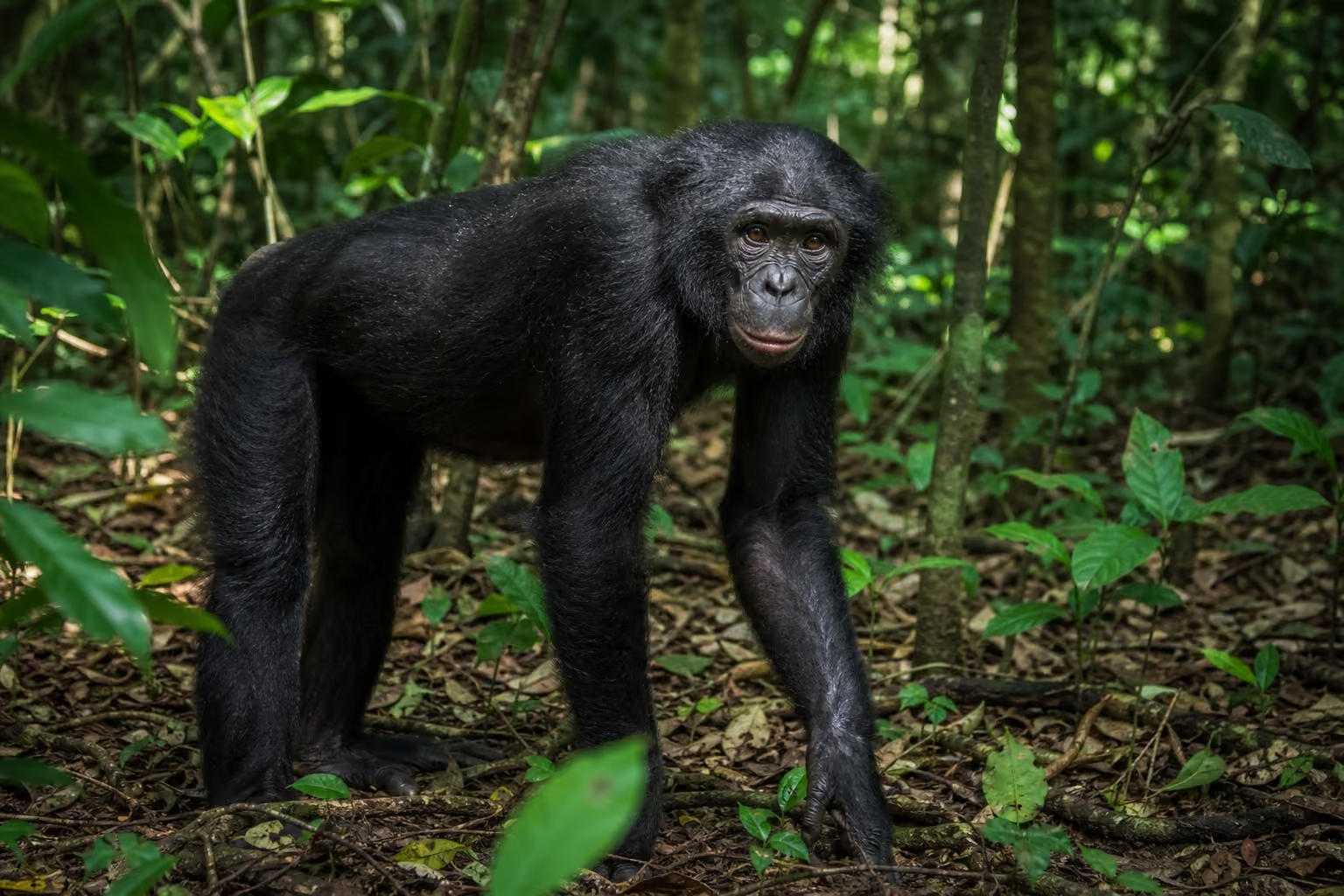
The bonobo is a highly social great ape of central African forests. It is active by day and moves between trees and the ground in flexible groups.

View in catalog
Key facts

  • Bonobo (Pan paniscus) is an omnivore animal classified as Mammal · Primates · Hominidae.
  • Primary habitats are forest, with a range across Afrotropical.
  • Activity is diurnal, sociality is social, and conservation status is EN (Endangered).
  • The bonobo is a highly social great ape of central African forests.
  • It is centered on humid lowland forest, using both fruiting canopy and accessible forest floor.
  • Typical lifespan: 10-20 years

Range

Habitat range map
Native rangeOccasional / Transient
AfrotropicalAfrotropicalAfrotropicalAfrotropical

Map: Ecoregions 2017 © RESOLVE (CC BY 4.0) · Natural Earth (PD)

Details

Habitat

It is centered on humid lowland forest, using both fruiting canopy and accessible forest floor. Its range is concentrated in limited forest areas.

Appearance

Body length is about 70-83 cm and weight about 30-60 kg. Long arms, a dark face, and a relatively slender build suit both climbing and walking.

Behavior

Diurnal and social, it lives in complex communities. Party size changes with food, movement, and social context, while relationships remain important.

Feeding

It is omnivorous, with fruit as a major food along with leaves, seeds, and small animals. Movements follow seasonal patterns of forest foods.

Reproduction

Young remain dependent on their mothers for many years and learn social behavior within the group. Long intervals between births make recovery slow.

Notes

Its status is listed as Endangered. Forest loss and hunting pressure are major concerns, so connected forest habitat is critical.