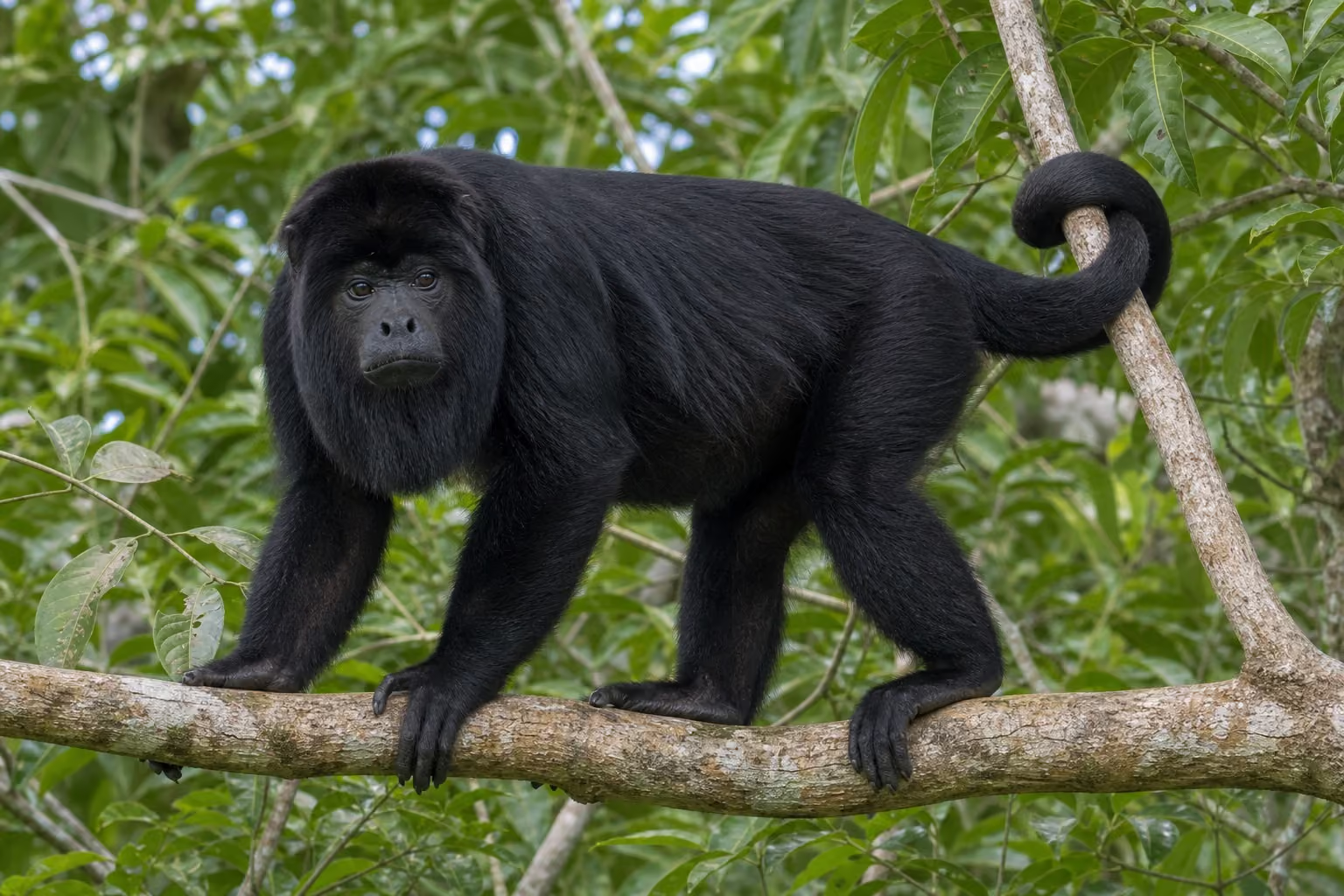
Black howler monkey

Details

Black howler monkey

Alouatta caraya

Size
0.9–1.4 m · 4–10 kg
Diet
Herbivore
Activity
Diurnal
Sociality
Social
Lifespan

A large South American howler monkey. Males are black, females are pale buff, and deep roars carry far through forest.

View in catalog
Key facts

  • Black howler monkey (Alouatta caraya) is a herbivore animal classified as Mammal · Primates · Atelidae.
  • Primary habitats are forest · savanna, with a range across Neotropical.
  • Activity is diurnal, sociality is social, and conservation status is LC (Least Concern).
  • A large South American howler monkey.
  • Black howlers inhabit riparian forest, swamp forest, dry forest, and wooded savanna patches.

Range

Habitat range map
Native rangeOccasional / Transient
NeotropicalNeotropicalNeotropicalNeotropicalNeotropicalNeotropicalNeotropicalNeotropical

Map: Ecoregions 2017 © RESOLVE (CC BY 4.0) · Natural Earth (PD)

Details

Habitat

Black howlers inhabit riparian forest, swamp forest, dry forest, and wooded savanna patches. Connected canopy supports movement and feeding.

Appearance

Sexual dimorphism is strong: males are black, while females and young are yellowish to buff. A prehensile tail supports movement through branches.

Behavior

They are diurnal, arboreal, and live in small groups. Loud morning and evening calls help space neighboring groups.

Feeding

Leaves dominate the diet, with fruit, flowers, and young shoots added seasonally. A leaf-heavy diet leads to long rest periods and slow movement.

Reproduction

Females bear single infants that cling to the belly or back. Group members may remain nearby while infants develop.

Notes

The roar is amplified by specialized throat anatomy, allowing long-distance communication in dense forest.