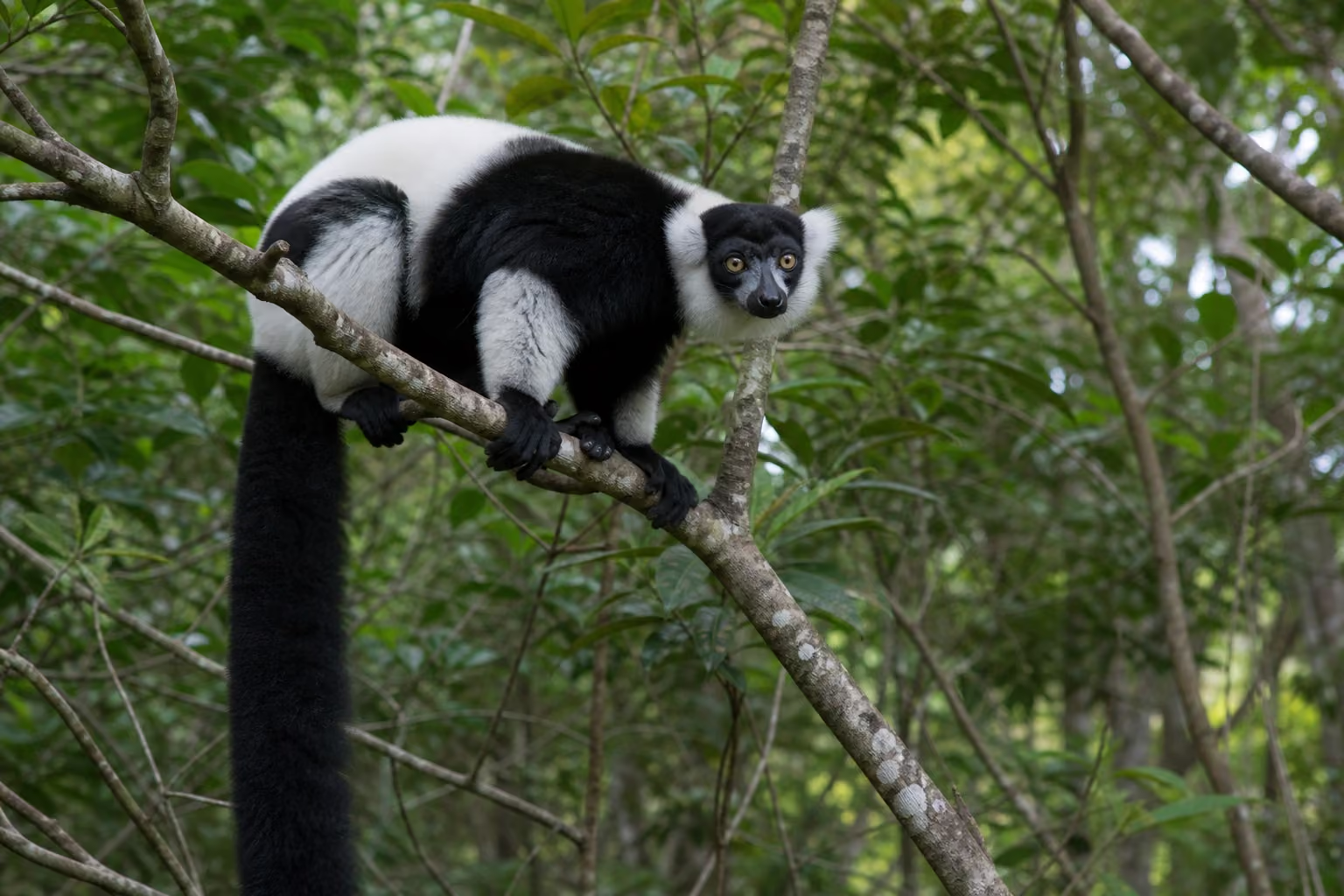
Black-and-white ruffed lemur

Details

Black-and-white ruffed lemur

Varecia variegata

Size
43–57 cm · 3.1–4.1 kg
Diet
Herbivore
Activity
Diurnal
Sociality
Social
Lifespan
18–20 years

The black-and-white ruffed lemur is a large Madagascan lemur with a shaggy contrasting coat. By day it feeds in the canopy and gives loud carrying calls.

View in catalog
Key facts

  • Black-and-white ruffed lemur (Varecia variegata) is a herbivore animal classified as Mammal · Primates · Lemuridae.
  • Primary habitats are forest, with a range across Afrotropical.
  • Activity is diurnal, sociality is social, and conservation status is CR (Critically Endangered).
  • The black-and-white ruffed lemur is a large Madagascan lemur with a shaggy contrasting coat.
  • It is confined to Madagascar's forests.
  • Typical lifespan: 18–20 years

Range

Habitat range map
Native rangeOccasional / Transient

Map: Ecoregions 2017 © RESOLVE (CC BY 4.0) · Natural Earth (PD)

Details

Habitat

It is confined to Madagascar's forests. Humid rainforest canopy and large fruiting trees are especially important, and fragmented forest is a serious problem.

Appearance

Length 43-57 cm; weight 3.1-4.1 kg. Long black-and-white fur forms bold patches, with a full ruff around the neck. A long tail aids balance in trees.

Behavior

Diurnal and social, it moves through the canopy in small groups. Loud calls maintain contact and signal territory or alarm.

Feeding

A herbivore, it feeds mainly on fruit, with nectar, flowers, and young leaves also taken. Visits to flowers can make it an important pollinator.

Reproduction

Unusually for lemurs, females build nests and may bear multiple young. Infants begin life in the nest before traveling with the mother.

Notes

It is listed as Critically Endangered. Deforestation, hunting, and fragmentation in Madagascar are severe threats.