Bighorn sheep

Details

Bighorn sheep

Ovis canadensis

Size
1.4–1.8 m · 50–140 kg
Diet
Herbivore
Activity
Diurnal
Sociality
Herd
Lifespan

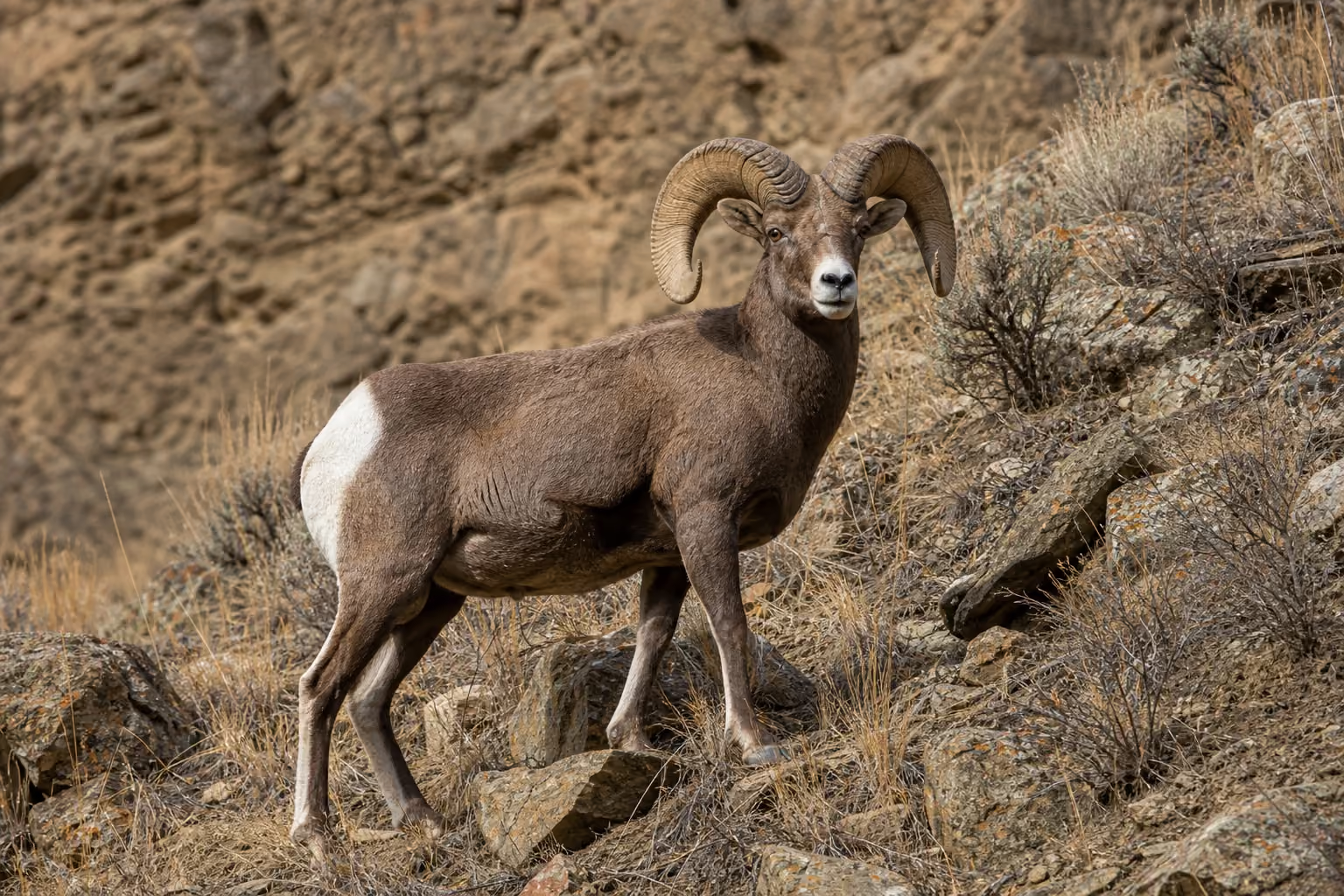
A wild sheep of western North American mountains and dry ranges. Males carry massive curled horns and are built for steep rocky terrain.

View in catalog
Key facts

  • Bighorn sheep (Ovis canadensis) is a herbivore animal classified as Mammal · Cetartiodactyla · Bovidae.
  • Primary habitats are mountains · desert · grassland, with a range across Nearctic.
  • Activity is diurnal, sociality is herd, and conservation status is LC (Least Concern).
  • A wild sheep of western North American mountains and dry ranges.
  • Bighorn sheep use cliffs, canyons, dry grasslands, and desert mountains.

Range

Habitat range map
Native rangeOccasional / Transient
NearcticNearcticNearcticNearcticNearcticNearcticNearcticNearcticNearcticNearcticNearcticNearcticNearcticNearcticNearcticNearcticNearcticNearcticNearcticNearcticNearcticNearcticNearcticNearcticNearcticNearcticNearcticNearcticNearcticNearcticNearcticNearcticNearcticNearcticNearcticNearcticNearcticNearcticNearcticNearcticNearctic

Map: Ecoregions 2017 © RESOLVE (CC BY 4.0) · Natural Earth (PD)

Details

Habitat

Bighorn sheep use cliffs, canyons, dry grasslands, and desert mountains. Open slopes with nearby escape terrain are important habitat features.

Appearance

The coat is brown with a pale rump patch. Rams grow heavy curling horns, while females have shorter, slimmer horns.

Behavior

They live in herds, and males clash horns during the breeding season. When threatened, they climb steep rock to gain distance from predators.

Feeding

They graze grasses and sedges and browse shrubs and seasonal herbs. In dry areas, movements may track water and mineral sites.

Reproduction

Mating occurs in autumn or early winter. Ewes usually bear a single lamb in spring, and lambs soon move on rocky slopes.

Notes

The species is globally Least Concern, but local herds can be vulnerable to disease, livestock contact, and fragmented movement corridors.