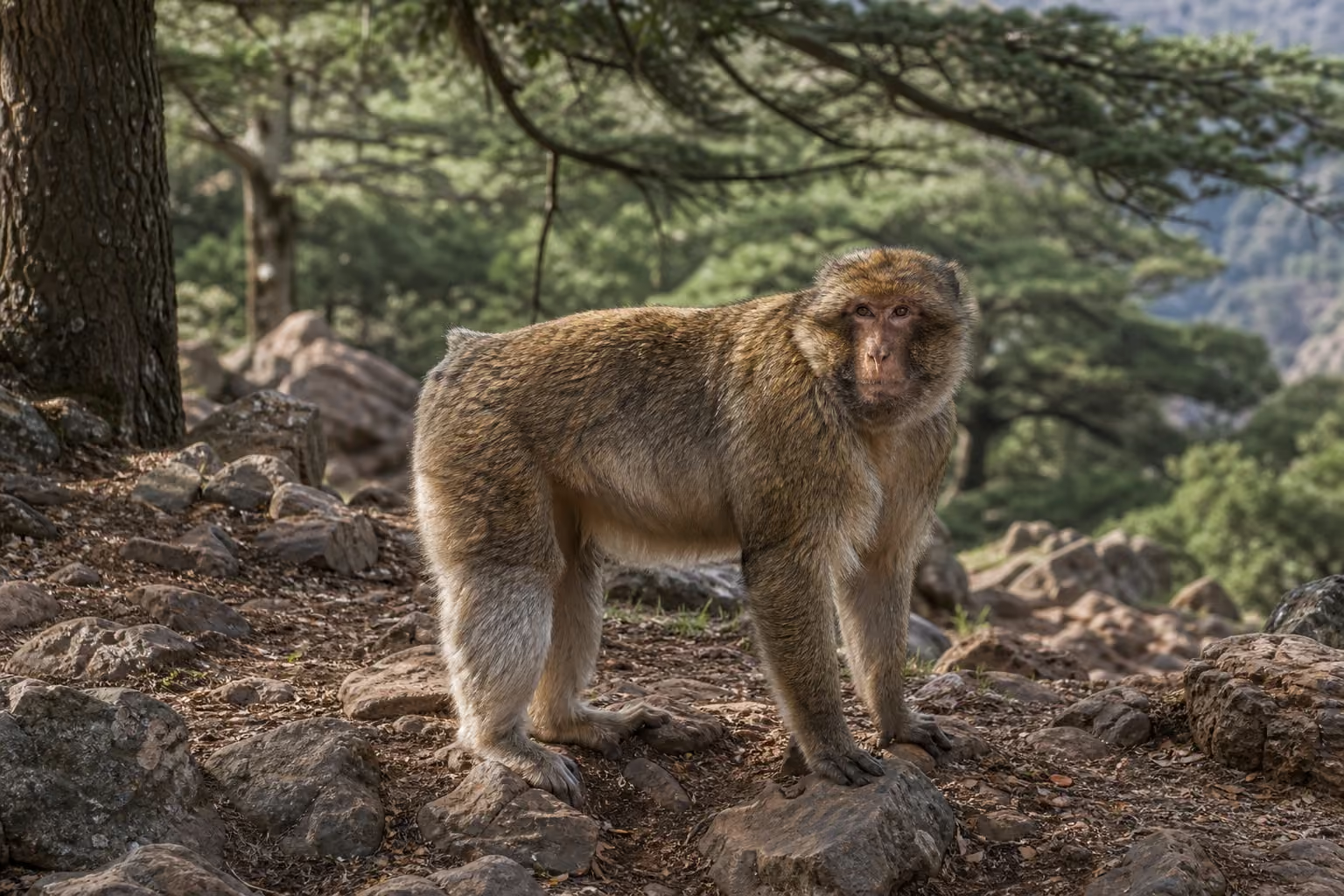
Barbary macaque

Details

Barbary macaque

Macaca sylvanus

Size
45–75 cm · 5–16 kg
Diet
Omnivore
Activity
Diurnal
Sociality
Social
Lifespan

Barbary macaque is the only wild macaque around Europe, surviving in North Africa and Gibraltar. Tourism makes the species familiar, but wild populations face forest loss and illegal trade.

View in catalog
Key facts

  • Barbary macaque (Macaca sylvanus) is an omnivore animal classified as Mammal · Primates · Cercopithecidae.
  • Primary habitats are forest · mountains · grassland, with a range across Palearctic · Afrotropical.
  • Activity is diurnal, sociality is social, and conservation status is EN (Endangered).
  • Barbary macaque is the only wild macaque around Europe, surviving in North Africa and Gibraltar.
  • It lives in mountain forests, rocky areas, grassland, and the limestone landscape of Gibraltar.

Range

Habitat range map
Native rangeOccasional / Transient
PalearcticPalearcticPalearcticPalearcticPalearcticPalearcticPalearcticPalearcticPalearcticPalearcticPalearcticPalearcticPalearcticPalearcticPalearcticPalearcticPalearcticPalearcticPalearcticPalearcticPalearcticPalearcticPalearcticPalearcticAfrotropicalAfrotropicalAfrotropicalAfrotropical

Map: Ecoregions 2017 © RESOLVE (CC BY 4.0) · Natural Earth (PD)

Details

Habitat

It lives in mountain forests, rocky areas, grassland, and the limestone landscape of Gibraltar. Main habitat types in this guide are forest, mountain, grassland.

Appearance

Typical length 45-75 cm, weight 5 kg-16 kg. A nearly tailless body, thick fur, and a pinkish face are characteristic.

Behavior

It is diurnal and a social species. Troops are social, and males may help handle or care for infants.

Feeding

It is omnivorous. Leaves, fruit, seeds, roots, and insects are eaten according to season.

Reproduction

Females bear single infants that grow up amid many social partners in the troop.

Notes

Its limited range makes protection and habitat management important. Tourism makes the species familiar, but wild populations face forest loss and illegal trade.