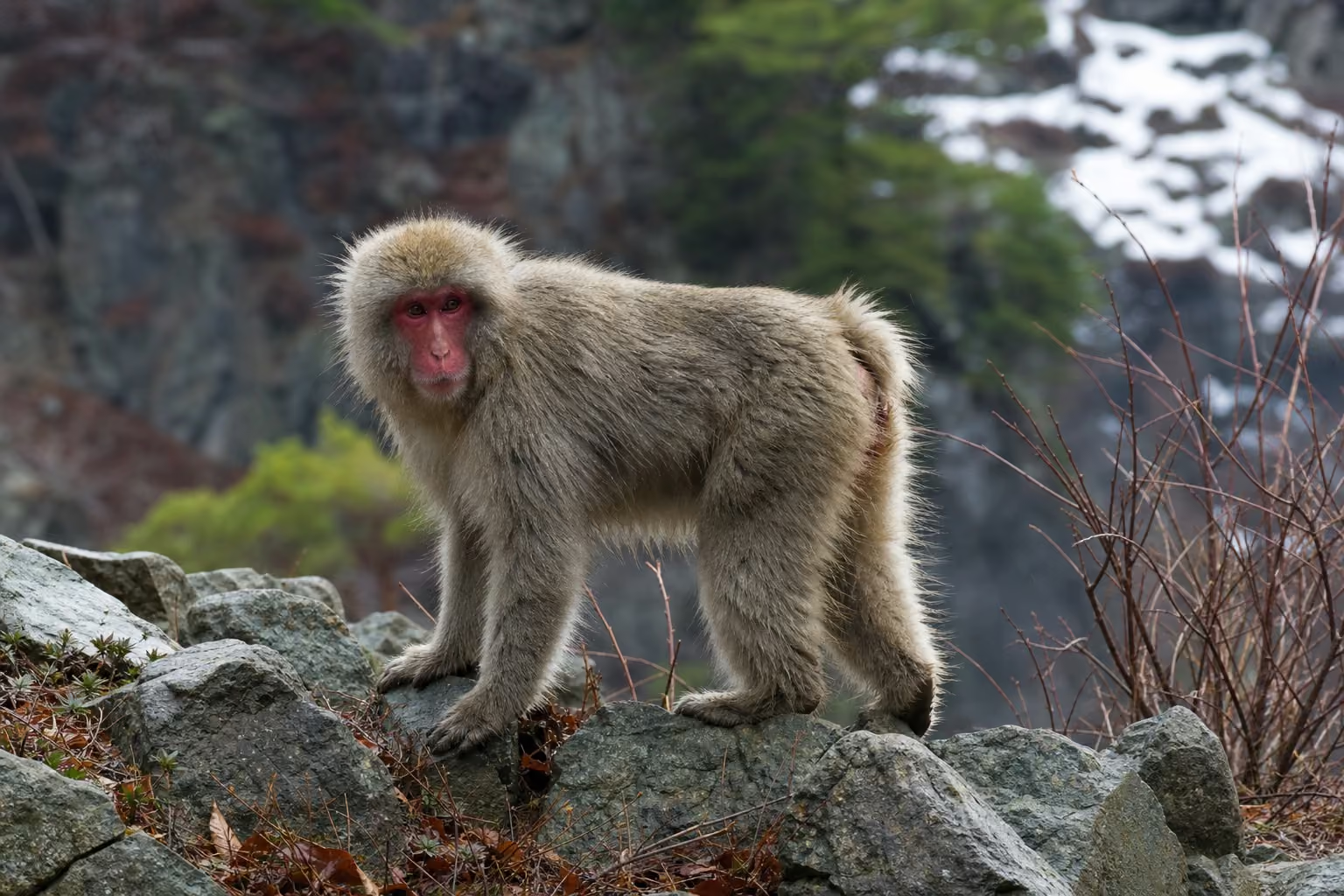
Japanese macaque

Details

Japanese macaque

Macaca fuscata

Size
47–60 cm · 8–18 kg
Diet
Omnivore
Activity
Diurnal
Sociality
Social
Lifespan
10-20 years

The Japanese macaque is a diurnal primate of Japan's forests and mountains. Social troops shift foods and ranging patterns with the seasons.

View in catalog
Key facts

  • Japanese macaque (Macaca fuscata) is an omnivore animal classified as Mammal · Primates · Cercopithecidae.
  • Primary habitats are forest · mountains, with a range across Palearctic.
  • Activity is diurnal, sociality is social, and conservation status is LC (Least Concern).
  • The Japanese macaque is a diurnal primate of Japan's forests and mountains.
  • It uses deciduous and evergreen forests, mountain valleys, and wooded slopes.
  • Typical lifespan: 10-20 years

Range

Habitat range map
Native rangeOccasional / Transient

Map: Ecoregions 2017 © RESOLVE (CC BY 4.0) · Natural Earth (PD)

Details

Habitat

It uses deciduous and evergreen forests, mountain valleys, and wooded slopes. It adapts to both snowy and milder forest regions.

Appearance

Body length is about 47-60 cm and weight about 8-18 kg. A red face, short tail, and thick coat are characteristic, with winter fur especially dense in cold areas.

Behavior

Diurnal troops have clear social relationships. Grooming, calls, and facial signals maintain bonds as animals move on the ground and in trees.

Feeding

It is omnivorous, eating fruit, leaves, seeds, buds, insects, and other seasonal foods. In winter it may use bark and foods under leaf litter.

Reproduction

Infants are carried by the mother and learn social relationships through play within the troop. Females often remain in their birth group.

Notes

Its status is listed as Least Concern. In some regions, crop damage and habituation make careful management of human distance important.