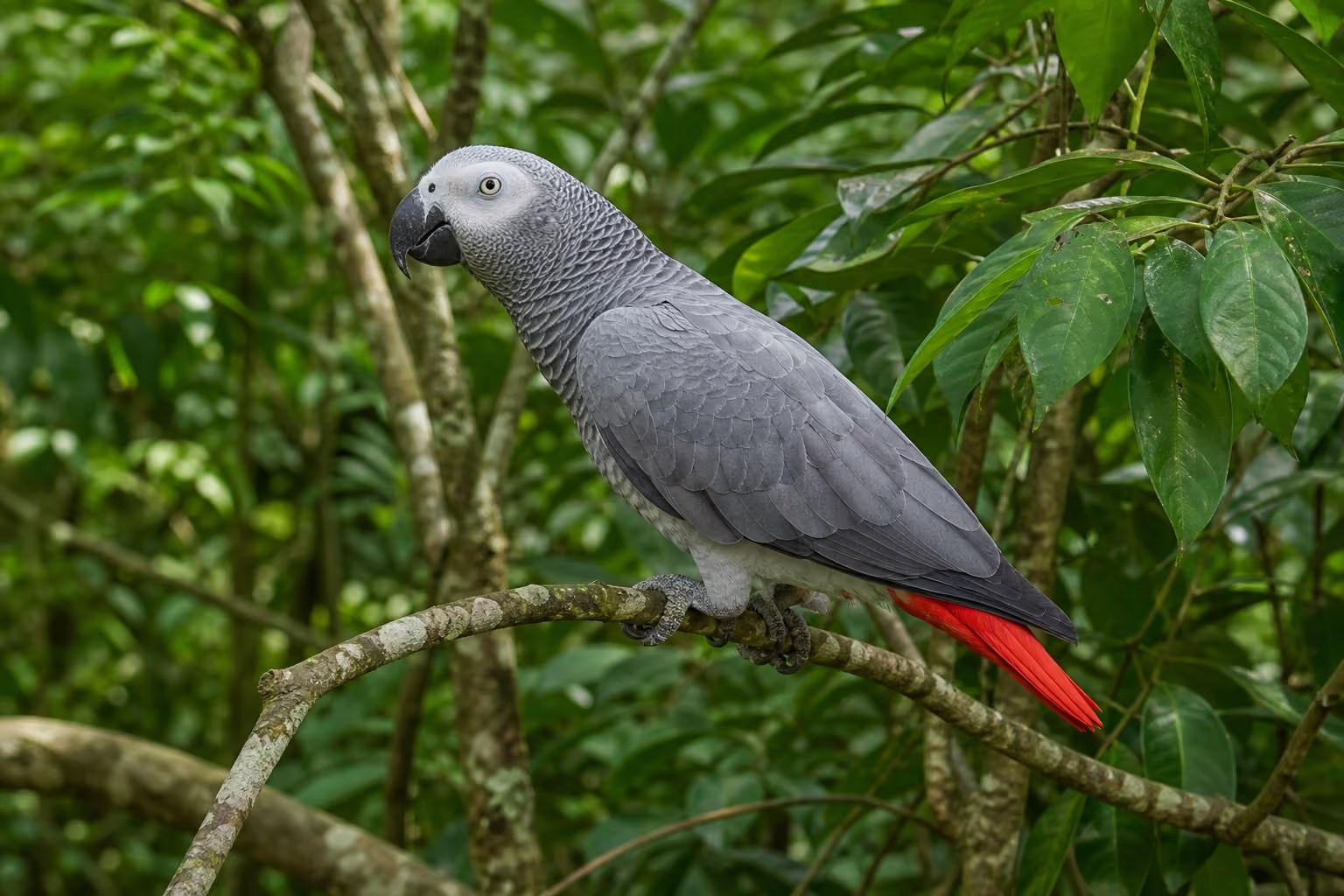
African grey parrot

Details

African grey parrot

Psittacus erithacus

Size
Wingspan 46–52 cm · 400–490 g
Diet
Herbivore
Activity
Diurnal
Sociality
Social
Lifespan
8-25 years

The African grey parrot is a highly social bird of African forests. Diurnal flocks move through the canopy in search of plant foods.

View in catalog
Key facts

  • African grey parrot (Psittacus erithacus) is a herbivore animal classified as Bird · Psittaciformes · Psittacidae.
  • Primary habitats are forest, with a range across Afrotropical.
  • Activity is diurnal, sociality is social, and conservation status is EN (Endangered).
  • The African grey parrot is a highly social bird of African forests.
  • It uses tropical forest and forest edges, depending on large canopy trees and nest cavities.
  • Typical lifespan: 8-25 years

Range

Habitat range map
Native rangeOccasional / Transient
AfrotropicalAfrotropicalAfrotropicalAfrotropical

Map: Ecoregions 2017 © RESOLVE (CC BY 4.0) · Natural Earth (PD)

Details

Habitat

It uses tropical forest and forest edges, depending on large canopy trees and nest cavities. Flocks visit fruiting trees and water sources.

Appearance

Wingspan is about 46-52 cm and weight about 400-490 g. Gray plumage, a pale face, red tail feathers, and a strong hooked bill are distinctive.

Behavior

Diurnal and social, it keeps contact with varied calls. Flocks gather while feeding and when moving to roosts.

Feeding

It is herbivorous, eating fruit, seeds, nuts, and flowers. The powerful bill cracks hard shells.

Reproduction

Pairs nest in tree cavities and raise chicks there. Young remain in the nest long enough to develop flight and feeding skills.

Notes

Its status is listed as Endangered. Forest loss and trade pressure are major threats, and mature cavity-bearing trees are important.