African civet

Details

African civet

Civettictis civetta

Size
67–84 cm · 7–20 kg
Diet
Omnivore
Activity
Nocturnal
Sociality
Solitary
Lifespan

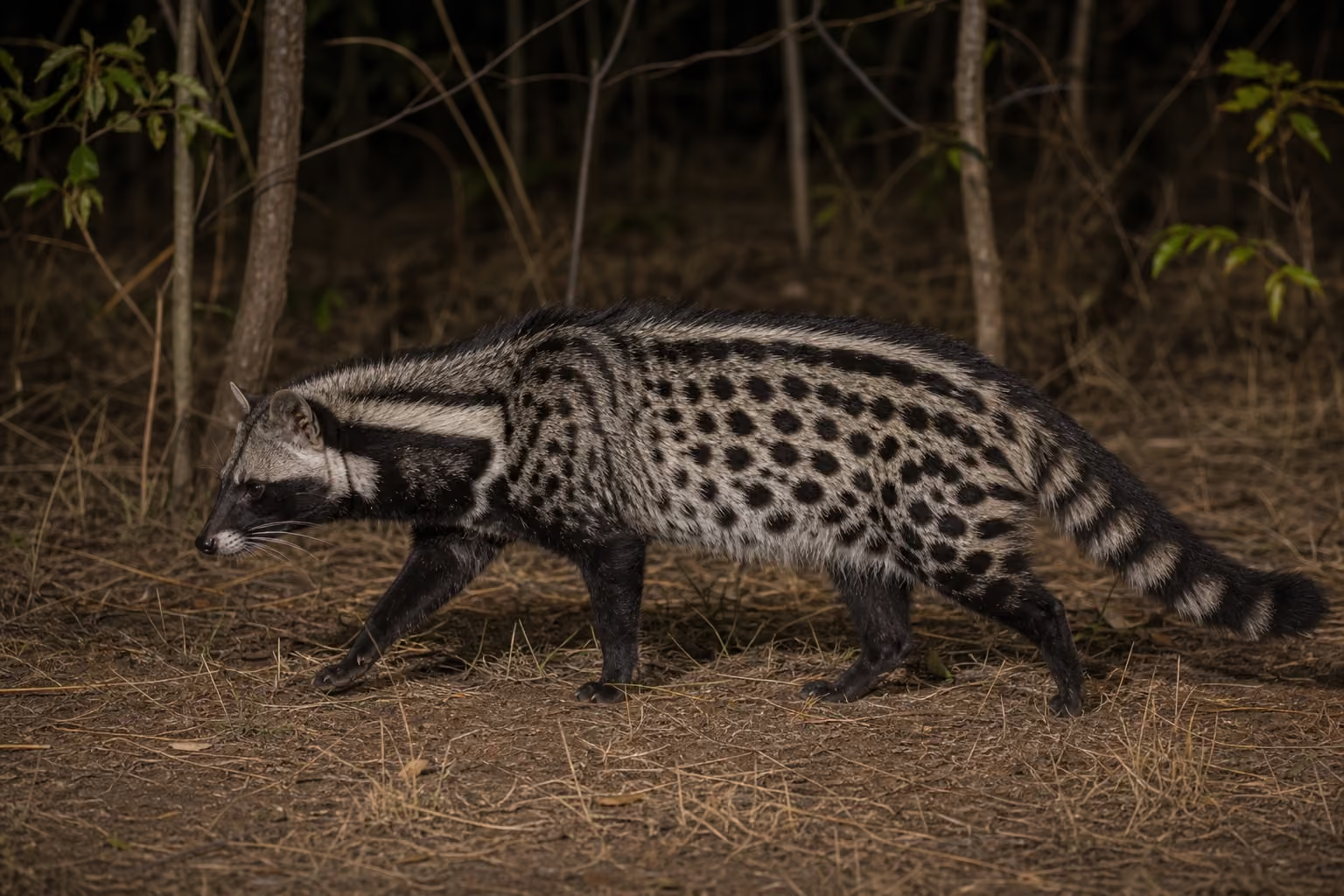
African civet is a large nocturnal African civet with bold black-and-white markings. Harvest of civet musk for perfume has raised animal-welfare concerns.

View in catalog
Key facts

  • African civet (Civettictis civetta) is an omnivore animal classified as Mammal · Carnivora · Viverridae.
  • Primary habitats are forest · grassland · savanna, with a range across Afrotropical.
  • Activity is nocturnal, sociality is solitary, and conservation status is LC (Least Concern).
  • African civet is a large nocturnal African civet with bold black-and-white markings.
  • It inhabits forest, savanna, grassland, and rural edges across sub-Saharan Africa.

Range

Habitat range map
Native rangeOccasional / Transient
AfrotropicalAfrotropicalAfrotropicalAfrotropical

Map: Ecoregions 2017 © RESOLVE (CC BY 4.0) · Natural Earth (PD)

Details

Habitat

It inhabits forest, savanna, grassland, and rural edges across sub-Saharan Africa. Main habitat types in this guide are forest, grassland, savanna.

Appearance

Typical length 67-84 cm, weight 7 kg-20 kg. Black-and-white spots and stripes, a dorsal crest, and a heavy tail are distinctive.

Behavior

It is nocturnal and usually solitary. It walks on the ground at night and marks areas with repeated latrine sites.

Feeding

It is omnivorous. Fruit, insects, small vertebrates, eggs, and carrion are all eaten.

Reproduction

Young are born in cover or burrows and raised in sheltered sites.

Notes

Although still widespread in places, it remains sensitive to habitat change. Harvest of civet musk for perfume has raised animal-welfare concerns.