343 Featured Specimen
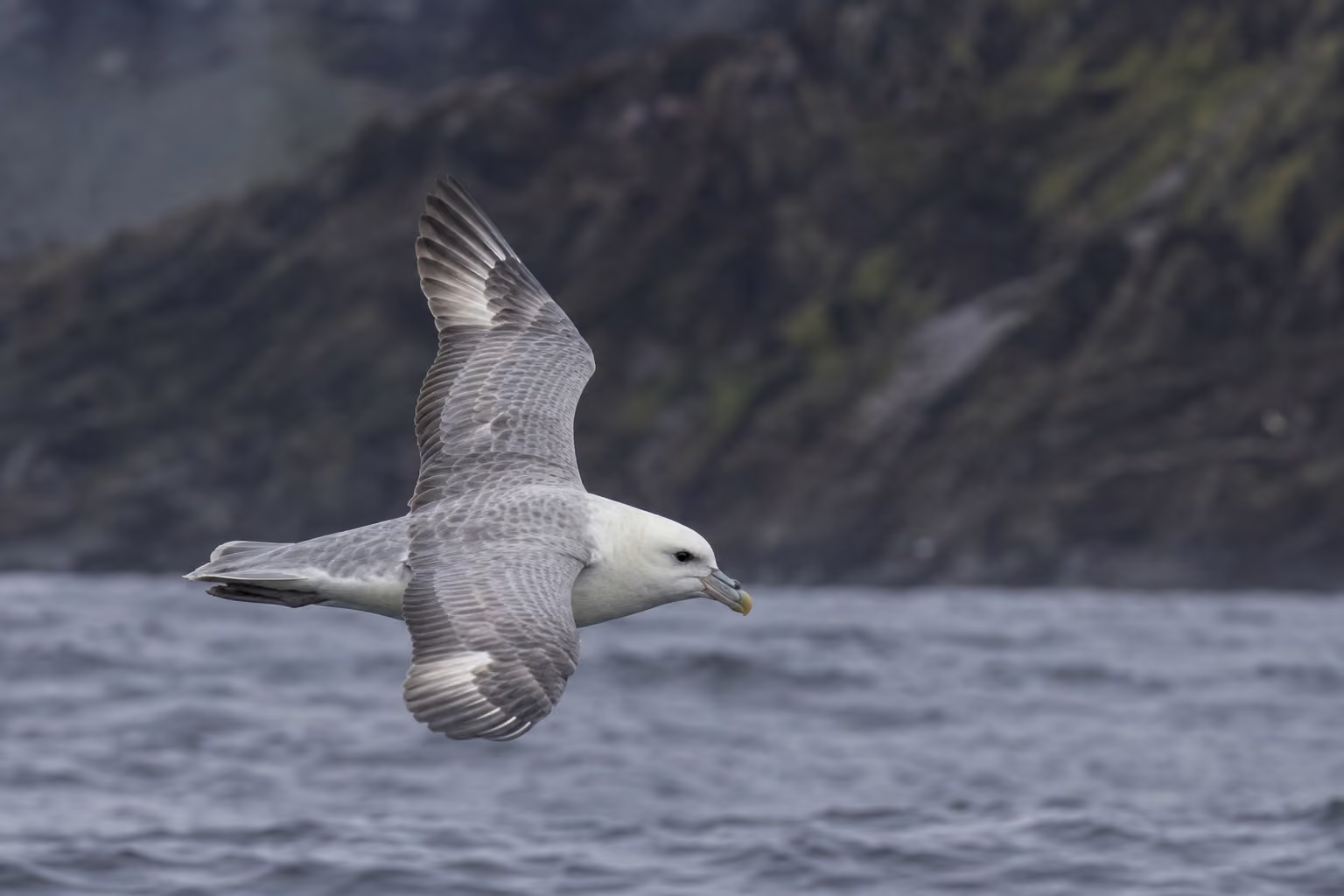
Northern fulmar

Details

Northern fulmar

Fulmarus glacialis

Size
43–52 cm · 0.5–1 kg
Diet
Carnivore
Activity
Diurnal
Sociality
Colony
Lifespan
30–40 years

The northern fulmar is a tube-nosed seabird that glides low over cold northern seas. Gull-like at first glance, it is strongly adapted to life offshore.
Range

Habitat range map
Native range Occasional / Transient
Pacific OceanPacific OceanPacific OceanAtlantic OceanAtlantic OceanAtlantic OceanAtlantic OceanAtlantic OceanArctic OceanArctic OceanArctic OceanPalearcticPalearcticPalearcticPalearcticPalearcticPalearcticPalearcticPalearcticPalearcticPalearcticPalearcticPalearcticPalearcticPalearcticPalearcticPalearcticPalearcticPalearcticPalearcticPalearcticPalearcticPalearcticPalearcticPalearctic

Map: Ecoregions 2017 © RESOLVE (CC BY 4.0) · Natural Earth (PD)

Details

Habitat

It occurs in cold waters of the Arctic Ocean, North Atlantic, North Pacific, and northern Palearctic. Breeding colonies occupy coastal cliff ledges and rocky sites.

Appearance

Length is 43-52 cm and weight 450-1000 g. Plumage ranges from pale grey-white to dark morphs, with a thick neck, tube-shaped nostrils, and stiff gliding wings.

Behavior

Diurnal and colonial, it uses wind to glide for long periods just above the sea. At the nest it can defend itself by spitting foul-smelling stomach oil.

Feeding

A carnivore, it eats fish, squid, crustaceans, zooplankton, and scraps from fishing vessels. It picks food from the surface and may make shallow dives.

Reproduction

A simple nest site is used on a cliff ledge, usually with a single egg. Both adults incubate for a long period and feed the chick energy-rich food.

Notes

It is listed as Least Concern. Ingestion of marine debris and interactions with fisheries remain concerns shared by many northern seabirds.