670 Featured Specimen
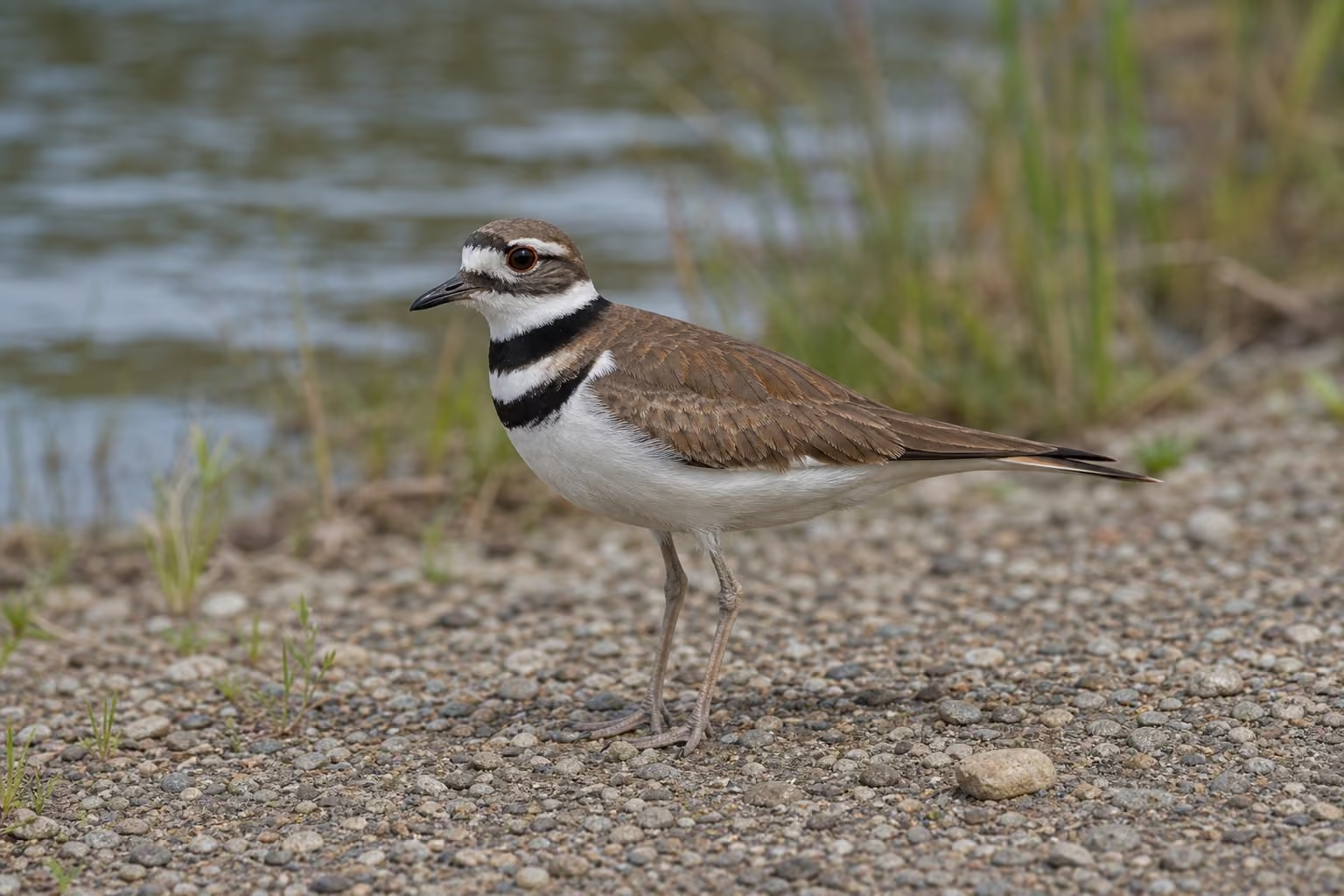
Killdeer

Details

Killdeer

Charadrius vociferus

Size
20–28 cm · 72–121 g
Diet
Carnivore
Activity
Diurnal
Sociality
Pair
Lifespan

A large plover of North and Central America, conspicuous for two black breast bands and a sharp calling voice.
Range

Habitat range map
Native range Occasional / Transient
NearcticNearcticNearcticNearcticNearcticNearcticNearcticNearcticNearcticNearcticNearcticNearcticNearcticNearcticNearcticNearcticNearcticNearcticNearcticNearcticNearcticNearcticNearcticNearcticNearcticNearcticNearcticNearcticNearcticNearcticNearcticNearcticNearcticNearcticNearcticNearcticNearcticNearcticNearcticNearcticNearcticNeotropicalNeotropicalNeotropicalNeotropicalNeotropicalNeotropicalNeotropicalNeotropical

Map: Ecoregions 2017 © RESOLVE (CC BY 4.0) · Natural Earth (PD)

Details

Habitat

Lives in grassland, fields, gravel areas, river edges, wetland margins, parking lots, and open vacant ground.

Appearance

It has brown upperparts, white underparts, and two black breast bands. Orange rump and tail colors flash in flight.

Behavior

It runs, pauses, and picks prey from the ground. Near nests or chicks, adults perform a broken-wing distraction display.

Feeding

Insects, earthworms, spiders, crustaceans, and other small invertebrates are taken from the surface.

Reproduction

Eggs are laid in a shallow scrape on gravel or bare ground. Precocial chicks walk and feed soon after hatching.

Notes

It adapts to open human-made habitats, but recent declines have moved it into a near-threatened global category.