626 Featured Specimen
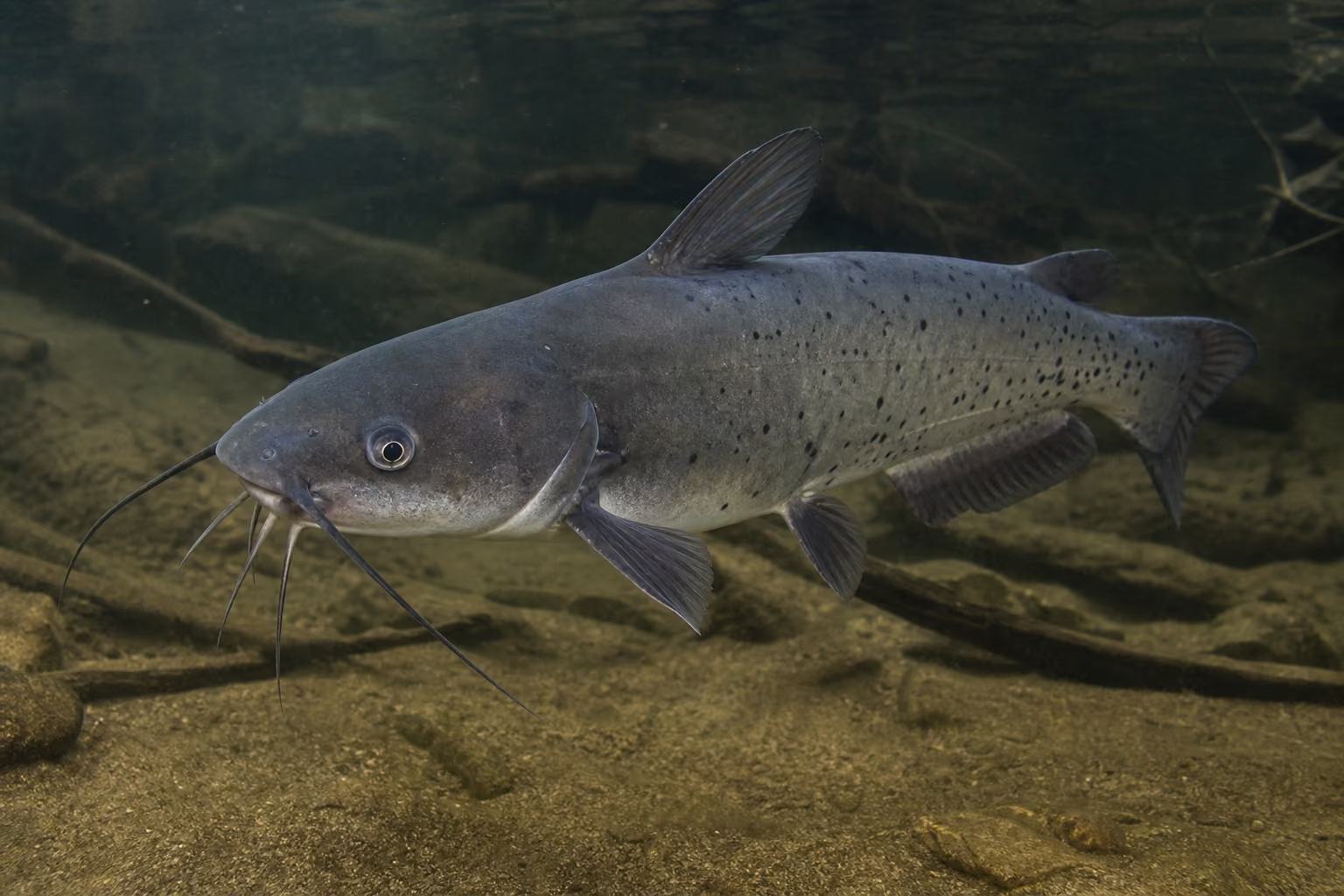
Channel catfish

Details

Channel catfish

Ictalurus punctatus

Size
0.3–1.3 m · 0.5–26 kg
Diet
Omnivore
Activity
Nocturnal
Sociality
Loose group
Lifespan

A widespread North American catfish that uses barbels to find food in turbid rivers and lakes and supports major food fisheries.
Range

Habitat range map
Native range Occasional / Transient
NearcticNearcticNearcticNearcticNearcticNearcticNearcticNearcticNearcticNearcticNearcticNearcticNearcticNearcticNearcticNearcticNearcticNearcticNearcticNearcticNearcticNearcticNearcticNearcticNearcticNearcticNearcticNearcticNearcticNearcticNearcticNearcticNearcticNearcticNearcticNearcticNearcticNearcticNearcticNearcticNearctic

Map: Ecoregions 2017 © RESOLVE (CC BY 4.0) · Natural Earth (PD)

Details

Habitat

Native to central and eastern North American rivers, lakes, and reservoirs, and introduced widely. It favors deeper runs, channels, and woody cover.

Appearance

The body is long, blue-gray to olive, with many dark spots in younger fish. Long barbels surround the mouth.

Behavior

It feeds most actively at night and rests near deeper water or structure by day, relying strongly on smell and taste.

Feeding

It is omnivorous, eating insects, mollusks, crustaceans, fish, plant material, and carrion from the bottom.

Reproduction

Males prepare nest cavities and guard the eggs. They may protect young schools for a short period after hatching.

Notes

Channel catfish is a major aquaculture species in the United States and a widely stocked sport fish.